Most Searched and Hardest to Find Aircraft Parts in April 2026

The aviation aftermarket is operating under sustained pressure, as airlines continue to maximize fleet utilization while facing ongoing constraints in aircraft deliveries and supply chain performance. These pressures are increasingly visible in real-time sourcing behavior rather than forecasts alone.

Locatory.com aviation marketplace offers a clear and immediate view into where operational stress is emerging across fleets and maintenance segments, by capturing the top 50 most searched and 50 hardest to find aircraft parts of April 2026. This report translates those signals into actionable insights, helping aviation professionals align procurement and maintenance strategies with actual market conditions and reduce AOG risk.

System-Wide Stress Indicators

To understand the underlying drivers behind this marketplace behavior, it is essential to first examine the main system-wide indicators:

  • Recent data from International Air Transport Association shows global passenger demand continuing to rise, with March 2026 RPKs up 2.1% year on year. Capacity declined by 1.7%, pushing load factors to 83.6%, the highest ever recorded for the month. This imbalance reflects a system operating at near-maximum utilization.
  • Fleet renewal remains constrained. Airbus delivered 114 aircraft in the first quarter of 2026, including 81 A320-family units, while Boeing delivered 143 aircraft, led by 114 737s. These delivery levels are insufficient to offset demand growth, forcing operators to extend the operational life of older A320ceo, 737NG, CRJ and ERJ aircraft. This dynamic is sustaining demand for mature rotables, used serviceable material and repairable cores.
  • Logistics is adding further pressure. Air cargo demand declined 4.8% YoY, while jet fuel prices surged over 100%, increasing the cost and complexity of AOG recovery.

Most Searched Aircraft Parts I Locatory.com April 2026

Engine Components

The April Locatory.com dataset is clearly engine-led, with demand concentrated around CFM56 air management and control systems. Repeated searches for Valve Transient Bleeds (PN: 8910-277, PN: 8910-272, PN: 8910-344), Valve HPTACC (PN: 8910-253, PN: 8910-255), LPT clearance control valves (PN: 8910-275), VBV actuators (PN: 8100-0083) and VSV actuators (PN: 8100-0051, PN: 8100-0091) point to engines operating under sustained thermal and cycle stress.

These parts become increasingly sensitive as engines age, EGT margins tighten and operators attempt to maximize on-wing time between shop visits. The scale of the installed base amplifies this effect. CFM56 engine family remains one of the most widely deployed engine families globally. CFM56-5B powers nearly 60% of all Airbus A320ceo-family aircraft, while the CFM56-7B is the exclusive engine for the Boeing Next-Generation 737 and has more than 15,000 delivered engines. Therefore, as shop visit volumes increase, the available pool of serviceable material and repairable cores is rapidly absorbed.

Fuel system demand reinforces this utilization-driven pattern. Searches for main fuel pumps (PN: 6970-125, PN: 6970-126, PN: 6970-141), fuel control units (PN: 441921-5), hydromechanical units (PN: 442653, PN: 442369) and fuel nozzles (PN: 3105208-2) indicate that operators are not only sourcing routine spares but actively targeting components that directly influence dispatch reliability and troubleshooting efficiency.

More importantly, the presence of core engine hardware such as HPT rear shafts (PN: 1864M90P04), HPC spools (PN: 2048M20G03), piston assemblies (PN: 430378, PN: 327288, PN: 3181785-1), bearings (PN: 100104-246) and seal systems signals a shift toward deeper maintenance workscopes. This is no longer a line-maintenance-driven market. Material availability is increasingly determining whether engines can progress through teardown, inspection and maintenance without delay.

Avionics and Structure Components

While engine components dominate overall demand, adjacent systems including avionics, safety equipment and structural assemblies are also showing clear signs of increasing maintenance pressure.

High searches for flight control computers (PN: 4051600-914) and other avionics components reflect the continued reliance on established configurations, particularly on Boeing 737 ecosystem. Retrofitting or upgrading avionics systems is often deferred when aircraft are required to remain in active service, shifting demand toward maintenance and repair rather than replacement.

Moreover, retractable landing light (PN: 4315542) on A320neo-family aircraft shows that new-generation fleets are already appearing in aftermarket search behavior, while escape slide assy (PN: 5A3307-701) signals life-limited emergency-equipment pressure.

ERJ-190 landing gear was highly sought after last month, including side stays (PN: 190-70200-40, PN: 190-70200-402), locking stays (PN: 190-70250-409) and nose landing gear components (PN: 190-70453-613, PN: 190-70550-403, PN: 190-70650-401). This pattern is consistent with high-cycle regional operations and calendar-driven heavy maintenance events rather than isolated AOG demand. It suggests that structural and landing gear systems are entering predictable overhaul cycles across regional fleets.

Hardest-to-Find Aviation Supplies I Locatory.com April 2026

While demand is concentrated in engines, supply constraints are more fragmented and, in many cases, more operationally disruptive.

Standard Hardware

A significant portion of scarcity is concentrated in standard hardware and fluid-transfer components such as bolts (PN: AN3H-6A, PN: AN4-10A, PN: AN5-21A), nuts (PN: AN365-428, PN: AN365-624), washers (PN: AN960-8), packings (PN: MS28775-224)  hose and tube assemblies (PN: 70-010H000T070, PN: 70-010H000V080, PN: XA1AC, PN: XA1AD). These are low-cost items, but they are certification-dependent and documentation-sensitive. Their absence can delay aircraft release just as effectively as a missing high-value component.

Regional aircraft components

The most structurally significant constraint lies in the regional aircraft segment. The CRJ platform appears repeatedly in the hardest-to-source portion of the dataset, including components such as wiper motor converters (PN: 2313M-340-2, PN: 2313M-341-2), skew detection units (PN: 601R59014-1), radome assembly (PN: 601R33038-5), APU panel assembly (PN: 601R51226-23), horizontal stabilizer trim actuators (PN: 601R92305-7), windshield (PN: NP139321-9), right-hand cockpit side window (PN: NP139322-2), cockpit dome light (PN: 2LA007278-75), and digital clock (PN: GMT4190-020). This pattern reflects the underlying economics of mature regional fleets: smaller production runs, fewer active surplus channels, limited repair and overhaul alternatives, and reduced supplier incentive to carry slow-moving inventory.

The presence of CF34-3B engine  (PN: 6089T11G01) adds to the regional-fleet story. GE’s CF34-3 is associated with the Bombardier CRJ200 and Challenger 604/605/850 ecosystem.

Safety equipment

Safety and emergency equipment introduces another layer of risk. Fire extinguishers (PN: 30H673, PN: 473957-4, PN: G800100-3), protective breathing equipment (PN: MR10037N) and escape slides (PN: 5A3307-701) are tightly regulated, life-limited components. Their availability is constrained not only by supply but also by certification, storage and transportation requirements. When these items are unavailable, operational flexibility is minimal.

Avionics

Avionics and electrical scarcity is also evident, though skewed toward legacy or specialized components. Hardest-to-find parts include computer EGPWS MK V (PN: 965-0976-003), GPS antenna (PN: S67-1575-52), undervoltage sensor relay (PN: VS643), power contactor controller (PN: P600A803E014), chip detector (PN: DK249), and oscilloscope (PN: 122-A). This pattern points to a structural aftermarket issue: while mature avionics remain operationally critical, OEM production, repair bench availability, and alternative supply often decline before the associated fleets fully exit service.

Widebodies components

Widebody and older airframe scarcity appear in a smaller but still strategically important layer. Components such as the pneumatic compressor (PN: 766B0000-01) for A330/A340, union-sliding assembly (PN: HTE620197) for A340, window assembly (PN: 141W4835-7) for B777, acoustic liner panel (PN: 2082M14G01) for B777, and lamp (PN: F40T12WW) for 737 illustrate a “long-tail” supply challenge. While these parts do not typically require high inventory turnover, their availability becomes critical when demand arises, and substitution options are often limited due to airframe-specific design constraints and diminishing aftermarket depth.

Key Insights from Locatory.com data

1. The CFM56 aftermarket is not declining quietly
The data shows mature-engine demand moving from generic spares into air-management, fuel-control and rotating core hardware. Aviation Week’s forecast identified CFM56 as the largest engine-family MRO demand share, even as new-generation engine demand grows.

2. Low-value hardware is becoming a high-impact supply chain risk.
Bolts, nuts, washers, hoses, tubes and packing rarely dominate spend forecasts, but the Locatory.com marketplace scarcity list continuously shows they can dominate delay risk.

3. Regional aircraft supportability is becoming more fragile
CRJ and ERJ signals are structurally different from A320/737 demand. Narrowbody shortages are driven by scale and consumption while regional shortages are driven by thin supply, aging fleets, small production lots and weaker surplus depth.

4. Marketplace search data is becoming a leading indicator for shop-visit friction
MROs that monitor aircraft parts demand early can adjust teardown planning, USM sourcing and customer slot commitments before material holds become visible.

Next 3–6 Months Outlook

Over the next three to six months, demand for engine-related material is expected to remain strong, particularly within CFM56 ecosystem. The underlying drivers, including high utilization, delayed fleet renewal and constrained MRO capacity, remain firmly in place.

At the same time, supply-side challenges are unlikely to ease quickly. Labor constraints, limited repair throughput and ongoing logistics inefficiencies will continue to restrict material flow. IATA expects 2026 passenger traffic to grow 4.9% and load factors to remain near record highs because supply-side constraints are still limiting capacity expansion.

These conditions reinforce a broader structural shift in how the aviation aftermarket is monitored and managed. Locatory.com aircraft parts marketplace is more than a sourcing tool. Its search and scarcity reports provide real-time market intelligence on where the MRO supply chain is tightening, which platforms are generating aircraft parts demand, and which parts shortages are most likely to create AOG risk before the broader market reacts. Locatory

Textron Aviation Opens New Melbourne Service Facility at Essendon Fields Airport, Expanding Support in APAC

Textron Aviation announced its new service facility at Essendon Fields Airport in Melbourne is now open for customers, expanding factory-direct support for Cessna, Beechcraft and Hawker customers across Australia and the Asia-Pacific region. The purpose-built facility strengthens Textron Aviation’s global service network and reflects the company’s long-term commitment to expanding capacity and enhancing customer support throughout aircraft ownership.

“We’ve supported customers in Australia for decades, and we continue to invest where our customers tell us they need more capacity and faster access to factory direct expertise,” said Brian Rohloff, senior vice president, Global Customer Support, Textron Aviation. “The Essendon Fields facility is a significant investment in a highly important region, strengthening our service network and expanding service capability, parts access and technical support across Australia and the Asia Pacific region.”

The new facility more than doubles the footprint of Textron Aviation’s previous Essendon Fields operation to more than 35,000 square feet (3,343 square meters) and is designed to support the more than 1,400 Cessna, Beechcraft and Hawker aircraft operating across the Asia-Pacific region. Developed based on customer feedback, the location features expanded space for servicing aircraft to help reduce downtime, an on‑site Textron Aviation parts stockroom to improve parts availability and a more comfortable customer lounge for use while aircraft are being serviced.

The Essendon Fields service center complements Textron Aviation’s broader investment strategy to strengthen regional support across Australia, alongside recent facility expansions and upgrades in Perth. Located at one of Australia’s most established aviation hubs, the new facility also reflects close collaboration with Essendon Fields Airport to support the continued growth of business aviation and aircraft maintenance in the region.

“Our investment in the new Textron Aviation service center underscores Essendon Fields’ commitment to building Australia’s most capable and connected business aviation precinct,” said Brandan Pihan, CEO, Essendon Fields. “As the closest airport to the Melbourne CBD, Essendon Fields is the most convenient choice for business aviation customers. Textron Aviation’s long-term commitment ensures the retention of skilled jobs and service capability at Essendon. It also advances our Airport Master Plan by consolidating operations on the main airfield, improving safety and efficiency, and responds to strong demand for new hangar space.”

Textron Aviation will host a formal grand opening event for the Essendon Fields service facility in August, inviting members of the media, customers and community leaders to officially mark the opening of the site. Additional details will be shared closer to the celebration.

Gulfstream Invests $5 Million to Support Georgia Education

Gulfstream Aerospace announced a $5 million investment in Georgia education, reinforcing its long-standing commitment to strengthening the talent, skills and innovation that will shape the future of business aviation. The investment will benefit Savannah-area schools, technical colleges and universities across the state, expanding educational pathways and supporting the development of future industry leaders.

“Each year, we invest $5 million in education through our Georgia partnerships, and we are proud to deliver our 2026 commitment today,” said Mark Burns, president, Gulfstream. “Developing a strong local talent pipeline is essential to our future, and we are grateful for our educational partners who help prepare students with the skills and knowledge needed to succeed.”

To mark the contribution, Gulfstream welcomed dignitaries, educational partners and students to its exclusive Discover the Difference event at its worldwide headquarters in Savannah. The event showcases Gulfstream’s next-generation fleet, providing guests with a unique opportunity to experience the innovation, performance and craftsmanship that define the industry leader. 

Gulfstream’s educational outreach spans K-12 programs, dual enrollment opportunities for high school students, technical colleges and research universities, introducing students to the diverse careers available in business aviation. These investments also support Gulfstream’s research and development efforts, all based in Savannah, where nearly 2,500 engineers and other professionals develop innovations at the forefront of aerospace technology. 

TECNAM Concludes AERO Friedrichshafen 2026 with 86 Confirmed Orders and Certifications

Tecnam announced the conclusion of its most successful AERO Friedrichshafen exhibition to date. Commanding the largest booth at the entire show, the 2026 edition served as the perfect stage for Tecnam to unveil groundbreaking new aircraft, secure fleet expansion contracts, and celebrate the strength of the general aviation community.

The company announced it secured 86 confirmed aircraft orders during the show, fueled by substantial commitments from global stocking dealers — including strong demand from South American partners — and major fleet expansions. Several other significant agreements remain in final negotiations. Europe’s top Approved Training Organizations (ATOs) and commercial operators consistently chose Tecnam’s sustainable, efficient fleet to power their future:

European Flyers (Spain): Signed a monumental agreement for 12 P2010 TDI aircraft.

Greybird Aviation Group (Denmark/Sweden/Spain): Standardized its European bases with an order for 13 aircraft (10 P-Mentor, 3 P2006T NG).

Center Air Pilot Academy (Denmark): Built upon years of operational success by ordering 11 new aircraft (10 P-Mentor, 1 P2006T NG).

Smart Aviation (Poland): Expanded its training fleet with an order for 10 new P2008JC NG aircraft.

ACS Aviation (UK): Announced a major fleet expansion program, securing 4 confirmed P-Mentors and 6 options.

Finnish Aviation Academy (FINAA): Celebrated the live handover of their third P2010 TDI, part of a landmark 10-aircraft modernization contract.

AirTaxi Express AG (Germany): Expanded its commercial AOC operations to offer affordable European IFR travel with a new P2006T NG.

A-VIATOR (Belgium): Transitioned to a standardized Tecnam fleet to support rapid growth with the acquisition of a new P2008JC NG.

New Aircraft and Certifications
AERO 2026 was highlighted by major product reveals that redefine safety, efficiency, and luxury across the Tecnam range:

P2008JC NG Receives EASA Type Certificate: In a historic ceremony, EASA Executive Director Florian Guillermet personally handed over the CS-23 Amendment 6 Type Certificate for the new P2008JC NG.

The P2012 VIP Debuts: Infusing business-jet luxury with unmistakable Italian flair, Tecnam revealed the ultra-quiet, 6-seat VIP twin, bringing premium bespoke design to the piston market.

The P2010 MkIII Launches: The ultimate four-seat cross-country experience was elevated with standard factory air conditioning and modernized interiors.

P92 with Rotax 915iS: Tecnam proudly presented the beloved P92 platform equipped with the powerful Rotax 915iS engine, offering exceptional climb performance and high-altitude capabilities.Additionally, Tecnam announced a new partnership with Jeppesen ForeFlight, offering premium digital navigation subscriptions directly into its factory-new aircraft.

“AERO 2026 has been an absolutely phenomenal event for Tecnam. Securing 86 confirmed orders in just four days is a staggering achievement that speaks volumes about the trust operators place in our aircraft,” said Walter Da Costa, Tecnam’s chief sales officer. “The massive fleet expansions we finalized here with Europe’s premier academies and operators prove that the market is fully aligned with our vision for sustainable, highly efficient flight training and commercial operations.”

“Commanding the largest booth at AERO this year allowed us to truly showcase the scale and passion of the Tecnam family,” added Giovanni Pascale Langer, Tecnam managing director. “We are deeply grateful to our trusted engine and avionics partners—ROTAX, LYCOMING, CONTINENTAL, and GARMIN — who are integral to our aircraft. A special thank you goes out to our incredible Tecnam staff, our worldwide dealer network, and the thousands of aviation enthusiasts who visited us. Finally, we want to express our sincere appreciation to the AERO Friedrichshafen management, staff, and the local airport ground crew for flawlessly supporting such an extraordinary and busy event.”

Rethinking Runoff: How Diverter Valves Protect Infrastructure, Operations, and the Environment

By: Chris Eberly, PE, Vice President Product Development at NWPX Park

Water management in commercial and industrial environments is rarely as simple as installing a drain. In outdoor wash areas, fuel loading pads, aircraft hangars, retail service zones, and data center campuses, runoff can originate from two fundamentally different sources — routine rainfall and active wash operations. Each demands a different destination. Rainwater is typically required to discharge to storm systems, while wash water containing oils, detergents, fuel residues, and debris must be routed to sanitary sewer systems or containment for treatment. Improper flow routing is not just a design flaw — it is a compliance failure that can trigger regulatory violations, environmental damage, and operational shutdowns.

Diverter valves are engineered to resolve this conflict. Installed below grade within catch basins or vault structures, these systems automatically direct runoff to the appropriate discharge point based on operating conditions. Rather than relying on manual intervention, they create a multi-path hydraulic control point between storm, sanitary, and containment pathways. This transforms runoff management from a binary decision into a configurable routing strategy aligned with site-specific risks and regulatory requirements.

For engineers, municipalities, and facility owners, this capability transforms runoff management from a compliance vulnerability into a predictable, engineered solution.

The Engineering Principles Behind Diversion Systems

At its core, a diverter valve functions as a multi-path hydraulic control point, transforming runoff management into a controlled routing system capable of directing flow between stormwater, sanitary, and containment pathways as conditions change.

When wash operations begin, the system diverts that runoff to the sanitary sewer or a designated holding tank for treatment. This hydraulic control point ensures that rainwater does not overload wastewater treatment facilities, while contaminated wash water does not enter storm systems that discharge directly into rivers, lakes, or coastal waters.

Two primary system configurations are used, depending on site conditions and surface area: Demand-Driven and First Flush.

In smaller wash zones — generally 200 square feet or less — a demand-driven configuration is often sufficient. In this design, the system senses water flow in the supply line to a pressure washer or wash system. When flow exceeds a defined threshold, typically around half a gallon per minute, the valve automatically opens to divert runoff to sanitary treatment. Once washing stops, the valve returns to its default position directing water to storm. This approach requires no manual switching and avoids the operational risk associated with human error.

For larger paved areas, the first flush principle becomes critical. This configuration builds upon the same demand-driven activation but incorporates a PLC (Programmable Logic Controller)-controlled process to capture and treat the initial runoff volume. The “first flush” refers to the initial half-inch of rainfall over a surface area—the portion most likely to mobilize accumulated oils, hydrocarbons, and debris. Engineers calculate this volume based on site area, and the system then meters and releases runoff in controlled batches, repeatedly cycling the valve until the full volume has been diverted for treatment.

In many applications, these two approaches are integrated within a single system, providing continuous protection across both operational and environmental conditions while scaling from compact retail pads to large industrial sites and airport tarmacs.

Because these systems operate below grade in moisture-prone environments, reliability is essential. Many installations employ hydraulically actuated valves rather than fully electric motorized assemblies, reducing exposure-related maintenance concerns in subterranean vaults. The result is a largely maintenance-free solution designed for long-term service.

Diversion Configurations and Application Scenarios

Diversion systems are often viewed as simple two-path controls—directing flow between stormwater and sanitary systems. In practice, however, modern infrastructure requires more flexible routing. Based on site risk, regulatory requirements, and operating conditions, systems can be configured in several ways.

Three-way diversion (common configurations):

Stormwater ↔ Sanitary Sewer
The most common configuration for washdown applications. Runoff flows to stormwater under normal conditions and is diverted to sanitary during wash events.
Applications: wash racks, dumpster/compactor areas, maintenance pads.

Sanitary Sewer ↔ Spill Containment
Used where storm discharge is not permitted. Runoff is directed to sanitary under normal conditions and to containment during spills or controlled events.
Applications: medical decontamination, hazardous wash areas, spill prevention.

Stormwater ↔ Spill Containment
Runoff is typically discharged to stormwater but diverted to containment during fueling or spill events.
Applications: fuel transfer areas, loading racks, aviation fueling or deicing.

Four-way diversion (advanced configurations):
Stormwater ↔ Sanitary Sewer ↔ Spill Containment
These systems provide maximum flexibility, allowing runoff to be routed based on real-time conditions such as rainfall, wash activity, or emergency events.
Applications: medical decontamination facilities, high-risk industrial sites, critical infrastructure.

Expanding Applications Across Infrastructure Sectors

While wash racks are a natural application, diversion systems are increasingly being specified in a wider range of facility types. Dumpster and compactor areas represent one of the most overlooked runoff challenges. Liquids generated from solid waste accumulation often mix with rainwater and discharge directly to storm systems when left unmanaged. As regulatory awareness increases, some municipalities now require diversion or pretreatment systems in dumpster enclosures. What was once viewed as a housekeeping issue is now recognized as an environmental compliance concern.

Fuel loading and unloading zones present another critical use case. Facilities handling diesel, aviation fuel, or other hydrocarbons must comply with spill prevention and discharge regulations. In these environments, diversion systems route runoff either to storm drains during normal conditions or to containment tanks when fueling activities occur. Failure to implement compliant controls can expose operators to significant financial penalties and operational risk.

Aircraft hangars equipped with aqueous firefighting foam systems require similar diversion capabilities. During suppression events, foam discharge must be routed to holding tanks rather than municipal sewer lines. The same underlying valve technology can serve these specialized scenarios.

Emerging markets are also driving adoption. Data centers, for example, rely on large-scale cooling infrastructure that often requires periodic washdown. Municipalities increasingly prohibit untreated wash water from entering storm systems. In colder climates, frost depth considerations may necessitate deeper installations, insulated vault assemblies, or integrated heating elements. These projects demonstrate that diversion systems are not static catalog products but adaptable engineering platforms capable of responding to complex site constraints.

Structural Integration and Long-Term Durability

Installation flexibility is a significant advantage of modern diversion systems. In new construction, diverter valves can be integrated directly into precast concrete vaults, delivering a complete, traffic-rated structure ready for installation. Precast construction offers proven structural integrity, long service life, and resistance to deformation. Because many wash and fueling areas are located in parking lots or high traffic zones, vaults must withstand vehicular loading, from service trucks to aircraft support equipment.

Retrofit scenarios are also common. Systems can often be installed within existing catch basins, provided separate storm and sanitary connections are available. Coordination between civil and plumbing disciplines is typically required, particularly when adding pressurized supply lines for demand activation. However, once installed, these systems operate with minimal routine maintenance.

Within the portfolio of NWPX Park, a division of NWPX Infrastructure, diverter valves are incorporated into engineered, pre-plumbed precast systems rather than supplied as isolated components. These engineered systems may integrate separators, screening components, or additional treatment elements within a unified vault assembly. Delivering a factory-assembled system reduces field complexity, improves quality control, and ensures that the diversion mechanism performs as designed.

Customization is another factor critical to performance. Whether adapting to deep frost lines in northern climates, integrating filtration for marine facilities, or designing for heavy-load runway environments, diversion systems can be scaled and configured to meet project-specific demands. This ability to refine and recombine established technologies allows engineers to respond to evolving regulatory expectations without compromising durability.

Diversion as a Strategic Compliance Tool

Environmental regulations governing stormwater discharge and wastewater treatment continue to evolve. Municipalities and state agencies are placing greater emphasis on preventing contaminated runoff from entering natural waterways. As awareness increases around the environmental impact of uncontrolled discharge, diversion systems are shifting from optional enhancements to specified infrastructure elements.

For design engineers and facility owners, the benefits extend beyond avoiding fines. Proper diversion protects municipal treatment capacity, reduces pollutant discharge to receiving waters, and demonstrates proactive environmental stewardship. It also positions facilities to adapt to tightening discharge standards without costly retrofits in the future.

Runoff will always occur. The difference lies in whether it is directed intentionally or allowed to follow the path of least resistance. Diverter valves provide a controlled, engineered solution that aligns infrastructure performance with environmental responsibility, an outcome increasingly demanded by regulators, municipalities, and project stakeholders alike.

Textron Aviation Announces Signature Aviation as Exclusive FBO Sponsor for 2026 Special Olympics Airlift 

Signature Aviation announced with Textron Aviation Inc., that Signature will serve as the exclusive Fixed Base Operator (FBO) Sponsor for the 2026 Special Olympics Airlift — a mission that unites the aviation community to transport athletes to the Special Olympics USA Games in Minnesota’s Twin Cities. Signature Aviation will provide nationwide operational and hospitality support from 17 Signature departure locations as athletes travel to and from the Games. 

Organized by Textron Aviation, the Special Olympics Airlift is the world’s largest peacetime airlift, mobilizing more than 100 volunteer Cessna, Beechcraft, and Hawker owners and pilots. Together, they create a once-in-a-lifetime experience for Special Olympics athletes and coaches. The 2026 Airlift will transport participants to the Games on Friday, June 19 and transport them home on Saturday, June 27, 2026. 

As part of its support, a Signature Aviation hangar will be converted into the Champion Center — a dedicated arrival and departure space designed to celebrate athletes from the moment they step off the aircraft through their journey home following the Games.  

“This is what our industry can do at its best — come together in service of something bigger than ourselves. We’re honored to support the Special Olympics Airlift and help create an experience that reflects the dignity, excitement and pride these athletes bring to the games,” said Tony Lefebvre, CEO, Signature Aviation.  

This collaboration underscores the aviation community’s ability to deliver more than transportation and showcasing the care, dignity and a sense of celebration every athlete deserves. By combining Textron Aviation’s leadership in organizing the Airlift with Signature Aviation’s expertise in hospitality and operational excellence, the event ensures that athletes, coaches and volunteer pilots experience a smooth, uplifting start to their journey to the Games. 

“The Special Olympics Airlift is about creating an experience where athletes feel welcomed and celebrated from the moment they arrive,” said Ron Draper, president & CEO, Textron Aviation. “Signature Aviation helps make that possible with a level of care that turns the journey into a meaningful part of the Games.” 

Everybody needs a lift every now and then. Learn more about this monumental nationwide aviation event by visiting airlift.txtav.com

Textron Aviation to Expand European Parts and Distribution Center

Textron Aviation announced plans to expand its European Distribution Center (EUDC) by 50 percent this year, building on more than a decade of regional support and strengthening parts availability and fulfillment performance for customers across Europe. This expansion reinforces the company’s long-term commitment to customer support and continued Aftermarket growth in the region. About the expansion:

  • Increases the facility’s footprint by approximately 1,000 square meters 
  • Supports greater parts availability allowing for an estimated increase of 5,000 additional parts and improved fulfillment performance 
  • Enables continued growth of the local EUDC support team 
  • Enhances the company’s ability to scale operations to meet growing European demand 
  • Provides faster access to critical parts for customers across the region 

ProvenAir Technologies Names Chris Kubinski as Chief Executive Officer

ProvenAir has appointed Chris Kubinski as CEO to lead the company into its exciting next chapter, succeeding the late Jim Boccarosa, who passed away in September of last year.

“Chris has spent his career at the intersection of aviation, data, and modernization through technology, and brings a clear understanding of what the industry is looking for through innovation and advancements in AI solutions,” said Stephanie Boccarosa, ProvenAir board member.

Chris brings over two decades of experience in aviation software, most recently serving as Vice

President of Worldwide Sales at CORRIDOR Aviation Service Software, a CAMP Systems Company, where he spent 20+ years helping aviation maintenance organizations drive efficiency, improve compliance, and elevate operations through the use of technology.

“I am honored and excited to take on this role with ProvenAir and build on the strong foundation the team has established,” Kubinski said. “ProvenAir provides a much-needed solution for traceability and record-keeping, and I look forward to working closely with our team, customers, and partners to continuously advance our solutions and support the overall success of the aerospace industry.”

TECNAM Announces Exclusive Slot Deposit Program for the New MOSAIK59 Product Line

Following the unveiling of its MOSAIK59 product line, Tecnam announced the opening of a priority slot deposit program for two of its flagship models: the Astore GT and the P2008 Next Generation. This exclusive initiative allows pilots, flight schools and operators to secure early production slots ahead of the FAA’s Modernization of Special Airworthiness Certification (MOSAIC) rule implementation.

The MOSAIC regulations are fundamentally redefining the Light Sport Aircraft (LSA) segment by replacing rigid 1,320 lb weight limits with performance-based criteria centered around a 59-knot clean stall speed. Anticipating massive demand for aircraft that maximize these new regulatory freedoms, Tecnam has proactively launched this pre-order program for its MOSAIK59 fleet.

Starting April 14, customers can secure a priority delivery slot for either the Astore GT or the P2008 Next Generation with a fully refundable deposit of $10,000. Deliveries for these secured slots are targeted for the first and second quarters (Q1 and Q2) of 2027, aligning perfectly with the rollout of new Part 22 LSA registrations.

“MOSAIC opens a new era of opportunities across the aviation community, and we want to ensure our customers are the very first to benefit,” said Giovanni Pascale Langer, managing director at Tecnam S.p.A. “Our MOSAIK59 line is engineered to maximize these new privileges. This deposit program is our way of helping pilots access the future of aviation with guaranteed priority on our production line.”

Both models included in the deposit program have been drastically evolved to take full advantage of the removal of legacy weight limits:

  • Astore GT: The pinnacle of the MOSAIK59 lineup. This beautifully relaunched low-wing cruiser is powered by the 160 HP Rotax 916iS and features an optional air conditioning system and an optional airframe parachute system.
  • P2008 Next Generation: This versatile high-wing favorite features a significantly increased Maximum Takeoff Weight (MTOW), allowing pilots to finally fly with full fuel and two adults onboard with room to spare. Customers can choose between the high-performance Rotax 916iS or the proven 912iS, also with an optional air conditioning system and an optional airframe parachute.

By securing a slot today, pilots and flight training organizations guarantee their position to operate more capable, higher-performance aircraft the moment the new regulations take full effect.

Customers interested in securing a Q2 2027 delivery slot are invited to visit Tecnam at SUN ‘n FUN.

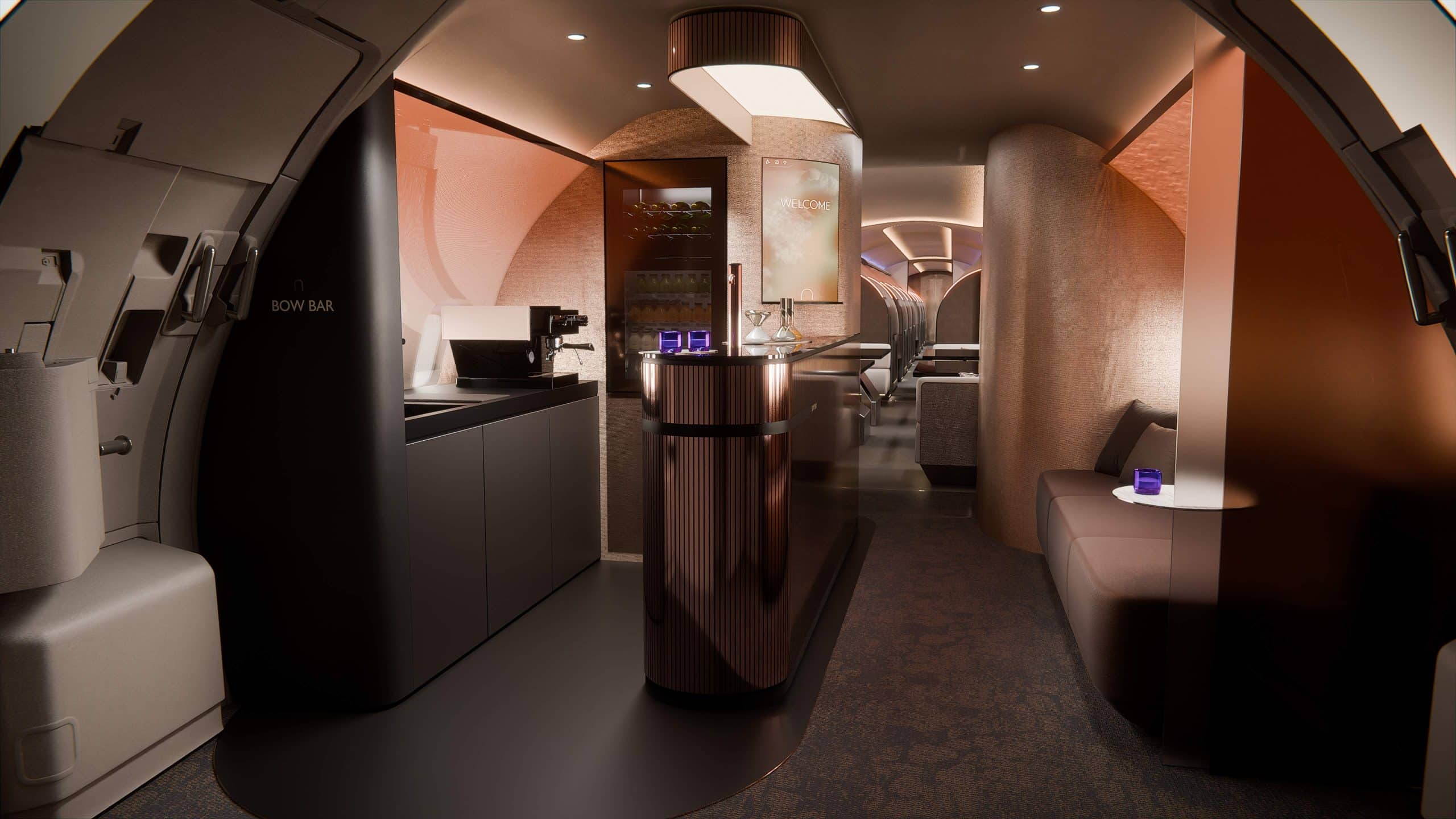
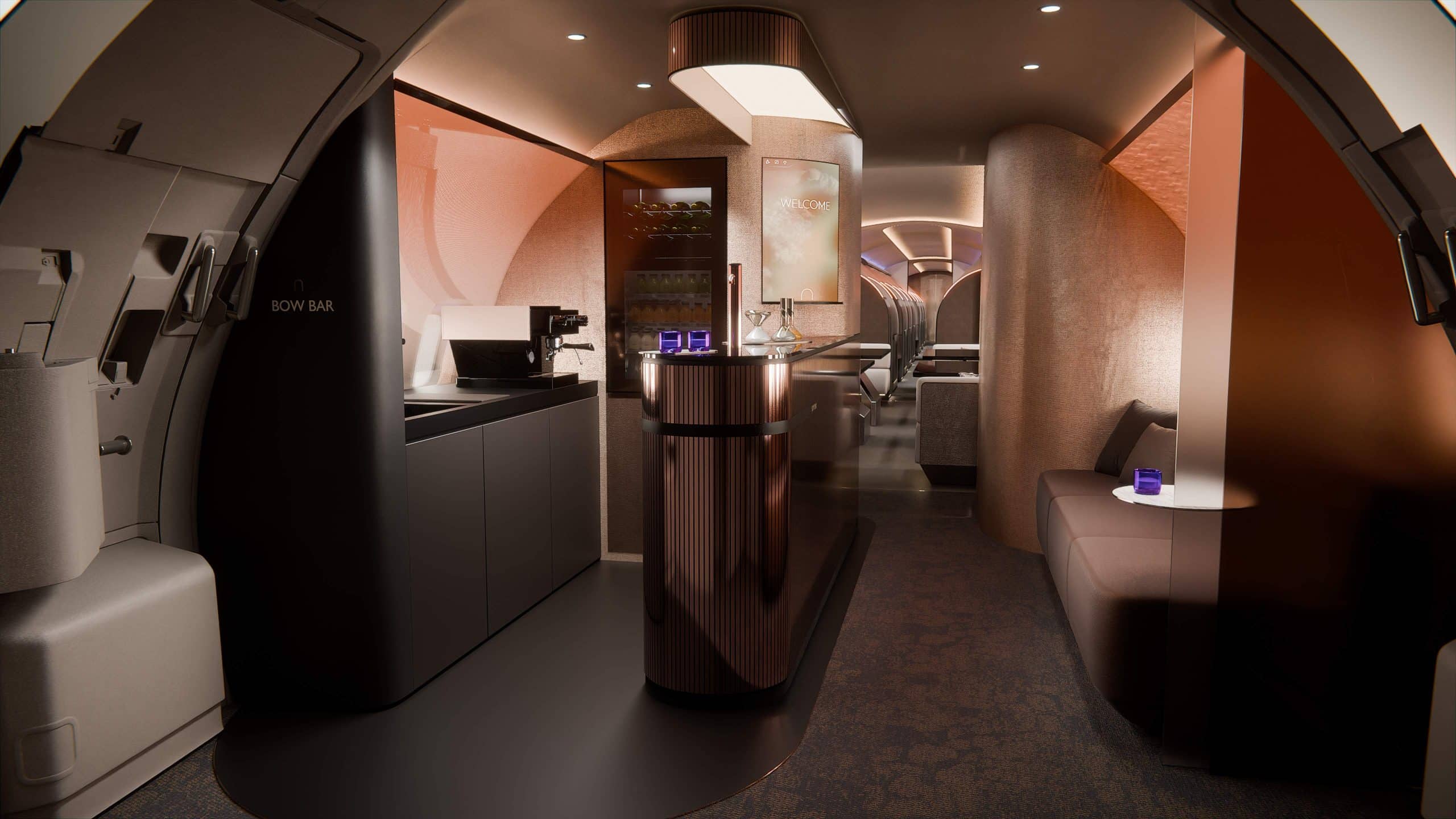
Lufthansa Technik and Designworks unveil Narrowbody VIP Cabin Concept “The BOW”

At this year’s Aircraft Interior’s Expo (AIX), Lufthansa Technik is presenting an entirely new approach to VIP aviation: “The BOW” — a modular narrowbody cabin concept created in exclusive collaboration with Designworks, a BMW Group Company. The concept redefines the idea of shared deluxe travel for executive groups, sports teams, or artists.

Inspired by the growing demand for flexible, design‑driven private travel solutions, the new cabin architecture brings together two leading brands recognized for engineering excellence, premium craftsmanship, and visionary design. As part of the BMW Group, Designworks brings deep roots in automotive design, combined with extensive experience in the luxury and tech segment, while Lufthansa Technik integrates leading‑edge technologies and its proven VIP cabin engineering competence. 

Together, the two companies have created a design platform that showcases the future of VIP travel for groups: The new cabin design functions as a laboratory for modular ideas – a platform that enables early and individualized customer involvement. Layout, suite configurations, color environments and functional zones can be reconfigured — enabling operators to tailor the aircraft precisely to their mission profile. Fewer suites for more open social areas? A larger bar? Greater privacy for high‑level board meetings? All of that is possible. 

Designed for shared exclusivity

The design target group is not a single VIP passenger, but a group of high-profile users: a corporate board of directors, a professional sports team or a touring band. Each private suite accommodates one or two travelers and can be used for private meetings or shared dining. Every suite includes dedicated personal storage – ideal for items such as a musical instrument, professional equipment, or personal items – while optional movable partitions allow the cabin atmosphere to shift from a cocoon like privacy mode to open social interaction.

All suites can be closed individually, and selected compartments feature automated sections that can be raised or lowered to adjust privacy levels. This flexibility allows operators to configure up to 28 passengers on board without compromising exclusivity or comfort.

A sequence of distinctive spaces

The cabin design is structured into several signature zones:

Reception & lobby

A welcoming entrance area sets the tone with curved architectural forms, premium materials, integrated tech solutions, and a hospitality driven bar environment. Transforming elements such as a gradient screen or a foldable, interactive service table, together with other design-focused touchpoints, convey a sense of luxury and craftsmanship.

Transformative lounge

The central lounge features two multifunctional curved touch screen displays and a large presentation table that can be transformed into four segments with individual tables. This area transitions seamlessly from a collaborative working space to fine dining, reflecting the needs of business teams, or coaching staff. The table incorporates Lufthansa Technik’s Hidden Touch technology, whose core innovation lies in the remarkable fusion of a high‑quality look and feel with seamless, intuitive functionality. It allows passengers to operate a wide range of cabin functions through a sleek touch panel that completely disappears into any interior surface when not in use. 

Private suites

The “BOW Suite” design theme — characterized by arcs, soft shapes, progressive forms, and premium materials — evokes a high level of wellbeing while integrating Lufthansa Technik technologies discreetly into the furniture. Acoustic shields, mood lighting, scent options, and subtle storage solutions create a balanced environment of luxury and functionality.

Integrated cabin technologies for a seamlessly orchestrated experience

The new cabin design also incorporates Lufthansa Technik’s »nice« system (»network integrated cabin equipment«) , seamlessly integrating cutting‑edge technology throughout the cabin: The Red Dot Design Award–winning Hidden Touch displays, inductive charging modules, curved OLED screens, next‑generation remote‑control solutions and special lighting effects, are harmonized into the interior architecture to elevate service, functionality and aesthetics. The innovative and user-centric »nice intellitable«, for example, blends high-definition touchscreen functionality directly into the high-quality haptic surface of a folding tray table.

At the heart of the sound system, Lufthansa Technik’s Red Dot Design Award–winning Omni‑Fi speakers deliver a fully immersive sound experience. Their ultra‑slim form factor — enabled by exclusive Ring‑mode Converter/Transducer technology — ensures optimal omnidirectional sound dispersion while blending discreetly into any high‑end surface.

The network‑integrated cabin management platform »nice« enables effortless control of even the most sophisticated onboard systems. Passengers can intuitively manage lighting, climate, seating, and a wide range of multimedia functions through a modular, flexible interface that integrates naturally into the cabin’s exquisite design language. 

“With ‘The BOW’, we are elevating group centric VIP travel to a completely new level,” says Fabian Nagel, vice president sales VIP & special aircraft services at Lufthansa Technik. “This concept offers customers unprecedented flexibility and allows operators to tailor every mission with an experience that is both highly functional and luxurious. ‘The BOW’ also creates a unique opportunity to experience the full suite of our products directly interfacing with the VIPs in one coherent environment. By integrating these technologies seamlessly into the cabin concept, we give operators a tangible impression of what our full portfolio of unparallel technology and innovation can deliver — from enhanced comfort and functionality to a consistent, high‑quality design language that elevates the entire onboard experience.”