Veryon Wins Innovation Award for Advancing Aviation Maintenance and Reliability with AI-Powered Data Intelligence Platform 

Veryon, a provider of aviation software and information services, recently announced that Veryon AIRE, the AI-driven data intelligence platform underpinning its software suite, has been named a winner in the 2026 BIG Innovation Awards.

Veryon AIRE brings aircraft maintenance and reliability data into context within the software maintenance teams already rely on: Veryon Tracking, Veryon Defect Analysis, and Veryon Publications. By surfacing data insights directly within daily workflows, teams gain clearer direction and ultimately get more efficient at every stage of maintenance.

“Launched in the fall of 2025, Veryon AIRE harnesses maintenance events logged in our platform for over a decade,” said Bethany Little, chief executive officer at Veryon.”With the power of AI, Veryon AIRE enables data visualization, easy-to-use AI-assist tools, and training algorithms to make our customers more effective than ever before.”

Veryon AIRE has been trained on the industry’s largest de-identified maintenance dataset, spanning more than 80 million events, 1.3 million parts, and 2 million chronic defects, giving operators unprecedented insight into fleet behavior and risk patterns.

“Veryon AIRE turns data into action,” Little added. “As it learns from fleet behavior over time, it keeps getting smarter, ultimately helping teams get ahead of issues rather than constantly reacting to unscheduled maintenance events and unexpected AOGs.”

Alongside the launch of Veryon AIRE, Veryon also released Defect Analysis for Business Aviation, which harnesses Veryon AIRE’s intelligence to help operatorsvisualize data and reduce repeat fixes or catch chronic defects before they become disruptive or hugely expensive. 

“The 2026 BIG Innovation Awards winners show that true innovation is no longer about chasing the latest buzzwords,” said Russ Fordyce, Chief Recognition Officer at the Business Intelligence Group. “It’s about building intelligent platforms, automating workflows with purpose, and making trust, privacy, and resilience the foundation of every breakthrough. These organizations and leaders are not just keeping pace with change; they are shaping the future of global business.”

Veryon joins 159 organizations recognized in the 2026 BIG Innovation Awards across healthcare, financial services, logistics, manufacturing, and enterprise technology. This year’s winners reflect a broader shift in innovation, where impact is defined not by the presence of AI, but by how effectively it’s applied to real operational challenges.

For more information about the BIG Innovation Awards and to view the full list of winners, click here.

NTSB: Boeing Knew of Earlier MD-11 Engine Mount Failures

The National Transportation Safety Board said Wednesday, January 15, that Boeing documented four prior failures in 2011 involving a component that secures MD-11 engines to the wings. The failures occurred on three aircraft originally built by McDonnell Douglas, which Boeing later acquired. At the time, Boeing concluded the issue did not pose a “safety of flight” risk.

Investigators have since found cracks in several of the engine-mount parts involved in the recent crash — damage that routine maintenance failed to detect. The components were last inspected closely in October 2021, and the aircraft was not scheduled for another detailed check for roughly 7,000 additional takeoffs and landings.

It remains unclear when the cracks began to form, but the incident echoes a 1979 disaster in Chicago, when an American Airlines DC-10—predecessor to the MD-11—lost an engine during takeoff, killing 273 people. That crash prompted a worldwide grounding of 274 DC-10s until investigators determined that improper maintenance, not a design flaw, caused the engine to detach.

In the current case, Boeing issued a service bulletin addressing the MD-11 issue, but unlike an FAA airworthiness directive, it did not require operators to make repairs. The FAA also did not issue its own directive.

EAS Barcelona Celebrates 10th Anniversary with Major Fleet Expansion, Invests €4 Million in Tecnam P2006T NG and P-Mentor


Tecnam iannounced that EAS Barcelona, a European Approved Training Organization (ATO), has committed to a significant fleet expansion and modernization program valued at more than €4 million.

Coinciding with the school’s 10th anniversary, this investment reinforces the long-standing partnership between Tecnam and EAS Barcelona, positioning the ATO as the operator of the largest Tecnam training fleet in Spain, now exceeding 30 aircraft.

Despite already operating one of the youngest fleets in Europe, with an average aircraft age of under four years, EAS Barcelona is taking a decisive step toward the future. The agreement includes:

  • Acquisition of six (6) P2006T NG, increasing the school’s multi-engine capacity.
  • Addition of two (2) Tecnam P-Mentor aircraft, which will join the single-engine training platform following an order placed in late 2025.

The new aircraft will progressively enter service beginning mid-2026. This strategy ensures EAS Barcelona offers the highest concentration of new-generation Tecnam aircraft among European ATOs, specifically designed to replicate the avionics and systems management of modern commercial airliners.

The fleet renewal underscores a shared commitment to environmental responsibility. Powered by the latest-generation Rotax 912iSc3 engines, the new P2006T NG and P-Mentor models deliver approximately 20% lower fuel consumption per flight hour compared to previous generations. This efficiency aligns EAS Barcelona’s growth with European aviation sustainability objectives, integrating responsible practices from the earliest stages of pilot training.

“We are incredibly proud that EAS Barcelona has chosen Tecnam once again to mark such a significant milestone as their 10th anniversary,” said Walter Da Costa, Tecnam chief sales officer. “This substantial investment in the P2006T NG and P-Mentor confirms that our fleet solution is the preferred choice for top-tier ATOs. It is an honor to support EAS Barcelona in delivering airline-oriented, sustainable, and technologically advanced training to the next generation of pilots.”

Jorge Garcia, EAS Barcelona head of training, added: “Tecnam aircraft allow us to deliver airline-oriented training using platforms that reflect modern avionics, systems management, and operational efficiency. This fleet expansion strengthens our long-term commitment to training quality, sustainability, and operational realism.”

About the Aircraft

P-Mentor: The ultimate two-seats IFR trainer, offering a state-of-the-art glass cockpit and flight physics that prepare students for the demands of commercial aviation. https://tecnam.com/aircraft/p-mentor/

P2006T NG: The world’s smartest twin-engine trainer, now updated for the modern age, offering superior multi-engine flight exposure for Integrated ATPL students. https://tecnam.com/aircraft/p2006t-ng/

From Concept to Certified Reality: Inside Aviation Interior Design and Production

Aircraft modifications may look simple from the outside, but every interior upgrade or structural change follows a tightly controlled, highly regulated process. Engineering, compliance, and production work closely together to turn designs into certified, airworthy solutions.

Donaldas Barkauskas, Head of Design & Production, and Pavel Olenskij, Head of Airworthiness, oversee how their Design Organisation Approval (DOA) and Production Organisation Approval (POA) teams manage these processes.

How design and production work together

In aviation, interior design and production are not separate field. At FL Technics, they operate as a single, certified end product.

“The Design Office develops the engineering solution – whether it’s a small interior modification or a more complex aircraft refurbishment – and prepares the full technical documentation package,” explains Pavel Olenskij. “Once this phase is complete, production manufactures the part itself. The customer receives not only the physical component but also a single installation document that clearly explains how that part must be installed on the aircraft.”

This integrated DOA–POA cooperation simplifies the process for operators, leasing companies, and ACMI providers. Instead of coordinating multiple suppliers, customers receive a complete, compliant solution – from concept to installation – delivered under one roof.

Evaluating customer requests

Aircraft operators naturally want solutions tailored to their operational and commercial needs. However, not every idea can be safely or legally implemented.

“A customer comes with their needs, and that’s completely natural,” says Donaldas Barkauskas. “Airlines usually work with a small number of trusted design organizations. Their engineers come to us to discuss their ideas and check whether those ideas can realistically be materialized on the aircraft.”

Meeting safety and regulatory requirements

Compliance with safety and regulatory requirements is non-negotiable in aviation. But many operators go further.

“Regulations differ between regions, such as Europe and the United States,” Pavel notes. “Some aircraft owners and operators prepare in advance for potential transitions between jurisdictions. That forward planning saves both time and money later.”

Above regulatory alignment, there is another group of customers focused on high-value, creative solutions. “These operators invest in solutions that improve the working environment for crews and create a better experience for passengers,” Pavel continues. “Compliance keeps you safe. Smart choices create value. The real advantage comes from combining both.”

Choosing the right DOA or POA partner

Choosing a DOA or POA partner isn’t about finding a “one-size-fits-all” organization. Only a limited number of design and production organizations can handle a broad range of aircraft modifications, which is why FL Technics combines its certified capabilities with a trusted partner network to deliver end-to-end solutions.

“Operators don’t want requests rejected – they want a partner who can take care of all requested work scope,” says Donaldas Barkauskas. “We work with trusted partners for different scopes and processes, so when a customer comes to us, they know we can manage the entire project quickly and reliably. For airlines, leasing companies, or ACMI providers, having one partner who can solve all the headaches is essential.”

Understanding client expectations and being upfront about what’s possible saves time, reduces costs, and accelerates delivery – all without compromising safety or compliance. The real advantage lies in choosing a partner who doesn’t just say “yes,” but one who says, “we know how to get it done.”

Will AI reshape aircraft design and production?

Aviation design and production have always balanced two worlds: the technical and the managerial. AI already shows strong potential on the managerial side – from process optimization and workflow management to customer support and improving the passenger experience. When it comes to technical decisions, however, progress will inevitably be slower. Aviation remains a conservative, heavily regulated industry, and every new technology must pass rigorous oversight before it can be applied to an aircraft.

That said, major industry players are steadily moving toward AI adoption. While these early steps may seem modest, they point to a future where design, production, and aircraft engineering become more efficient, more data-driven, and increasingly optimized – without compromising safety or compliance.

From design to certification

Aircraft design and production demand forward-looking engineering, regulatory awareness, and disciplined execution. Success in this field depends on more than technical capability alone. It requires open communication with customers, honest evaluation of feasibility, deep regulatory expertise, and seamless cooperation between design and production teams. By combining all these elements, FL Technics ensures every approved idea – from a minor interior update to a major modification – reaches the aircraft as a safe, certified, and fully documented solution.

Heston MRO Expands to New Zealand with New International Line Station in Auckland

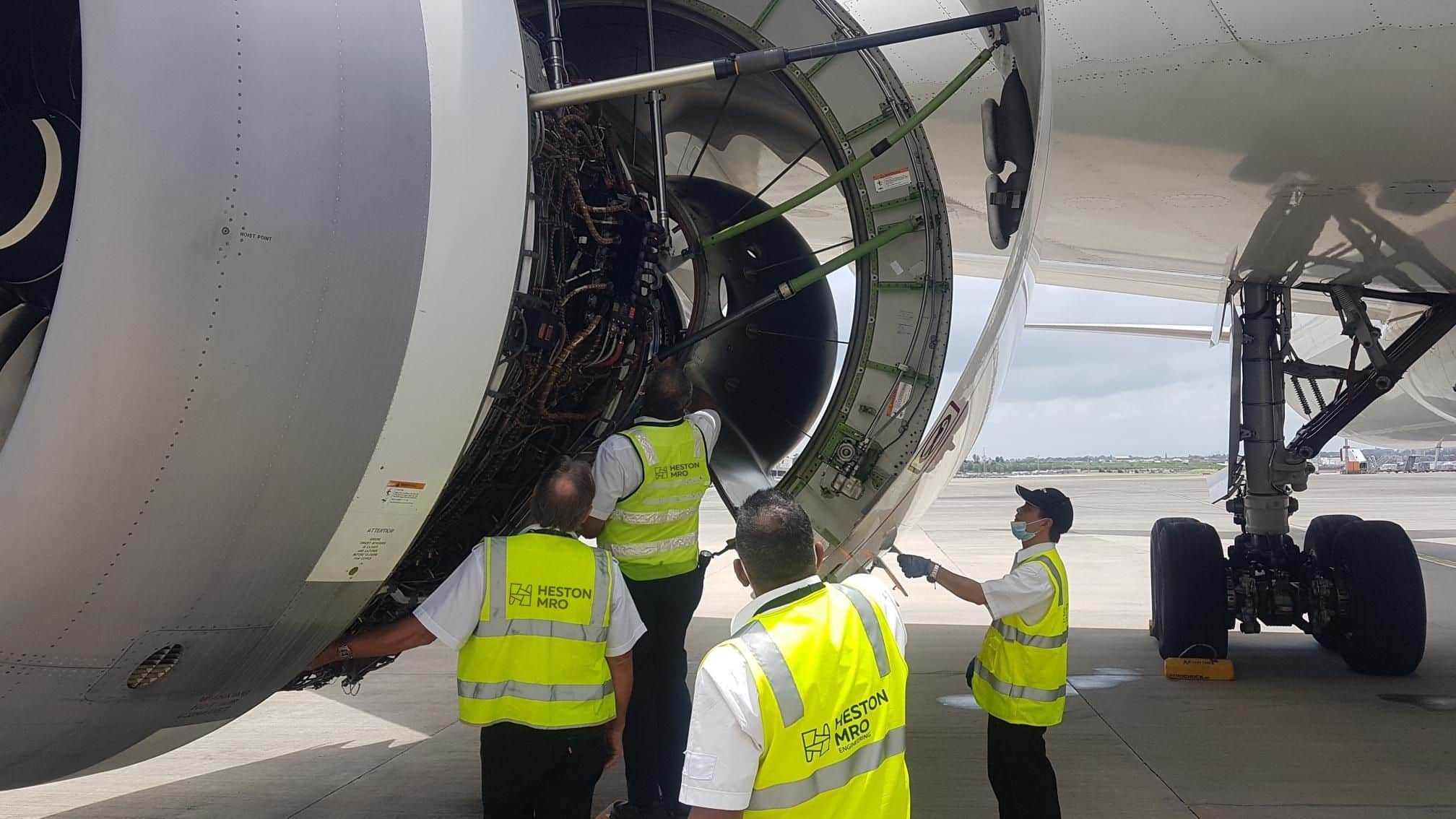
Heston MRO, the largest independent MRO organization in the Australasian region, is proud to announce the opening of its newest international line station at Auckland Airport (AKL), New Zealand.

The new station is established and operated in a strategic partnership with Fieldair, a New Zealand MRO provider. This expansion marks Heston MRO’s first permanent footprint in New Zealand, directly responding to the needs of its international customer base that operates flights into both Australia and New Zealand. By expanding its geographical offering, Heston MRO is strengthening existing customer relationships with a broader regional reach and expanded capabilities.

The Auckland station provides a comprehensive range of capabilities for both wide body and narrow body aircraft, ensuring seamless support for long-haul and regional carriers. The partnership combines Heston MRO’s extensive Australasian presence with Fieldair’s local expertise to offer:

Part 145 Engineering: Full line maintenance support and aircraft certification for international fleets;

Part 147 Technical Training: Localized technical training solutions to support the regional aviation workforce;

Joint NDT Services: Advanced Level 2 Non-Destructive Testing capabilities provided through the collaborative resources of both Heston MRO and Fieldair, covering Australia and New Zealand.

“The opening of the Auckland station is a natural evolution of our customer relationships,” said Asta Zirlyte, CEO of Heston MRO. “Many of our existing airline partners who rely on us across major Australian airports also fly into New Zealand. By expanding our geographical offering to Auckland, we can now provide them with the same high-quality, ‘Total Technical Care’ solutions across their entire Pan-Tasman network.”

“We are excited to partner with Heston MRO to bring this international line station to Auckland,” said Brett Richmond, CEO of Fieldair. “Fieldair has a long history of keeping New Zealand’s aircraft flying, and this collaboration allows us to combine our deep local knowledge with Heston MRO’s global customer reach. Together, we are providing a unique,full-service capability that will benefit international carriers and strengthen the local aviation sector.”

LAUNCH Announces Acquisition of JMC Aviation; Jeff Martin to Lead Combined Organization as CEO

LAUNCH Technical Workforce Solutions, a leading provider of technical workforce solutions and services to the aviation industry, today announced the acquisition of JMC Aviation, a global engineering solutions and aviation recruitment specialist headquartered in Exeter, United Kingdom. JMC Aviation provides a wide range of technical solutions across the UK, European Union and Canada, among other geographies.

The acquisition brings together two highly complementary organizations and creates the largest specialized provider of technical aviation solutions, globally. By combining LAUNCH’s U.S. market leadership with JMC’s established international presence, the acquisition establishes a global leader of workforce solutions and technical services to manufacturing and MRO/aftermarket customers within the commercial aerospace, business & general aviation, defense and rotary end markets. In combination, LAUNCH will now be able to offer a broader range of capabilities, including an expanded suite of modifications and a mobile repair team, furthering its commitment to creating a global technical services offering. The transaction also expands LAUNCH’s pool of technical talent, deepening its ability to deliver comprehensive workforce solutions on a global scale.

LAUNCH is a portfolio company of Capitol Meridian Partners, a private equity firm with deep expertise in the aviation sector. Equity financing in support of the transaction was provided by Capitol Meridian Fund I, L.P. and its affiliates, with participation from members of both management teams. Debt financing for the transaction was provided by LAUNCH’s existing lenders, MidCap Financial and Marathon Asset Management. Terms of the transaction were not disclosed.

In connection with this transaction, LAUNCH’s Executive Chairman, Jeff Martin, will add the title of CEO of both organizations. Jeff brings more than 33 years of aviation experience, along with extensive senior executive and board leadership. His depth of expertise uniquely positions him to guide LAUNCH through the Company’s next chapter of innovation, growth, and expansion while continuing to shape its strategic vision.

“This acquisition represents a significant milestone in LAUNCH’s evolution,” said Jeff Martin, executive chairman and CEO. “JMC Aviation is a respected global organization with a strong reputation for technical excellence and customer partnership. Together, we are building a platform that allows us to support our customers wherever they operate, while staying true to our shared commitment to quality, safety, and long-term relationships.”

Hollie Prendergast, managing director of JMC Aviation, added, “Partnering with LAUNCH is a natural next step for JMC. From the very beginning, it was clear that our companies share the same values and customer-first mindset. This acquisition strengthens our ability to support clients globally,while preserving the culture, leadership, and service standards our customers rely on every day.”

LAUNCH Announces Acquisition of JMC Aviation; Jeff Martin to Lead Combined Organization as CEO

Oak Brook, IL and Exeter, UK — January 14, 2026 — LAUNCH Technical Workforce Solutions, a leading provider of technical workforce solutions and services to the aviation industry, today announced the acquisition of JMC Aviation, a global engineering solutions and aviation recruitment specialist headquartered in Exeter, United Kingdom. JMC Aviation provides a wide range of technical solutions across the UK, European Union and Canada, among other geographies.

The acquisition brings together two highly complementary organizations and creates the largest specialized provider of technical aviation solutions, globally. By combining LAUNCH’s U.S. market leadership with JMC’s established international presence, the acquisition establishes a global leader of workforce solutions and technical services to manufacturing and MRO/aftermarket customers within the commercial aerospace, business & general aviation, defense and rotary end markets. In combination, LAUNCH will now be able to offer a broader range of capabilities, including an expanded suite of modifications and a mobile repair team, furthering its commitment to creating a global technical services offering. The transaction also expands LAUNCH’s pool of technical talent, deepening its ability to deliver comprehensive workforce solutions on a global scale.

LAUNCH is a portfolio company of Capitol Meridian Partners, a private equity firm with deep expertise in the aviation sector. Equity financing in support of the transaction was provided by Capitol Meridian Fund I, L.P. and its affiliates, with participation from members of both management teams. Debt financing for the transaction was provided by LAUNCH’s existing lenders, MidCap Financial and Marathon Asset Management. Terms of the transaction were not disclosed.

In connection with this transaction, LAUNCH’s Executive Chairman, Jeff Martin, will add the title of CEO of both organizations. Jeff brings more than 33 years of aviation experience, along with extensive senior executive and board leadership. His depth of expertise uniquely positions him to guide LAUNCH through the Company’s next chapter of innovation, growth, and expansion while continuing to shape its strategic vision.

“This acquisition represents a significant milestone in LAUNCH’s evolution,” said Jeff Martin, Executive Chairman and CEO. “JMC Aviation is a respected global organization with a strong reputation for technical excellence and customer partnership. Together, we are building a platform that allows us to support our customers wherever they operate, while staying true to our shared commitment to quality, safety, and long-term relationships.”

Hollie Prendergast, Managing Director of JMC Aviation, added, “Partnering with LAUNCH is a natural next step for JMC. From the very beginning, it was clear that our companies share the same values and customer-first mindset. This acquisition strengthens our ability to support clients globally, while preserving the culture, leadership, and service standards our customers rely on every day.”

AJW Group Secures Long-Term Component Support Contract for Air Astana and FlyArystan Airbus Fleet

AJW Group, an independent global provider of aircraft component parts, repair, and supply chain solutions to the commercial, business, and defence aviation sectors, is pleased to announce the award of a new long-term Power-by-the-Hour (PBH) component support contract with Air Astana and FlyArystan, covering its expanding Airbus A320-family fleet.

The agreement, which went live on 1 January, supports an initial fleet of 56 Airbus aircraft, comprising a mixed and growing fleet of:

  • A320 and A321 ceo aircraft
  • A320 and A321 neo, NX and NXLR aircraft powered by GTF engines

The contract reflects the continued evolution of Air Astana narrowbody fleet and supports its significant growth plans, including a substantial future expansion of neo aircraft over the coming years.

AJW Group has a long-standing relationship with Air Astana having supported the airline since 2006, initially on its Boeing 757 fleet, which has since retired. AJW also supported Air Astana’s Airbus A320 ceo fleet from 2011 until March 2019 and currently provides PBH support for their Boeing 767 fleet under a contract that has recently been extended by a further two years.

This new agreement marks AJW’s return to supporting Air Astana’s Airbus narrowbody operation, coinciding with the airline’s major NEO fleet expansion.

The contract will be underpinned by AJW Technique, AJW’s in-house MRO component repair capability located in Montreal, as well as its new EU-based warehouse in Amsterdam, enhancing material availability and turnaround times to support Air Astana’s European operations.

“We are delighted to once again be supporting Air Astana’s Airbus A320-family fleet,” said Christopher Whiteside, Chairman at AJW Group. “Our relationship with Air Astana spans two decades, and this agreement reflects the trust built through that partnership. With Air Astana’s growing and increasingly sophisticated fleet, we look forward to delivering reliable, cost-effective, PBH support throughout the next phase of their expansion.”

Peter Foster, chief executive officer at Air Astana, added: “AJW has a proven track record of supporting our fleets, and we are pleased to extend that partnership to our expanding Airbus narrowbody operation. As we continue to grow our A320 and A321 fleet, including next-generation aircraft, this agreement provides us with the operational confidence and component support we need.”

TrueNoord Completes Sale of Two Embraer E190s to Airlink

Specialist regional aircraft lessor, TrueNoord, has announced the sale of two Embraer E190 aircraft to existing lessee customer, Airlink. The aircraft were delivered to Airlink, who operate the African Continent’s largest fleet of Embraer aircraft, in December 2025.

Amid ongoing global supply chain issues, Airlink intends to salvage parts from the E190 airframes and retain the engines as spares, but are also evaluating options for future operation of the aircraft. 

Maarten Grift, TrueNoord sales director, comments: “This transaction underscores TrueNoord’s commitment to supporting operators with flexible solutions that address today’s operational challenges. We were pleased to work with Airlink’s experienced and knowledgeable team and help strengthen their fleet resilience despite dynamic market conditions.”

Airlink CEO, de Villiers Engelbrecht, adds: “Securing these aircraft is a strategic move to safeguard the reliability of our Embraer fleet. By acquiring additional engines and components, we can mitigate the impact of global supply chain disruptions and maintain the high standards of service our customers expect. We value our partnership with TrueNoord and appreciate their flexibility in completing this transaction.”

Richard Jacobs, TrueNoord CCO, concludes: “Further strengthening our existing relationship with this leading African operator, our joint collaborative efforts ensured the sale was finalised in a timely, streamlined and efficient manner. It was a pleasure working with Airlink’s entire team, and we look forward to partnering again on future opportunities. Additional thanks also goes to the aircraft’s previous lessee, Breeze, for their support throughout the process.”

Sustainable Jet Fuel Startup OXCCU Wins Eco Award

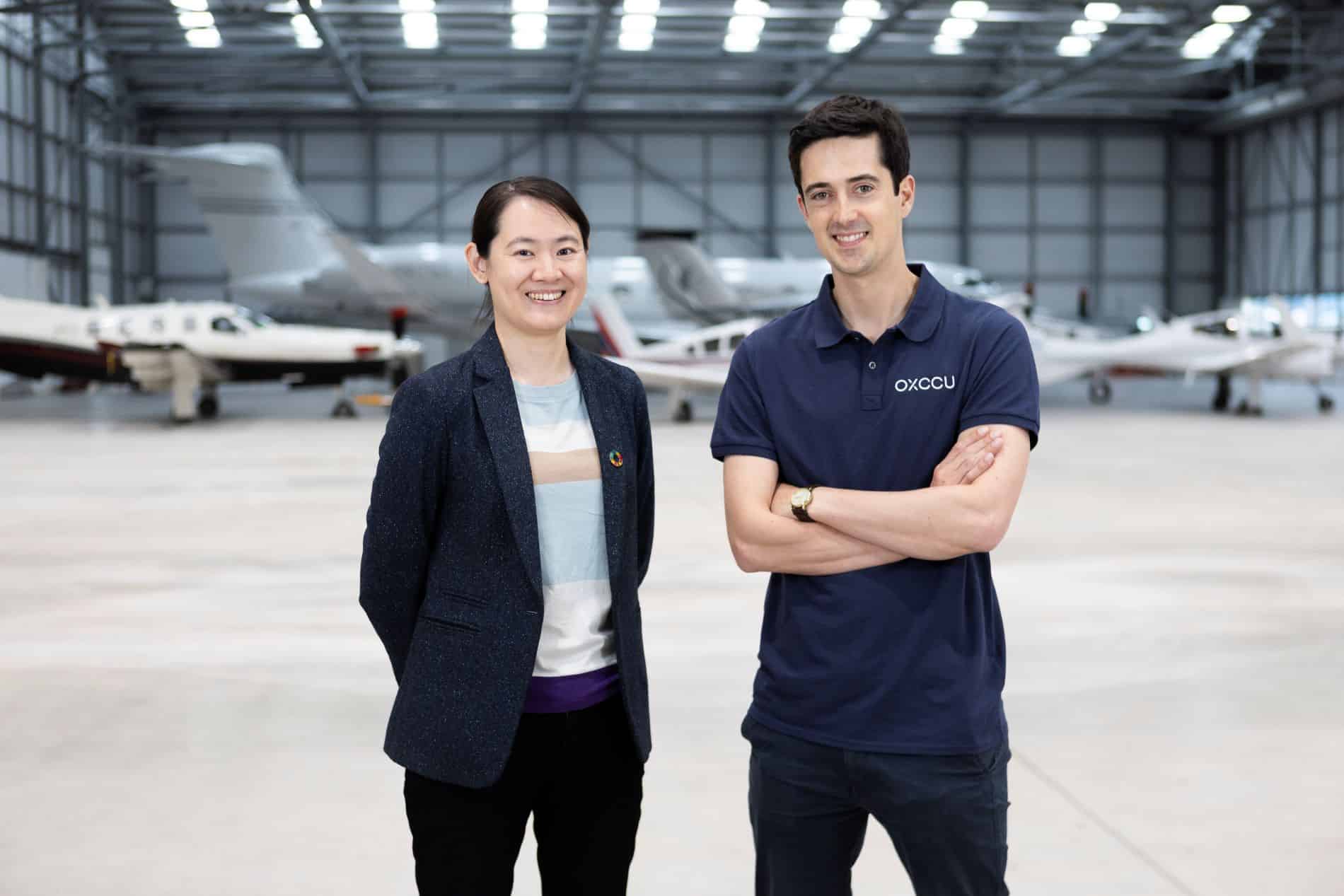
Oxford-based startup OXCCU, which has developed an innovative new process to create Sustainable Aviation Fuel (SAF) has been crowned the winner of the 2026 Startups 100 Sustainability Award. The award honors businesses that demonstrate innovative and impactful sustainability practices.

OXCCU is decarbonizing the aviation industry, a sector known for its harsh environmental impact, by using world-leading technology.

The revolutionary startup has also ranked 4th in the 2026 Startups 100 Index powered by Sage, the UK’s longest-running index of promising new businesses.

What is OXCCU?

  • Founders:  Andrew Symes, Dr. Jane Jin, Dr. Tiancun Xiao, Dr. Benzhen Yao, and Professor Peter Edwards
  • Year founded: 2021
  • Read OXCCU’s Startups 100 Index profile here

How OXCCU stands out in the sustainability space:

The UK startup is tackling the need to find alternative means of maintaining our standard of living without relying on fossil fuels, by using cutting-edge technology to make waste carbon usable.

OXCCU’s OX1 demonstration facility at London Oxford Airport has already logged 1,000 hours producing liquid fuel, with high conversion rates and excellent selectivity for SAF.

Following this success, the business secured £20.75m in Series B funding at the end of last year, to further scale its sustainable fuels and technologies.

Why is OXCCU’s technology revolutionary?

The team has developed a breakthrough single-step process that combines captured CO₂ with green hydrogen to create jet-fuel-range hydrocarbons. 

Its patented iron catalyst converts CO₂ and CO directly into liquid hydrocarbons in a single reaction, avoiding intermediate steps and minimising byproducts. This translates into lower capital costs, lower operating costs, and more competitive prices for SAF. 

What are OXCCU’s future goals?

OXCCU aims to produce 10,000 tonnes of SAF per year before 2030 (for context, a Boeing 787 transatlantic flight uses around 50 tonnes) while exploring applications beyond aviation in chemicals and plastics. 

This could lower the environmental impact of fuel-guzzling industries.

From lab breakthroughs to commercial demonstrations, OXCCU is proving that waste carbon doesn’t have to be a problem; it can also be the solution.

OXCCU’s co-founder and CEO, Andrew Symes, says: “Being recognized in the Startups 100 Index reflects the momentum we’ve built this year. Securing our 21M Series B funding, starting the build of our second demonstration plant OX2, and growing the team has given us strong foundations to move forward.With strong investors alongside us, the focus now is on proving the technology at a larger scale and building the foundations for a pathway that can make a meaningful difference to future aviation fuel production.”

Editor of Startups.co.uk, Zohra Huda added: “We are incredibly proud to name OXCCU as this year’s Sustainability Award winner. Their mission to create a low-cost, low-emission route to Sustainable Aviation Fuel (SAF) addresses one of the most urgent challenges in the global climate agenda. Aviation and petrochemicals are notoriously difficult to decarbonize, yet OXCCU offers a genuinely scalable alternative to fossil fuels, proving that breakthrough science and commercial ambition can go hand-in-hand.”