AkzoNobel is investing €50 million to upgrade its Waukegan, Illinois, facility in the US – the company’s
biggest aerospace coatings production site.
As well as increasing capacity, installing new machinery and introducing more automated processes, the two-phase project will also include creating a new warehouse space just across the state border in Wisconsin.
“This investment will increase our comprehensive North American supply capability and solidify our position as a frontrunner in the aerospace coatings industry,” says Patrick Bourguignon, Director of AkzoNobel’s Automotive and Specialty Coatings business. “Demand for air travel is expected to grow significantly over the next few years and we want to make sure our customers are able to meet that demand with aircraft of the highest quality.”
The Waukegan site covers 11 acres and employs around 200 people. It produces a wide range of aerospace coatings, including primers, basecoats and clearcoats, and pre-treatment coatings. It also has its own color center.
Ongoing improvements will include setting up a liquid pre-batch area, installing high-speed dissolvers and creating a rapid service unit to help provide faster turnaround for delivering coatings to the maintenance, repair and operations market.
Moving the warehousing to Pleasant Prairie in Wisconsin will also free up space in Waukegan, enabling the company to produce more customized coatings and respond faster to customer needs.
“Our customers demand – and deserve – top-of-the-line coatings,” adds Martijn Arkesteijn, Global Operations Director, AkzoNobel Aerospace Coatings. “We’ll be able to provide current and future customers with even more flexibility through the delivery of large batch sizes, better responsiveness to market needs and shorter lead time for color development.”
The investment is part of AkzoNobel’s Industrial Excellence program, which is designed to improve operations and reduce complexity. By focusing on anchor sites that offer greater scale and improved efficiencies, the company aims to lower operating costs and optimize its industrial network to enhance competitiveness and drive sustainable growth.
Magma Aviation takes pride in completing the rollout of its new digital transformation strategy with the debut of its fully-customized Cargo Management System (CMS), designed specifically to meet the unique operational needs of the air cargo industry. As a customer-focused organisation, this development demonstrates Magma Aviation’s dedication to creating modern and efficient internal processes that align with its long-term goal of providing its customers with a seamless experience.
Optimising daily operations throughout the organisation
As part of its digitalisation vision, Magma Aviation recognised the need to centralise operational data and eliminate the fragmentation that often affects freighter airlines. To date, many organisations still rely on multiple spreadsheets and fragmented systems, resulting in duplicated work, data inconsistencies, and internal misalignment.
To address this issue, Magma Aviation prioritised the creation of a single, connected environment allowing every department, from Commercial, Financial to Operations, to work from the same information source. This ensures that teams are more internally aligned and are capable of operating with more clarity, accuracy, and real-time visibility.
“As a customer-centric organisation, a CMS customised to our business model helps us to seamlessly coordinate internally as a team, and that it reflects the service quality we offer to our customers,” Paul Hoatson, Magma Aviation’s Head of Network Planning & Alliances reiterated.
Why a customised CMS matters in Air Cargo?
Air cargo operations in general require a specific level of speed, accuracy and data consistency. Despite this, some segments of the industry still rely on manual spreadsheets that restrict them from achieving their organization’s full operational efficiency
Off-the-shelf CMS often fail to meet the depth required for complex cargo environments. When Magma Aviation explored available CMS solutions in the market, it was evident that no existing software solution could meet the needs of their operational model or the level of integration the organisation required.
Following the successful implementation of the CMS across its organisation, its value has also been recognised by a key industry partner. In partnership with Forward Momentum, Magma has now been able to license the system for third-party use, extending the benefits of the platform to organisations that control their own freighter capacity without holding an AOC.
“As a technology partner, we are proud to be instrumental in helping freighter companies reach their full operational potential through a system solution designed for their business and able to grow with them as they scale in the future,” said Barry Zigner, CEO of Forward Momentum.
The CMS will continue to drive Magma Aviation’s growth ambitions while also supporting partners who can benefit from Magma’s digitalisation efforts. As the solution continues to undergo system developments, partners can expect future enhancements, including AI and machine learning capabilities, to further strengthen operational efficiency and decision-making.
Setting a new standard for digital operations in Air Cargo
Magma Aviation’s customised CMS is a long-term investment in the company’s support system, especially in an era where automation and collaboration are more prevalent than ever.
As customer experience continues to be its top priority, Magma Aviation remains fully committed to staying ahead of the competition by building tools and solutions that match its operational standards and its ambition for future growth.
Air cargo companies looking to explore a customised CMS solution to improve their operational efficiency and internal alignment can contact Jacek.Lechocki@magma.aero for further information.
ITP Aero, leader in aerospace propulsion, has signed a binding agreement to acquire Aero Norway, a leading MRO provider specializing in the overhaul and repair of CFM56 engines. This agreement marks a significant step in ITP Aero’s global growth strategy and reinforces its commitment to expanding its aftermarket service capabilities.
Based in Stavanger (Norway), Aero Norway has built a strong reputation for high-quality CFM56 engine maintenance services. It serves a growing customer base that includes airlines, lessors, and asset managers worldwide. The company operates out of a state-of-the-art facility at Sola Airport and employs over 200 highly skilled workforce.
This acquisition aligns with ITP Aero’s strategic focus on strengthening its position in the global aerospace aftermarket, particularly in key large commercial platforms. The two companies bring highly complementary strengths: Aero Norway’s deep overhaul expertise in CFM56, combined with ITP Aero’s MRO offerings, robust engineering base and advanced component repair capabilities, creates powerful synergies that enhance the value and competitiveness of their combined aftermarket services.
This strategic milestone is the latest step in ITP Aero’s MRO growth strategy, strengthened following Bain Capital’s acquisition of ITP Aero in 2022. It follows the acquisition of BP Aero in the U.S. in 2023 and ITP Aero’s recent selection to join Pratt & Whitney’s GTF MRO network, expanding its global footprint and capabilities across major engine platforms.
“The signing of this binding acquisition agreement marks a significant milestone in our strategic roadmap,” Eva Azoulay, CEO of ITP Aero Group, commented. “This acquisition reinforces our ambition to become a leading independent player in the aerospace aftermarket. Aero Norway’s expertise and capabilities will be instrumental in delivering exceptional value to our customers as we move forward together.”
Neil Russell, CEO of Aero Norway, commented: “Today’s announcement marks the beginning of an exciting new chapter in our journey. By combining the complementary strengths of ITP Aero and Aero Norway, we will unlock significant synergies that enhance our competitiveness and deliver even greater value to our customers. We are pleased to join the ITP Aero Group and look forward to working together to drive innovation, technical excellence, and long-term growth in the global aerospace aftermarket.”
ITP Aero is on an ambitious growth journey. Since 2022, ITP Aero has tripled its earnings and is implementing its 2030 long-term strategy and Business Plan. ITP Aero expects to double the size of its business by 2030 and increase the global workforce by 50% through growth in all its business segments, civil, defence and MRO.
The acquisition of Aero Norway is expected to close during the first half of 2026, after obtaining the customary approvals. ITP Aero was advised on legal M&A matters by Baker McKenzie.
December 16, 2025, Newport, UK | AerFin, the aviation asset specialist that buys, sells, leases and repairs aircraft, engines and parts, has acquired a third B777-300ER previously operated by Japan Airlines.
This latest purchase builds on AerFin’s established capability in supporting the global B777 market. The company holds extensive B777 inventory across its warehouses in the UK, the Americas and the Asia Pacific region, supported by its ongoing teardown programmes. Alongside this, AerFin maintains significant A320neo inventory sourced through dedicated disassembly projects, giving customers dependable access to high-quality serviceable material across two of the industry’s most in-demand platforms.
Auvinash Narayen, Chief Investment Officer at AerFin, said:
“Purchasing another 777-300ER to our portfolio reflects our continued confidence in the asset and the operators who rely on it. Our global footprint and material stock provide the resilience our customers need to plan ahead with certainty.
“As the demand for dependable component supply remains strong, AerFin is focused on giving operators clear, cost-effective support they can trust.”
AerFin continues to expand its presence across key regions, providing tailored solutions that help airlines, lessors and MROs maintain operational stability and extend the service life of their fleets.
If you’d like to discuss available material or request a customised package, our team is ready to help. Get in touch and we’ll find the right solution for your fleet.
Iberia Maintenance is reinforcing its commitment to developing world-class aviation talent with the expansion of its Training Center. This specialized hub is designed to prepare the next generation of engine maintenance technicians. Backed by nearly 100 years of experience in the MRO industry, the company is uniquely positioned to offer one of Europe’s most advanced and practice-focused training ecosystems.
A Training Center Built Inside a Leading Engine MRO Facility
Iberia Maintenance operates one of Southern Europe’s largest Engine Shops, servicing more than 100 international third-party customers and handling over 200 engines per year. This real operational environment forms the core of its training model, enabling students to gain direct hands-on experience with engine families such as CFM56, V2500, and PW1100.
“Our Training Center offers something truly unique: students learn directly where engines are overhauled, inspected, and tested every day,” said Fernando Comenge, Business Strategy, Transformation and Supply Chain director of Iberia Maintenance. “This ensures they acquire not only technical knowledge, but also real operational readiness.”
Apprentices School: A Strategic Bridge Between Education and Employment
A cornerstone of Iberia Maintenance’s talent acquisition strategy is its Apprentices School, a programme specifically designed to connect vocational education with real aircraft engine experience. Apprentices complete on-the-job training under the mentorship of experienced engine maintenance technicians, accelerating their transition into full-time roles.
This pathway has become a vital source of new talent, particularly in the context of global demand for certified aviation maintenance professionals.
Launching the Engine Maintenance Specialization Programme
In 2025, Iberia Maintenance launched an ambitious Engine Maintenance Specialization Programme, aligned with the needs of next-generation engine technologies and officially recognised by the Community of Madrid with the Vocational Education and Training (VET) system.
Key milestones include:
Completion of workshop upgrades, including crane bridge installation (August 2025) and CFM56 training engine readiness
Start of the first trainee group with programme delivered as internal training from 6 October 2025 to 22 February 2026, offering candidates the opportunity to be hired through this specialization track
Official approval of the programme as Vocational Education Training on October 2025 to be for delivery under CIFP Profesor Raúl Vázquez training school in the 2025–26 academic year.
This programme strengthens Spain’s position in specialised aviation education while helping develop one of the industry’s most in-demand technical profile.
A Nearly 100-Year Legacy: Iberia Maintenance’s Competitive Advantage
Since 1927, Iberia Maintenance has been a benchmark in aviation maintenance, combining deep technical expertise with a strong culture of learning. This heritage gives the Training Center a clear competitive edge:
Proven experience in high-volume engine MRO
A real engine shop as a hands-on learning environment
Clear career pathways from training to employment
Specialisation aligned with market demand
Continuous adaptation to new engine technologies
“Our legacy is our greatest differentiator,” added Fernando Comenge. “We are not only teaching aviation maintenance—we are shaping the future of this profession.”
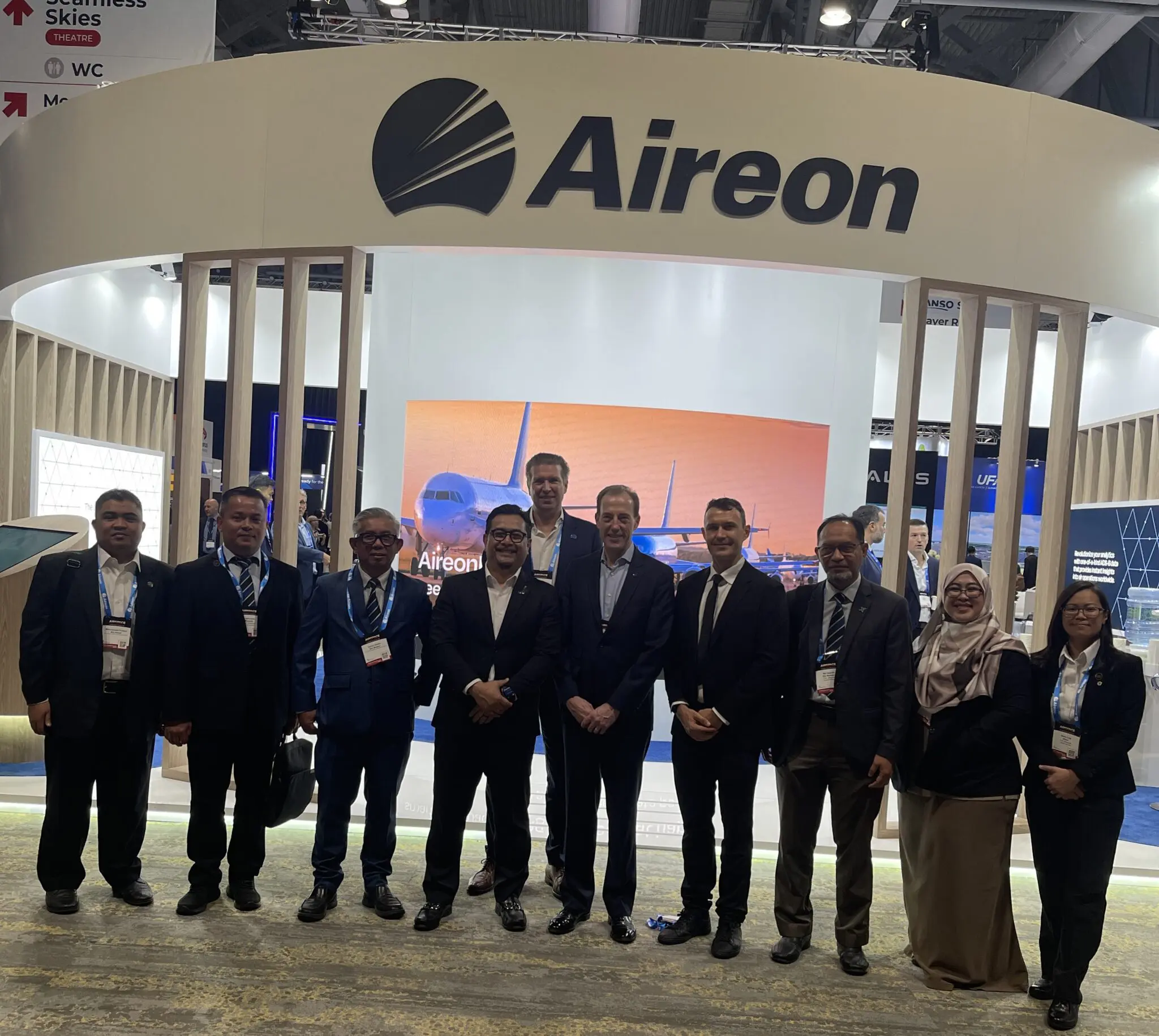
The Civil Aviation Authority of Malaysia (CAAM) and Aireon have announced a strategic collaboration to deploy Aireon’s space-based Automatic Dependent Surveillance–Broadcast (ADS-B) data for air traffic surveillance across the oceanic sector of the Kuala Lumpur Flight Information Region (FIR). This initiative marks a major milestone in strengthening Malaysia’s air traffic management capabilities and enhancing operational safety and efficiency across one of the world’s busiest international air corridors.
Aireon, in partnership with its local partner ClearWisdom, signed the agreement at this week’s Airspace Asia Pacific event in Hong Kong. The agreement includes Aireon’s EASA-certified space-based ADS-B data covering the oceanic service volume of the Kuala Lumpur FIR West Region. This includes a substantial portion of the Bay of Bengal and Andaman Sea, a critical corridor for flights connecting Asia and the Middle East.
Malaysia plays a pivotal role in the safe management of this region, surrounded by Jakarta FIR (Indonesia) to the south, Chennai FIR (India) to the west, and Singapore FIR to the east. Several regional air navigation service providers (ANSPs) including the Airports Authority of India and the Civil Aviation Authority of the Philippines have already adopted Aireon’s data services, contributing to greater interoperability and regional cooperation.
“Thank you to CAAM for entrusting Aireon to bring space-based ADS-B data to Malaysia,” said Peter Cabooter, Aireon executive vice president of customer affairs. “Air traffic in the region is poised to grow strongly in the coming years, and Malaysia is responding strongly by investing in safety for the airspace.”
“The implementation of Aireon’s space-based ADS-B service represents a key milestone in strengthening Malaysia’s air traffic surveillance capabilities, particularly over the Bay of Bengal and Andaman Sea. This enhancement will support safer, more efficient airspace operations and aligns with CAAM’s continuous efforts to modernize Malaysia’s air traffic management system and advance regional collaboration,” said Dato’ Captain Norazman Bin Mahmud, CEO of CAAM.
The integration of space-based ADS-B forms part of CAAM’s long-term plan to modernise surveillance infrastructure and improve situational awareness in remote and oceanic airspace where ground-based radar is limited. This collaboration will support Malaysia’s commitments under ICAO’s Global Air Navigation Plan (GANP), enabling enhanced safety, reduced separation standards, more efficient routing, and improved environmental outcomes.
11 December 2025 | Newport, UK AerFin, the aviation asset specialist that buys, sells, leases and repairs aircraft, engines and parts, has acquired a package CFM56-5B Performance Improvement Package (PIP) engines from a major European customer
The PIP engines, featuring the latest hardware configuration, represent an exciting pipeline of material for AerFin’s customers and further strengthen the company’s technical expertise in supporting new-generation configurations.
With the teardown now well underway at AerFin’s expanded engine shop in South Wales, high-quality used serviceable material (USM) from these engines is becoming available to operators, lessors and MROs worldwide. Customers are encouraged to contact AerFin’s sales team to discuss availability.
Simon Bayliss, Chief Operating Officer at AerFin, said: “Bringing these PIP engines through teardown at our Indurent Park facility in Newport, shows how far our in-house capability has come. We’ve handled PIP material before, but the combination of this advanced configuration and our increased capacity means we can control the flow of inventory more closely and respond to customer needs with greater precision. It allows our team to apply their expertise where it has the greatest impact, ensuring airlines receive high-quality, serviceable material exactly when they need it.”
Simon Goodson, Chief Executive Officer at AerFin, added: “This acquisition highlights both the trust we have built with leading airlines and the confidence we have in our team’s ability to deliver. By bringing these newer-technology engines into our pipeline, we’re not only enhancing our capability but also reinforcing AerFin’s position as a global leader in the aviation aftermarket.”
With some of the teardowns complete and others now well underway, a broad selection of USM from these engines is already available to purchase. This sits alongside our growing stock from the A320neo teardown programme and a substantial inventory of B777-300ER components. Material is positioned across our global warehousing network in Newport, Gatwick, Miami and Singapore, giving customers fast, reliable access to the parts they need to keep their fleets moving.
An engineer at British Airways (BA) is in critical condition after falling around 20 feet from a jet during a routine maintenance inspection inside a hangar at Heathrow Airport. The incident occurred just after 2 a.m. on Sunday while the worker was inspecting the auxiliary power unit on the tail section of a stationary aircraft.
Emergency services, including paramedics and a trauma team from London Ambulance Service and London’s Air Ambulance, rushed to the scene, arriving within minutes. The engineer was treated at the hangar, then transferred to a major trauma center for urgent care.
BA has confirmed it is conducting an internal safety review and is offering full support to the engineer’s family and colleagues. At the same time, the Health and Safety Executive (HSE) has opened a formal investigation to examine procedures, equipment and fall-prevention protocols.
Colleagues reportedly described the engineer as highly experienced and well-respected. The accident — described by insiders as exceptionally rare — has reportedly “sent shockwaves through the BA community.”
As a crucial part of the global aviation industry, specialized aerospace logistics providers must combine strict compliance with regulatory requirements and a flexible, proactive approach to every delivery. Two seasoned professionals from the logistics team of global MRO provider FL Technics, Raimondo Gramaglia, Head of Sales and Business Development, and Mažvydas Matažinskas, Head of Logistics and Storage, explain how strong partnerships and an adaptable mindset underpin success in this complex and fast-paced sector.
A critically important role in aviation
The aerospace logistics services sector is in robust health. According to the Aerospace Logistics Services Global Market Report 2025, by the Business Research Company, the sector is valued at USD 14.7 billion worldwide and is expected to grow to USD 19.9 billion by 2029.
This growth is hardly surprising, as aerospace logistics fulfils a fundamental need within the aviation supply chain: ensuring that the right aircraft parts reach the right place at the right time. To achieve this, logistics providers in aviation must operate at a level far beyond that required in many other sectors.
“Compliance in our sector is very strict, and we must comply with international regulations. Furthermore, aviation is a highly complex industry, so freight forwarders need to understand it inside out, including the need to adhere to strict operational procedures. Of course, other areas of logistics also involve compliance, but overall, they tend to be more relaxed,” explains Raimondo Gramaglia, Head of Sales and Business Development at FL Technics.
“From an operational standpoint, aerospace logistics differs greatly from standard logistics, because it demands far more precision and operates under much greater urgency”, adds Mažvydas Matažinskas, Head of Logistics and Storage at FL Technics.
Time-critical deliveries for AOGs
That sense of urgency becomes especially acute during an AOG (Aircraft on Ground) situation. Aerospace logistics providers must proactively think through potential solutions to help airlines avoid AOGs and minimize their impact, says Mažvydas.
“Planning ahead is critical, so that when a problem occurs you are ready. You need to have a range of information prepared in advance: how to collect a part, which flights are closest, and what options are available in terms of onboard couriers, charters, or road transport. Only then can you respond instantly to an AOG situation”, he explains.
“We deal with AOGs frequently, which means we have deep experience with the process and can react accordingly”, continues Mažvydas.
“What’s more, FL Technics has an extensive global network. Last year we were operating in 90 countries. This gives us an advantage in AOG situations, as we know the suppliers, engine shops, and pick-up points in different countries, and we have customs agents and freight forwarders in each one.”
Beyond the technical aspects of handling an AOG, having the right mindset is just as important.
“AOGs are a form of crisis management, and any delay can cost hundreds of thousands. We handle situations like this on a daily basis, and it is our job to manage the pressure, connect the dots, and find the fastest way to resolve the crisis and mitigate its consequences”, adds Raimondo.
Different needs for different clients
Not every case is as urgent as an AOG, with timelines varying depending on the type of client and the nature of the parts being delivered. Aerospace logistics providers support a wide range of customers. By far the largest group is airlines, followed by lessors, MROs, parts traders, and other freight forwarders.
Airlines themselves have diverse requirements. Some operate their own parts hubs, giving them ready access to stock, enabling them to work efficiently within their networks and avoid AOGs. ACMI operators have their own specific needs: their aircraft may be in Europe one week and Asia the next, making it essential to work with agile freight forwarders that have a truly global network.
MROs also have distinct logistical requirements and operating models. For example, in line maintenance, it is crucial to have strategically positioned trucks and to coordinate weekly deliveries to ensure that stock levels of key materials remain consistent.
Getting logistics right for a USD 5 million engine
It is not only client requirements that vary, but the cargo as well. As Mažvydas explains, all aircraft parts are important, regardless of their size or value.
“We transport aircraft parts ranging in value from USD 30 to USD 5 million, and the average weight is around 10 kg. Because we are connected to an MRO, we handle these parts every day and know them well. That means we know how they must be transported, and what needs to be done in terms of regulatory compliance, such as dangerous goods regulations (DGR)”, he says.
Naturally, moving high-value assets requires specific expertise. Every precaution is taken to ensure that the asset is protected during transportation and loading. However, as Raimondo notes, human error and external factors, such as road accidents, are always a possibility.
“Airlines must be properly informed about their insurance coverage. There are international conventions, like the Montreal Convention, that set out compensation for damages. However, these conventions are insufficient when it comes to covering the full value of the asset”, he explains.
To illustrate the scale of the issue, as of 1 March 2025 the International Monetary Fund (IMF) values one Special Drawing Right (SDR) at approximately USD 1.3132. Under the Montreal Convention, compensation for the destruction, loss, damage, or delay of cargo is capped at 26 SDR per kilogram.
Now imagine a USD 5 million engine weighing 5,000 kg being damaged in transit. Under these rules, the owner would receive just USD 170,716 in compensation, only a small fraction of the engine’s true value
“For this reason, we always recommend that our customers take out additional cargo insurance for transportation and loading. Some airlines do have their own supplementary cargo cover, but many do not, and this is an area that is not well understood”, concludes Raimondo.
Handling predictable and unpredictable challenges
Aerospace logistics is international by nature, which brings certain challenges that are largely foreseeable and can be managed proactively.
Different regions have varying customs regulations, and processes specific to air freight, such as access to airside areas within airports, also differ from country to country. For example, in Turkey, airside access approval typically takes two days, whereas in other countries clearance is granted more quickly. This requires logistics providers to be both flexible and highly organized, proactively preparing all necessary documents and factoring different clearance times into the delivery schedule.
Beyond these predictable challenges, geopolitical events can also demand adaptability from aerospace logistics providers.
“No matter the challenge, we strive to find solutions to make the delivery, even in situations involving no-fly zones or active conflicts. We keep every option on the table, including road and sea freight. The workload is significant, as we must still follow the manufacturer’s cargo handling instructions while coordinating all parts of the journey, but we remain adaptable”, explains Raimondo.
Strong partnerships
The final piece of the puzzle for successful global aerospace logistics is having a well-established network of reliable partners.
“Finding the right partners is far from easy”, explains Mažvydas. “It takes considerable effort to identify freight forwarders and agents who are certified, knowledgeable, and able to respond quickly in an AOG situation.”
As Raimondo highlights, being part of a consolidated global aviation group is a major advantage.
“Selecting the right partners requires a great deal of oversight. Being part of a large global group provides consistency and access to an extensive network. We are a global group ourselves and a member of Avia Solutions Group, which benefits both us and our customers.”
Prepared for any logistics scenario
As a key player in the global aviation industry, aerospace logistics providers require the network, expertise, and flexibility to meet a wide range of needs, all within a strict compliance framework.
“One delivery might be an engine stand that is not urgently required, in which case it can be shipped by sea over 45 days. The next delivery could be an aircraft part for an AOG that must reach its destination within hours. We understand all of these needs and have the capability to make the right decision quickly for each customer”, concludes Mažvydas.
“It is our responsibility as logistics service providers to know each part, understand how it should be handled, and follow strict operational procedures”, adds Raimondo. “By doing so, we work to ensure a smooth delivery process for our clients, enabling them to keep their fleets flying.”
Avionica, a leader in aircraft data management, connectivity and secure digital transformation, announced a strategic partnership with AIT (Avionics Interface Technologies), a supplier of secure, loadable software distribution and avionics test systems. Together, the companies plan to deliver the industry’s first fully integrated Secure Airborne Data Loader (ADL) ecosystem, purpose-built to advance modern Aircraft Network Security Program (ANSP) requirements for today’s connected fleets.
Under the agreement, AIT’s Secure ARINC 615 & 615A data loading capabilities—along with its ARINC 645-1/2 and 835 compliant technologies—will be natively hosted on Avionica’s aviONS airborne platform. This integration transforms the aviONS into a powerful, secure, in-flight ADL solution capable of supporting commercial operators as they modernize their software loading, cybersecurity and digital maintenance workflows.
In addition, Avionica’s avSYNC, the company’s cloud-based digital distribution service, will enable airlines to remotely deploy loadable software parts (LSAPs) directly to the aircraft. To further streamline enterprise-level data distribution, the companies will also integrate AIT’s Fleet Data Command Center (FDCC-SaaS), creating a closed-loop, end-to-end solution that supports both Portable Data Loaders (PDLs) and airborne systems.
A Game-Changing Step Forward for Secure, Connected Aircraft
“This partnership represents a significant advancement in secure, connected operations for today’s commercial fleets,” said Edward Gorman, vice president of engineering at Avionica. “By integrating AIT’s secure data loader technologies into our aviONS platform and leveraging our avSYNC cloud architecture, we are giving operators a seamless, modern, and cybersecurity-focused pathway to manage loadable software across the entire aircraft lifecycle. Together, Avionica and AIT are raising the bar for efficiency, security, and digital enablement across the industry.”
Industry-Leading Capabilities, Unified in One Ecosystem
With this partnership, Avionica and AIT now offer an unmatched suite of secure data loader tools, including:
Shop Loaders
Portable Data Loaders (PDLs)
Secure Airborne Data Loaders (ADLs) integrated with Avionica aviONS
Cloud-Based LSAP Distribution via avSYNC and FDCC-SaaS
End-to-end cybersecurity and ANSP support
This unprecedented combination gives aircraft operators a scalable, secure, and COTS-ready pathway to digital aircraft modernization.
“We are excited to expand our secure data loader portfolio by partnering with Avionica to deliver a fully integrated airborne solution,” said Troy Troshynski, general managerof AIT. “Our customers will now be able to deploy loadable software parts more efficiently and more securely—leveraging our industry-leading cloud-based LSAP distribution system across all data loader form factors.”
We use cookies on our website to give you the most relevant experience by remembering your preferences and repeat visits. By clicking “Accept”, you consent to the use of ALL the cookies.
This website uses cookies to improve your experience while you navigate through the website. Out of these, the cookies that are categorized as necessary are stored on your browser as they are essential for the working of basic functionalities of the website. We also use third-party cookies that help us analyze and understand how you use this website. These cookies will be stored in your browser only with your consent. You also have the option to opt-out of these cookies. But opting out of some of these cookies may affect your browsing experience.
Necessary cookies are absolutely essential for the website to function properly. This category only includes cookies that ensures basic functionalities and security features of the website. These cookies do not store any personal information.
Functional cookies help to perform certain functionalities like sharing the content of the website on social media platforms, collect feedbacks, and other third-party features.
Performance cookies are used to understand and analyze the key performance indexes of the website which helps in delivering a better user experience for the visitors.
Analytical cookies are used to understand how visitors interact with the website. These cookies help provide information on metrics the number of visitors, bounce rate, traffic source, etc.
Advertisement cookies are used to provide visitors with relevant ads and marketing campaigns. These cookies track visitors across websites and collect information to provide customized ads.