Embraer Signs Maintenance Deal with CommuteAir for New Dallas-Fort Worth MRO Location

Embraer has announced a new maintenance contract with CommuteAir for its new facilities dedicated to Commercial Aviation at the Perot Field Alliance Airport in Fort Worth, Texas. The deal was inked with CommuteAir and will provide maintenance, repair and overhaul for the Embraer aircraft operating in CommuteAir’s fleet.

“CommuteAir is pleased to strengthen its partnership with Embraer by commencing heavy airframe maintenance at its new facility in Fort Worth,” said Lon Ziegler, CommuteAir’s vice president of technical operations. “By working with our aircraft OEM, we will support our goals of ensuring the highest reliability for our ERJ145 fleet.”  

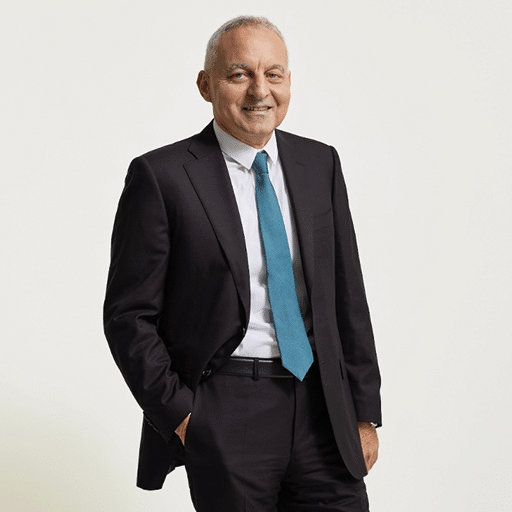
“This contract with CommuteAir is an important milestone for Embraer. We will provide best-in-class support for CommuteAir and reduce downtime. We have a long-term relationship with CommuteAir, and today we are starting a new chapter with this new facility. We are excited to welcome CommuteAir here at the Perot Field Alliance Airport,” says Frank Stevens, vice president MRO services, Embraer Services & Support.

In partnership with the City of Fort Worth and the State of Texas, Embraer began operations in an existing hangar on Tuesday, while building a second hangar that is expected to be completed in 2027. With the new facilities, Embraer’s capacity to serve our customers is expected to increase considerably in the United States, with an increase of 53% across the country.

Embraer Opens Dallas-Fort Worth MRO Facilities to Serve Commercial Jets Fleet

Embraer recently opened its new commercial MRO facilities at the Perot Field Alliance Airport in Fort Worth, Texas. In partnership with the City of Fort Worth and the State of Texas, Embraer will begin operations in an existing hangar, while building a second hangar that is scheduled for completion in 2027.

With the new facilities, Embraer’s capacity to serve its customers is expected to increase considerably in the United States, with an increase of 53% across the country. The investment will reach up to $70 million and is expected to create approximately 250 new aviation jobs in Texas.

“We are excited to join Embraer in celebrating the launch of their expanded operations at Perot Field Fort Worth Alliance Airport. Hillwood’s mission at AllianceTexas is to attract world-class companies while creating new jobs in our region — and Embraer is doing just that. Their phased expansion and investment in Fort Worth underscore the strength of our partnerships and Fort Worth’s standing as a center of aerospace excellence,” says Bill Burton, executive vice president for Hillwood.

“The opening of the new Embraer facility is just the latest example of how Fort Worth is the place to be to start, build, or expand a business,” said Robert Allen, president and CEO of the Fort Worth Economic Development Partnership. “Fort Worth has been declared the Aviation Capital of Texas by the Governor and this announcement proves it. This new facility at Alliance will allow Embraer to increase its aviation operations and bring hundreds of new jobs to our area. It’s wheels up for Embraer and for Fort Worth!”

“We are very excited to start operations at our new MRO facility in Fort Worth. The support from the City of Fort Worth, Denton County, and the State of Texas has been essential for launching this operation. We will continue working to expand Embraer’s capacity, capability, and footprint in the U.S.,” says Frank Stevens, vice president global MRO centers, Embraer Services & Support.

The new Fort Worth service center is the 13th Embraer Owned Service Center, out of more than 80 Authorized Service Centers worldwide.

Boeing’s Inadequate Training, Guidance and Oversight Led to Mid-Exit Door Plug Blowout on Passenger Jet

The National Transportation Safety Board Tuesday said the probable cause of last year’s in-flight mid-exit door (MED) plug blowout on a Boeing 737 MAX 9 was Boeing’s failure to “provide adequate training, guidance and oversight” to its factory workers.

The NTSB also found the Federal Aviation Administration was ineffective in ensuring Boeing addressed “repetitive and systemic” nonconformance issues associated with its parts removal process. 

The NTSB also concluded that in the two years before the accident, Boeing’s voluntary safety management system, or SMS, was inadequate, lacked formal FAA oversight, and did not proactively identify and mitigate risks. The investigation found that accurate and ongoing data about overall safety culture is necessary for an SMS to be successfully integrated into a quality management system.

On Jan. 5, 2024, the Boeing 737-9, operated as Alaska Airlines flight 1282, was climbing through 14,830 feet about six minutes after takeoff from Portland, Oregon, when the left MED plug departed the airplane. During the rapid depressurization, some passengers’ belongings were sucked out of the airplane, oxygen masks dropped from the overhead passenger service units, and the door to the flight deck swung open, injuring a flight attendant. In addition to the flight attendant, seven passengers received minor injuries. The two pilots, the other three flight attendants and the remaining 164 passengers were uninjured. The flight was destined for Ontario, California.

“The safety deficiencies that led to this accident should have been evident to Boeing and to the FAA — should have been preventable,” NTSB Chairwoman Jennifer Homendy said. “This time, it was missing bolts securing the MED plug. But the same safety deficiencies that led to this accident could just as easily have led to other manufacturing quality escapes and, perhaps, other accidents.”

The MED plug was found in a Portland neighborhood two days after the accident. When investigators examined the recovered plug, they found evidence that the four bolts needed to secure the plug were missing before the accident occurred. Without the bolts, NTSB investigators found the unsecured plug “had moved incrementally upward during previous flight cycles” until it departed the airplane during the accident flight.

The airplane had been delivered to Alaska Airlines three months earlier. Investigators determined that the door plug was opened without the required documentation in Boeing’s Renton, Washington, factory on Sept. 18, 2023, to perform rivet repair work on the fuselage. The door plug was closed the following day. While Boeing’s procedures called for specific technicians to open or close MED plugs, none of the specialized workers were working at the time the door plug was closed. The absence of proper documentation of the door plug work meant no quality assurance inspection of the plug closure occurred.

The investigation also highlighted the need for additional training on flight crew oxygen masks and their communication systems and the need for greater voluntary use of child restraint systems by caregivers of those under two years of age.

The NTSB issued new safety recommendations to the FAA and Boeing. Previously issued recommendations were reiterated to the FAA, Airlines for America, the National Air Carrier Association and Regional Airline Association.

The executive summary of the report, including the findings, probable cause and safety recommendations, is available online​. Additional material, including the preliminary report, previously issued safety recommendations, news releases, the public docket, investigative updates and links to photos and videos, is available on the accident investigation webpage.

The final report will be published in the coming weeks on NTSB.gov.  

Astronautics Selected to Provide Avionics System Solution for Radia Windrunner

Astronautics Selected to Provide Avionics System Solution for Radia Windrunner

Astronautics Corporation of America has signed an agreement with Radia for the design and development of a complete avionics system solution for their WindRunner cargo aircraft.

“The opportunity to work collaboratively with Radia on the avionics architecture for their one-of-a-kind WindRunner aircraft is an exciting project for all of us at Astronautics,” said Eytan Saletsky, Astronautics director of system solutions. “We look forward to applying our avionics products and system integration expertise to a platform that will reshape global aerospace logistics.”

The WindRunner is the largest aircraft ever built by volume and is designed for large-scale logistics in locations with limited infrastructure — serving energy, aerospace and defense, and emergency response missions.

Matt Lacki President, FDH Hardware

FDH Aero Unifies its Legacy Hardware Brands Under Single Division

FDH Aero, an independent supply chain solutions partner for the aerospace and defense industry, announced the formation of FDH Hardware, a unified division comprising its five legacy hardware brands within a cohesive, focused structure.

The newest of FDH Aero’s core divisions, FDH Hardware follows the formation of FDH Electronics and FDH Defense Aftermarket. This new FDH Hardware collective brings a deeper technical expertise and a more coordinated approach to supporting both OEM and aftermarket customers worldwide.

“The creation of FDH Hardware is an important step toward improving and simplifying the global supply chain,” said Matt Lacki, president of FDH Hardware. “I’m excited about the technical depth and operational strength this collective team brings, and we’re eager to apply the lessons learned from the formation of FDH Electronics and FDH Defense Aftermarket to deliver even greater flexibility, reliability and product breadth for our customers and supplier partners.”

The company says the move comes as OEMs continue to accelerate production across the globe while supply chains remain strained due to geopolitical challenges, creating significant bottlenecks in regions where aircraft parts are difficult to source. By unifying these companies under one coordinated division, FDH Hardware says it will simplify access to inventory, expertise and support while empowering regional teams to make decisions on the ground. This will offer customers access to a faster, more tailored service without the added complexity of managing multiple vendors.

“By consolidating backend systems and inventory, expanding our talent pool, and maintaining regional autonomy, we’ve created a model that combines the scale of a global distributor with the responsiveness of a local partner,” added Lacki. “We’ve seen how well this strategy works for FDH’s other core divisions and we already see how our hardware customers are benefiting from new efficiencies that we’re bringing to their operations.”

FDH Hardware now offers customers broader access to a complete line of aerospace fasteners, from specialized items to C-class parts, all rigorously tested and inspected to meet the highest industry standards. FDH Aero’s continued investment in its hardware division reinforces its commitment to setting a new standard for supply chain responsiveness, reliability, and customer-focused service across the aerospace and defense industry.

Safran and Saft to Co-Develop a High-Voltage Battery System for Aviation Electrification

Safran and Saft to Co-Develop a High-Voltage Battery System for Aviation Electrification

Safran Electrical & Power, a world leader in electric aircraft systems, and Saft, a subsidiary of TotalEnergies, which develops advanced batteries for a wide range of industrial sectors including aerospace, have signed an exclusive partnership to develop a high voltage battery system for aviation, paving the way for the next generation of aircraft.

The new high-voltage battery system is designed to meet the growing demand for aircraft electrification. It will revolutionize onboard energy by delivering unprecedented power levels, allowing more energy to be stored and supplied over longer durations. Thanks to the combined expertise of Safran and Saft, the system incorporates high-performance lithium-ion cells, cutting-edge technologies in thermal runaway containment, system management, and safety-related algorithms, ensuring the highest safety standards.

The battery’s performance is fully scalable: modules and cells are engineered for easy adaptation to various aircraft configurations. Its modular design, with length-adjustable modules, allows seamless integration, meeting diverse installation constraints across aircraft platforms. Leveraging the latest battery technologies — from today’s lithium manganese ferro phosphate (LMFP), to solid-state cells in the near future — this new system will guarantee optimized performance tailored to the stringent requirements of aviation.

“Our initial collaboration with Saft has shown the powerful synergy between our two companies, and we are thrilled to move forward,” said Bruno Bellanger, Safran Electrical & Power CEO. “We aim to bring to market a groundbreaking high-voltage battery system — a true game-changer for the industry. As the industry charts its path towards net-zero emissions by 2050, electrification will be a cornerstone of the transformation, and we are determined to lead the way.”

“We are delighted to combine our expertise with Safran to leverage our complementary skills and pool our resources,” said Cedric Duclos, Saft CEO. “Joining forces with Safran will enable us to accelerate the innovation in high voltage battery systems to meet safety, performance and emissions reduction.”

This collaboration is part of the strategic alliance between Safran and TotalEnergies signed in 2021 to jointly develop technical and commercial solutions for reducing the carbon footprint of aviation. Saft and Safran have been working together as part of an aviation battery research consortium with the support of the French Civil Aviation Authority (Direction Générale de l’Aviation Civile-DGAC).

FedEx Permanently Retiring 12 Aircraft

FedEx said on Tuesday, June 24 that it is permanently retiring 12 aircraft and also taking a $21 million impairment charge during the fourth quarter. These actions are part of their effort to streamline their network “in line with anticipated demand and modernize the fleet,” the company said.

The Memphis, Tennessee-based groundbreaking logistics company said the aircraft it removed are seven Airbus A300-600 aircraft, three large MD-11 tri-engine freighters and two Boeing 757-200 (large narrowbody) freighter aircraft from the fleet. It also let go of eight engines. During the fourth quarter of last year, FedEx decommissioned 22 Boeing 757 cargo jets.

Rolls-Royce Launches Durability Enhancement Package That Will Double Trent 1000 Time on Wing

Rolls-Royce Launches Durability Enhancement Package That Will Double Trent 1000 Time on Wing

Rolls-Royce launched the first of two Durability Enhancement Packages, that will more than double the duration Trent 1000 engines remain in service before needing scheduled maintenance. This marks an important milestone on Rolls-Royce’s transformation program into a high performing, competitive, resilient and growing business.

Increasing “Time on Wing” for the Trent 1000 will bring significantly improved asset utilization, reduced maintenance burden and provide far greater fleet planning certainty for customers, the company says. It says the durability enhancement complements the reliability that the Trent 1000 already has.

The enhancement package has been installed in new engines since January 2025, ready for delivery to customers at the earliest opportunity post-certification. They will now be distributed to maintenance facilities globally, to be retrofitted to engines that are already in service. Within two years all of the Trent 1000 fleet will have been upgraded.

The upgraded components have already been enhancing durability since 2022 on the Trent 7000 engine. It is performing better than expected, and in some cases more than tripling Time on Wing. This proven in-service performance gives Rolls-Royce full confidence in the same benefit reading across to Trent 1000 customers.

The new technologies — part of the Trent fleet £1bn durability enhancement program — will contribute to Rolls-Royce meeting its mid-term targets to increase average Time on Wing across all modern Trent engines, which incorporates the Trent 1000, Trent 7000, Trent XWB-84 and Trent XWB-97. The company announced earlier this year that this target would double from its initial ambition of a 40% average increase to 80% by 2027.

Tufan Erginbilgic
CEO, 
Rolls-Royce
Tufan Erginbilgic CEO, Rolls-Royce

“The Trent 1000 is an important engine for us and today marks a new chapter in its story,” said CEO, Tufan Erginbilgic. “When upgraded, we’re confident that our customers and their passengers will benefit from increased durability, thanks to the proven enhancements that have already surpassed our expectations on the Trent 7000. As part of our ongoing transformation, the investment we have made in new technologies will see the Trent 1000 deliver for Boeing, our customers and our investors. It’s a win-win for everyone involved.”

The first phase of durability enhancement includes a 40% increase in cooling to the new high pressure turbine blade. There are also updates to the combustion system, fuel spray nozzles and engine electronic controller software.

Rob Watson
President Rolls-Royce 
Civil Aerospace
Rob Watson President Rolls-Royce Civil Aerospace

“Today is an important day for Rolls-Royce, our customers and our partnership with Boeing,” said Rob Watson, president of Rolls-Royce Civil Aerospace. “We know that the same enhancements have already tripled Time on Wing in some cases for the Trent 7000, so we are confident it will deliver for Trent 1000 customers. To do so at pace, we began installing the enhancements into new engines prior to today’s certification to reduce the lead time as much as possible. They will now enter the fleet immediately.”

Phase two of the Durability Enhancement Package is currently being tested at Rolls-Royce’s facility in Derby, U.K., and will bring a further 30% improvement in Time on Wing across the Trent 1000 and Trent 7000 fleets. It features advanced coating on combustor tiles in non-benign environments; cooling and coating changes to high pressure nozzle guide vanes; weight reduction and coating improvements to high pressure turbine blades; and a redesigned combustor-to-turbine interface taken from the latest variant Trent XWB-84 EP. This further enhancement will start entering the Trent 1000 fleet from early 2026.

Fred Smith, Founder of FedEx, Dies at 80

Frederick Wallace Smith, the founder, executive chairman and long-time chairman and CEO of FedEx Corporation, passed away from natural causes on June 21, 2025, in Memphis, Tennessee. He was 80 years old. His death marks the end of an era for the global transportation and logistics industry; an industry which he founded and revolutionized through his innovative vision and relentless pursuit of excellence.

Born on August 11, 1944, in Marks, Mississippi and raised in Memphis, Tennessee, Mr. Smith was a born entrepreneur. In 1962, he entered Yale College to pursue a degree in economics. While at Yale, the young Smith worked as a charter pilot. It was at Yale where he conceived the idea for an integrated air-to-ground system that would ensure overnight delivery, a concept that would eventually become Federal Express.

After graduating from Yale in 1966, he served four years in the United States Marine Corps (USMC), which included two tours of duty in Vietnam where he served as a rifle platoon leader, a company commander, and aerial observer/tactical air controller in the OV-10A. He was decorated with the Silver Star, Bronze Star, and two Purple Hearts for his military service. He left the Marine Corps in 1970 as a Captain, and would often joke that he received his ‘business degree’ from the USMC.

Mr. Smith launched Federal Express in 1973 with a fleet of 14 Dassault Falcon jets and a vision to transform the shipping industry. Under his leadership as its President and CEO, FedEx grew from a small startup into a multinational corporation that redefined global commerce. Today, FedEx is the world’s largest express transportation company and is consistently recognized as one of the world’s most admired companies. The company employs more than 500,000 team members globally, connects more than 220 countries and territories, and moves nearly $2 trillion in goods annually and more than 17 million shipments per day.

Smith’s pioneering approach not only created an industry leader but also set new standards for customer focus with the renowned Purple Promise, a globally consistent People-Service-Profit culture, and a brand trusted by shippers and recipients around the world.

In 2022, after serving as one of the longest-tenured Presidents and CEOs of a Fortune 100 company, Mr. Smith stepped aside to become Founder and Executive Chairman of FedEx Corporation. As Executive Chairman, Mr. Smith focused on issues of global importance, including sustainability, innovation, and public policy. Until his death, Mr. Smith continued to help shape the vision and the strategy of the company he founded, as well as work on critical policy issues for the transportation industry.

In the words of FedEx President & CEO Raj Subramaniam, “Frederick W. Smith pioneered express delivery and connected the world, shaping global commerce as we know it. His legacy of innovation, leadership, and philanthropy will continue to inspire future generations. I will miss not only his visionary leadership, but his trusted friendship and counsel.”

Mr. Smith was a trustee for the Center for Strategic and International Studies, a Director of the American Battle Monuments Foundation, and a member of the Business Council. He served on the Business Roundtable for more than 30 years. He also served as chairman of the U.S.-China Business Council and co-chair of the French American Business Council. Smith served on the boards of several large public companies — Malone and Hyde (AutoZone), First Tennessee, Holiday Inn, EW Scripps, and General Mills — and charitable organizations including St. Jude Children’s Research Hospital and the Mayo Foundation. He was chairman of the Board of Governors for the International Air Transport Association and chaired the executive committee of the U.S. Air Transport Association.

Beyond his business achievements, Mr. Smith was a dedicated philanthropist and supporter of numerous charitable causes. He served as co-chairman of both the U.S. World War II Memorial project and the campaign for the National Museum of the Marine Corps. He was committed to education, veterans’ affairs, and environmental sustainability, ensuring that FedEx played a positive role in communities around the world.

Mr. Smith’s unwavering commitment to the city of Memphis was evident in his lifelong dedication to uplifting its people and future. Through philanthropic support of education, healthcare, sports, the arts, and community development, he helped shape Memphis for the better — always believing in the power of giving back to the place he proudly called home.

He was a devoted father and grandfather, known for his generosity, humility, and unwavering dedication to his family. He was preceded in death by his daughter Windland Smith Rice. He is survived by his wife, Diane Smith, and children: Stacey Rokas (Bill), Laurie Hooper (Steven), Richard Smith (Allison), Kathleen Forbush (Matt), Molly Heussenstamm (Bron), Arthur Smith (Allison), Rachel O’Neal (David), Sam Atkinson (Bubba), and Cannon Smith (Collins), as well as 31 grandchildren and two great grandchildren.

Safran and Bombardier Announce Their Technological Innovation Partnership in Defense

Safran and Bombardier Announce Their Technological Innovation Partnership in Defense

Safran and Bombardier Inc. signed a letter of intent to explore new opportunities for collaboration and foster the joint development of innovative, high-performance and reliable technologies for defense.

This initiative will enable the two companies to leverage their complementary technological expertise and create a conducive framework for innovation and the rapid industrial scaleup of new solutions.

Olivier 
Andriès
CEO, 
Safran
Olivier Andriès CEO, Safran

“Strengthening our long-standing partnership with Bombardier is a highly strategic move for both our groups,” said Olivier Andriès, CEO of Safran. “By combining our strengths, we’ll be well placed to accelerate innovation and deliver the advanced defense technologies of tomorrow.”

“This collaboration between Bombardier and Safran will foster the development of new solutions by leveraging our respective areas of expertise,” said Éric Martel, president and chief executive officer of Bombardier. “Bombardier and its more than 18,000 people stand ready to help our nations, and others, meet their evolving defense needs.”

The aerospace sector was identified as a priority by French Prime Minister François Bayrou and Quebec Premier François Legault in a joint statement issued in June, highlighting the commitment of their respective governments to strengthening economic ties between Quebec and France.