The Canada Industrial Relations Board authorized a representation vote for approximately 2,250 maintenance employees at Air Canada.
As part of its order, the board approved the fragmentation of the existing Technical, Maintenance, and Operational Support (TMOS) Bargaining Unit. While noting their general preference for broad-based units, the Board stated it “rarely grants such fragmentations,” but found that “fragmenting the existing bargaining unit is appropriate in the specific circumstances of this case.”
After approving the fragmentation of the TMOS Unit, the Board found that the following bargaining unit would be appropriate for collective bargaining:
All Air Canada Technical Services Business Unit employees, excluding employees in the Airport & Cargo Operations Business Unit and the Logistics & Supply Business Unit and all management positions.
“For decades, aircraft maintenance engineers and skilled trade groups have been overlooked, their wages and priorities overshadowed by larger workgroups within broad bargaining units,” said AMFA National President Bret Oestreich. “AMFA stands apart. We are the only craft/trade-specific union solely focused on promoting, elevating and unifying aircraft maintenance technicians, engineers, and related skilled trade groups across North America.”
Board representation votes are conducted on an expedited basis. AMFA anticipates that the vote at Air Canada will take place within the next several weeks. “We extend our sincere thanks all the organizers at Air Canada whose dedication and tireless efforts made this historic moment possible,” the group said.
Air Canada is the flag carrier and the largest airline in Canada, by size and passengers carried. Air Canada is headquartered in the borough of Saint-Laurent in the city of Montreal. The airline, founded in 1937, provides scheduled and charter air transport for passengers and cargo to 222 destinations worldwide. It operates major hubs at Montréal–Trudeau, Toronto–Pearson, and Vancouver. Air Canada is a founding member of the Star Alliance.
Magnetic Engines, a sub-brand of Magnetic Group, has announced its recently signed cooperation with Group Engine Management GmbH (GEM), a subsidiary of Deutsche Lufthansa AG that provides engine management services to Lufthansa Group airlines.
From May, Magnetic Engines will provide cost- and time-saving repairs on CFM56-5B engines for GEM-managed engines in the Tallinn-based workshop. This is part of a strategically important partnership that builds on Magnetic Engine’s varied portfolio of existing customers from across Europe, Africa, and Asia and expands on the previous work completed for Lufthansa Group Airlines in base and line maintenance, as well as engine shop repairs.
“The new agreement provides flexibility and reliability for our customer via a single agreement to cover all CFM56 engines regardless of the individual Lufthansa Group operator. GEM’s approach to fleet engine management is truly innovative, and we are excited to play a part in this,” shares Victoria Goodenough, Head of Business Development at Magnetic Engines.
Rolls-Royce and Turkish Technic, the leading maintenance, repair and overhaul (MRO) provider, will establish a state-of-the-art independent center at Istanbul Airport. As the newest member of the Rolls-Royce MRO network, the center will reinforce Turkish Technic’s standing at the forefront of the maintenance industry, while complementing Rolls-Royce’s existing MRO footprint and address growing long-term demand for new civil large engines.
The new facility, targeted to be operational by the end of 2027, will enable Turkish Technic to deliver comprehensive maintenance services for Trent XWB-97, Trent XWB-84, and Trent 7000 engines which power the Airbus A350 and Airbus A330neo aircraft respectively. This will greatly enhance and expand Turkish Technic’s engine maintenance and overhaul operations. With a planned capacity of ~200 shop visits per year, the facility is expected to be one of the largest in the region, further solidifying Turkish Technic’s position as a premier provider of engine maintenance services. The facility will provide services to third party Rolls-Royce TotalCare customers, as well as the Turkish Airlines fleet.
“We’re significantly increasing our global MRO capacity by 2030, and today’s announcement marks an important milestone on that journey, as we add Turkish Technic to our global network of capable, flexible and resilient MRO providers to support our TotalCare customers around the world,” saidRob Watson, president, civil aerospace, Rolls-Royce. “It reinforces our strong partnership with Turkish Airlines – whose fleet of Airbus A350s will be supported by this facility — and shows confidence in Turkish Technic’s ability to realize their ambition to become a world-class provider of civil large aero engine MRO. In April 2024, we reaffirmed our commitment to Türkiye, announcing our intention to explore the implementation of a number of industrial initiatives. Today’s agreement is a demonstration of that commitment. We are delighted to welcome Turkish Technic into our expanding network of Trent engine maintenance centers.”
Ahmet Bolat, chairman of the board, Turkish Technic, said, “We are thrilled to partner with one of the world’s leading engine manufacturers. Rolls-Royce’s expertise will be instrumental in enhancing our engine maintenance operations. With our new facility expansion, we will be equipped to perform comprehensive maintenance services across a wide range of Trent engine models, allowing us to meet the evolving needs of the industry. Solidifying our position in the MRO industry, this partnership significantly expands our maintenance capabilities and empowers us to continue delivering world-class service to our customers worldwide.”
In late 2023, Turkish Airlines placed an historic order for Airbus A350 aircraft, making the airline the world’s largest operator of the Trent XWB engine. It included an order for 120 Trent XWB-84 engines and 40 Trent XWB-97 engines, excluding options and spares.
On Monday May 5th, more than 3,000 machinists at jet engine maker Pratt & Whitney went on strike in Connecticut. This strike, which marked their first work stoppage since 2001, stemmed from a breakdown in contract negotiations over wages, retirement benefits and job security. The machinists, represented by IAM Locals 700 and 1746, voted to reject the company’s proposed contract and began picketing at Pratt & Whitney’s plants in East Hartford and Middletown, which manufacture engines for both commercial and military aircraft.
The strike could potentially disrupt Pratt & Whitney’s operations, especially concerning the production of engines for both commercial airliners (like the GTF engine for Airbus) and military aircraft (like the F-35’s F135 engine).
“Pratt and Whitney is a powerhouse in military and commercial aerospace products because our membership makes it so,” David Sullivan, the union’s eastern territory vice president, said in a statement. ”This offer does not address the membership concerns, and the membership made their decision — we will continue to fight for a fair contract.”
The company is a subsidiary of Arlington, Virginia-based RTX Corp. RTX said its latest wage and retirement proposal was “competitive,” and said its workforce is among the most highly compensated in the region and industry.
“Our message to union leaders throughout this thoughtful process has been simple: higher pay, better retirement savings, more days off and more flexibility,” the company said in a statement. “We have no immediate plans to resume negotiations at this time and we have contingency plans in place to maintain operations and to meet our customer commitments.”
Contract negotiations between Pratt & Whitney and IAM Locals 700 and 1746 concluded with the company presenting its last, best and final offer (LBF) Friday evening. Eligible employees are encouraged to vote at the contract ratification meeting at 10:00 a.m. on Sunday, May 4, at the Toyota Oakdale Theatre in Wallingford, Connecticut.
The company’s offer included: The offer strengthens total compensation with 18.6% in wage increases, bonuses and retirement benefits over the next three years, ensuring our union workforce remains among the best paid in the region and Aerospace & Defense industry.
Wage increases:
General wage increases of 4% immediately, 3.5% in 2026 and 3% in 2027
An immediate $0.57 per hour increase in base wage to reflect the current Cost-of-Living Adjustment (COLA) and improved future COLA formula
Progression increases of $0.20/hour every 16 weeks for employees below maximum rate ($2 per hour over the life of the contract)
Lump sum payment:
$5,000 bonus payable upon contract ratification
Pension Increase
20% increase ($19) to the pension multiplier to $113 per month per year of service before eligible employees transition from the Pension Plan to the Savings Plan (company automatic contributions of $103 per week in January 2028)
Pension benefits earned through 2027 are yours when you retire
Savings:
Enhanced 401(k) benefits begin in 2028, including 100% match on contributions up to $115/week and increased company automatic contributions (of $103 per week in January 2028)
Work Commitments and Investment:
Hundreds of millions of dollars invested in automation, tooling and technology at our East Hartford and Middletown facilities to support GTF and F135 engine work
Continued focus on training, safety and modernizing our factories to secure jobs and boost performance
Health and Wellness Benefits:
Maintain current healthcare plan with company HSA contributions
Sunnen Products Company, specializing in high-precision bore finishing, will exhibit its manufacturing solutions at EASTEC 2025, the event for manufacturing technology on the East Coast. The event takes place in West Springfield, Massachusetts, and attendees are invited to visit Sunnen at booth #2115 to experience firsthand the company’s latest innovations in honing technology and precision measurement.
Sunnen will showcase four key products at EASTEC 2025, each designed to enhance productivity and precision in manufacturing operations. The SV-3015 represents the latest in vertical honing technology, offering unparalleled flexibility and performance for a wide range of applications. This versatile machine is capable of handling both small and large parts with equal precision, making it an ideal solution for manufacturers across various industries.
Also on display will be the SH-4000 Horizontal Honing Machine, which redefines honing with its advanced features and digital repeatability. The SH-4000 boasts a touchscreen HMI and PLC controls, eliminating the need for manual levers and switches. Its servo-controlled ball screw stroker ensures precise positioning and consistent performance, while the wider stroker carriage accommodates a variety of fixturing options.
For precision measurement, Sunnen will present the PGE-6000 Electronic Bore Gaging System. This sophisticated instrument combines accuracy and versatility, offering a menu-driven operator interface and compatibility with SPC software for fast and easy data collection. The PGE-6000 is equally at home on the shop floor or in a controlled laboratory environment, providing reliable and repeatable measurements for a wide range of bore sizes.
Alongside these cutting-edge products, there will be a focus on Sunnen supplied air gaging technology. This includes the optional in-process air gaging system for SV machines, designed to enhance precision and efficiency. Additionally, the new benchtop PGA gage will be highlighted. These innovations underscore Sunnen’s commitment to providing state-of-the-art solutions for precision machining and quality control.
Visitors to Sunnen’s booth #2115 will have the opportunity to speak with the company’s experts and learn how these advanced solutions can transform their manufacturing processes, elevating productivity and precision to new heights. Sunnen is dedicated to driving innovation in the manufacturing sector and supporting the growth of industries.
The Prescott Foundation’s Workforce Development Program, an innovative initiative offering a hands-on, alternative pathway for individuals seeking FAA Airframe and Powerplant (A&P) certification. This program is designed to open doors for those who may not be able to pursue traditional schooling, providing a paid internship and real-world experience in aircraft restoration and maintenance.
The Prescott Foundation’s Workforce Development Program introduces participants to the aviation industry through immersive, practical training. By working directly with historic warbirds and modern aircraft, interns gain vital skills that are essential not only for preserving aviation history but also for ensuring the safety of millions of air travelers every day. The program is uniquely structured to welcome individuals with little or no prior work experience, equipping them with the tools and confidence to pursue rewarding careers in aviation maintenance.
A defining feature of the program is its supportive, team-based environment, enriched by a strong veteran presence. Veterans serve as mentors and role models, helping participants develop both technical expertise and a passion for aviation. This collaborative atmosphere fosters personal growth, new career paths, and a deep appreciation for the legacy of military aviation.
Key Program Features:
• Alternative, hands-on pathway to FAA A&P certification
• Paid internship with direct experience in aircraft restoration and maintenance
• Supportive environment with strong veteran mentorship
• Opportunities for individuals without prior work experience
• Contribution to the preservation of aviation history and safety
VSE Corporation, a provider of aviation aftermarket distribution and repair services, announced it has acquired Turbine Weld Industries, a specialized MRO service provider focused on complex engine components for business and general aviation (BG&A) platforms.
Founded in 1986, Turbine Weld is a premier provider of high-value engine component repairs, specializing in hot section components for Pratt & Whitney Canada engines—including the PW100, PT6, and JT15D series with approximately 25,000 engines in service. Operating from its MRO center of excellence in Venice, Florida with a team of approximately 60, Turbine Weld has repaired more than 80,000 components and is recognized for its exceptional service and technical excellence.
VSE says the acquisition will help with the following:
Expanded Technical and Proprietary Capabilities: Turbine Weld enhances VSE’s position in the B&GA engine aftermarket by delivering specialized MRO services across high-demand platforms. Through collaboration with OEMs, Turbine Weld has developed numerous proprietary repair specifications and serves as the sole-source provider for many flight-critical repairs on two of the most widely used engine platforms in the B&GA market.
OEM Alignment: The acquisition strengthens VSE’s collaboration with OEM partners by broadening technical service capabilities and expanding the repair portfolio.
Growth and Investment: VSE plans to invest in Turbine Weld’s operational capacity to address increasing demand and accelerate growth opportunities.
“This acquisition marks another important step in the strategic expansion of our aviation services business,” said John Cuomo, president and CEO of VSE Corporation. “Turbine Weld brings industry-leading expertise in complex engine component repair, further positioning VSE as a comprehensive solutions provider to our OEM and aftermarket partners. We are thrilled to welcome the Turbine Weld team and look forward to growing together.”
“Turbine Weld’s proven track record, technical depth, and dedication to quality make them an outstanding addition to VSE Aviation,” said Ben Thomas, chief operating officer of VSE Corporation. “Expansion of Turbine Weld’s highly technical repair capabilities is critical to supporting the tens of thousands of PT6 and PW100 operators in the global fleet. This partnership allows us to significantly increase Turbine Weld’s capacity, broaden our capabilities, and deliver even greater value to our customers.”
“We’re excited to join forces with VSE Aviation,” said Dave Bush, president of Turbine Weld Industries. “Their reputation, customer focus, strong culture, and commitment to technical excellence make this a natural fit for our employees and strengthens our overall service level to our customers.”
Airbus has entered into a definitive agreement with Spirit AeroSystems for the acquisition of industrial assets dedicated to its commercial aircraft programs.
As part of this agreement, Airbus will take ownership of the following Spirit AeroSystems assets:
the site of Kinston, North Carolina, U.S. (A350 fuselage sections);
the site of St. Nazaire, France (A350 fuselage sections);
the site of Casablanca, Morocco (A321 and A220 components);
the production of A220 pylons in Wichita, Kansas, U.S.;
the production of A220 wings in Belfast, Northern Ireland; and
the production of the A220 mid-fuselage in Belfast, Northern Ireland, unless Spirit AeroSystems identifies a suitable buyer for the part of the site where these activities are located.
Airbus will also acquire the production of wing components for A320 and A350 in Prestwick, Scotland.
Spirit AeroSystems intends to sell the site of Subang, Malaysia to a third-party owner.
The compensation amount has been adjusted to reflect this revised transaction perimeter, in line with the provisions of the binding term sheet agreement announced on 1 July 2024. Airbus will be compensated by payment of $439 million from Spirit AeroSystems, subject to certain adjustments at closing.
The conditions and financial impact of this agreement are in line with the EBIT Adjusted and Free Cash Flow before Customer Financing preliminary estimates included in Airbus’ 2025 guidance, as issued on 20 February 2025.
With this operation, Airbus aims to ensure stability of supply for its commercial aircraft programs through a more sustainable way forward, both operationally and financially, for key Airbus work packages.
Closing of the transaction and the official transfer of operations is planned in the third quarter of 2025, subject to regulatory and other customary approvals.
Airbus has also entered into a memorandum of agreement with Spirit AeroSystems, under which Airbus has agreed to, among other things, provide Spirit AeroSystems non-interest bearing lines of credit in an aggregate amount of $200 million, which will be used by Spirit AeroSystems to support Airbus programs.
The aviation aftermarket is facing one of its most pressing challenges to date: a global shortage of qualified maintenance technicians. While demand for aircraft services continues to rise, the supply of skilled labour isn’t keeping pace.
It’s a situation that’s been years in the making. Long-term demographic trends and pandemic-related workforce exits have created a critical gap—especially at the experienced end of the technician spectrum. As highlighted in Oliver Wyman’s Not Enough Aviation Mechanics report, the sector’s pipeline of new talent hasn’t been able to replenish the depth of knowledge that’s been lost.
And yet, this is not a crisis. It’s an opportunity — one AerFin is ready to meet head-on.
The impact on MRO — and the way ahead
Aircraft maintenance is high-stakes, highly specialised work. Delays in the shop floor ripple through operations, disrupting schedules, increasing costs, and placing pressure on frontline teams. But for businesses that are equipped to respond, this market shift opens the door to real competitive advantage.
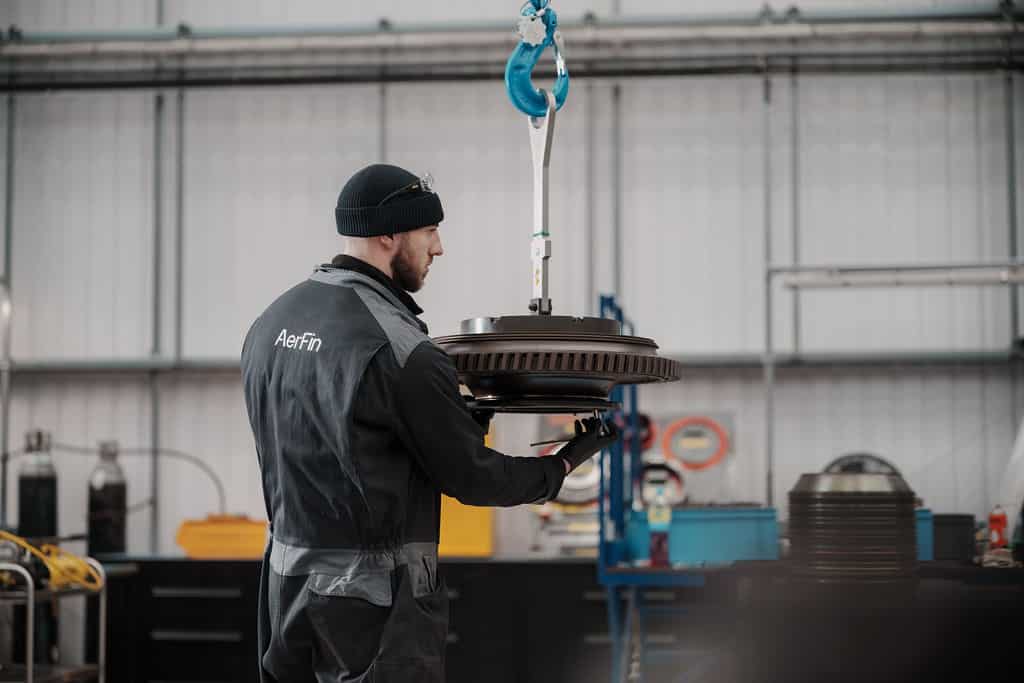
At AerFin, we’ve taken decisive steps to expand our in-house MRO capabilities over the past 12 months — adding capacity in new facilities, extending our Engine MRO Lite programme, and recruiting highly skilled technicians to support our growth. We’ve built a team with deep knowledge and the flexibility to respond to customer needs with speed, precision and care. But we’re not stopping there.
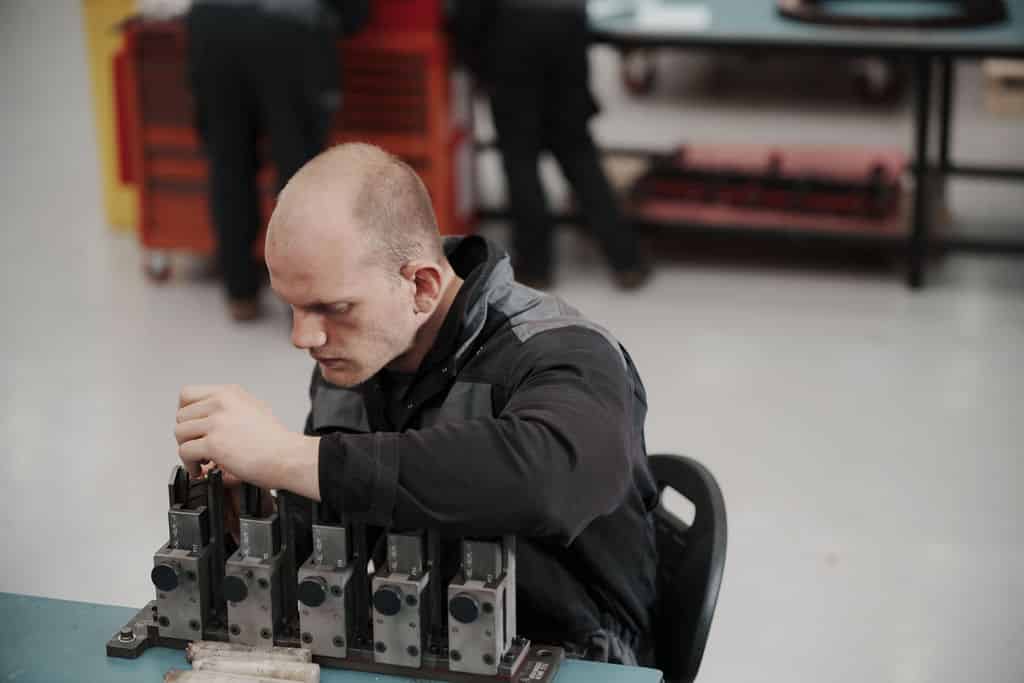
We know the long-term solution lies in developing talent from the ground up. That’s why we’re championing early careers and apprenticeship routes — bringing in new generations of engineers who will form the foundation of tomorrow’s aftermarket.
From our structured apprenticeship schemes to targeted recruitment across our sites, we’re creating a working environment where learning, development and hands-on experience go hand in hand. Our programmes are designed not just to teach the technical basics, but to embed the mindset, values and safety culture that define AerFin’s approach.
And it’s working. The majority of our apprentices move into full-time roles within the business, helping us build a loyal, skilled, and sustainable workforce.
Why the technician shortage plays to our strengths
We believe this workforce challenge is a chance to do things differently. It pushes us, both as an industry and as an individual business, to be smarter and more agile. It also reinforces our focus on investing in people, which sits at the heart of everything we do.
AerFin is already delivering in key areas:
· MRO capabilities that reduce turnaround times and keep fleets flying
· Strategic recruitment of experienced engineers to boost shopfloor capacity
· Apprenticeship and early-career pathways that build long-term resilience
· Collaboration with customers to plan workloads and optimise support
We’re not waiting for the market to adapt. We’re helping to shape the way ahead.
The Way Ahead – A people-first future
At the heart of our response to the technician shortage is the AerFin Promise – our commitment to creating a workplace where people feel supported, empowered and valued. We know that technical excellence starts with human connection. That’s why we’re investing not just in skills, but in a culture where individuals are recognised for their contribution, and where belonging is built into the way we work.
From mentorship schemes to wellbeing initiatives, we’re creating an environment where every team member, regardless of background or experience, can thrive. It’s not just about attracting talent; it’s about retaining it, by building a strong internal community where people feel they belong, are heard, and can see a future. That’s how we make good on our promise, and how we ensure our team is ready to meet the demands of a fast-moving industry.
Aviation is changing. Sustainability, circularity, and digital transformation are reshaping how we operate—and that makes skilled technicians more valuable than ever.
At AerFin, we’re investing in those people. We’re giving them the tools, the training and the trust to grow with us. Because when we support our people, they go on to support our customers — and that’s how we create value beyond the expected.
The technician shortage isn’t just a challenge. It’s a call to lead. And that’s exactly what we’re doing.
CPaT Global, a provider of distance learning for the airline and aviation industry, announced they have been awarded a new contract with Aviation Partnership Philippines Corporation. CPaT will be providing Aplus MRO with a variety of their products including training for the following fleets, Airbus A320, Airbus A330, ATR 72-500, ATR 72-600, Boeing B737 Classic, Boeing B737 NG, Boeing B737 MAX, Boeing B787, and the Embraer E190.
In addition to a large variety of fleets, CPaT will be providing Aplus with their full library of Aviation Specialty Courses (General Subjects) and CPaT Invent which will empower them to create and modify content specific to their training needs.
“CPaT is proud to partner with Aviation Partnership Philippines Corporation to support their comprehensive training needs,” said Capt. Greg Darrow, vice president of sales. “By providing our extensive fleet training courses, Aviation Specialty Courses, and CPaT Invent, we are equipping Aplus with the tools to enhance their training programs and maintain the highest standards in aviation maintenance. This partnership underscores our commitment to delivering flexible and innovative training solutions that meet the evolving demands of the MRO industry.”
Aplus added, “CPaT has achieved its goal and vision, providing state-of-the-art design training solutions.”
We use cookies on our website to give you the most relevant experience by remembering your preferences and repeat visits. By clicking “Accept”, you consent to the use of ALL the cookies.
This website uses cookies to improve your experience while you navigate through the website. Out of these, the cookies that are categorized as necessary are stored on your browser as they are essential for the working of basic functionalities of the website. We also use third-party cookies that help us analyze and understand how you use this website. These cookies will be stored in your browser only with your consent. You also have the option to opt-out of these cookies. But opting out of some of these cookies may affect your browsing experience.
Necessary cookies are absolutely essential for the website to function properly. This category only includes cookies that ensures basic functionalities and security features of the website. These cookies do not store any personal information.
Functional cookies help to perform certain functionalities like sharing the content of the website on social media platforms, collect feedbacks, and other third-party features.
Performance cookies are used to understand and analyze the key performance indexes of the website which helps in delivering a better user experience for the visitors.
Analytical cookies are used to understand how visitors interact with the website. These cookies help provide information on metrics the number of visitors, bounce rate, traffic source, etc.
Advertisement cookies are used to provide visitors with relevant ads and marketing campaigns. These cookies track visitors across websites and collect information to provide customized ads.