Azorra Partners with Delta Material Services (DMS) to Alleviate Global Supply Chain Issues

Azorra and Delta Material Services (DMS), a wholly owned subsidiary of Delta Air Lines, have entered into a strategic agreement to part out a used Airbus A220-300 aircraft* to help alleviate the parts shortages contributing to global Aircraft on Ground (AOG) challenges.

The former EGYPTAIR aircraft, which has been delivered and is currently undergoing teardown, is being used to support the repair needs of Delta Air Lines’ fleet and other airlines worldwide by providing A220-300 parts. In addition, Azorra is leasing the engines to Delta to support Delta’s existing A220 fleet. Azorra is the first lessor to develop such a solution for the A220.

“This strategic partnership with DMS is a clear example of Azorra’s creativity in helping alleviate the challenges seen across commercial aviation today. Airlines globally are working through AOG disruptions and we’re proud to play a role in helping our partners overcome these,” said Ron Baur, president at Azorra. “We’re big believers in the Airbus A220 and it remains a highly valuable and important asset to Azorra. Parting out this used airframe and leasing its engine is a creative solution that will generate long-term opportunity for the A220 to continue to thrive. We are honored to partner with an industry leader such as DMS to create this win-win result for our A220 customers.”

Mike McBride, vice president of maintenance operations at DMS, said: “Our collaboration with Azorra is vital to ensuring we minimize the disruption caused by the parts shortages and supply chain issues our industry faces. This innovative approach highlights the value of working with our stakeholders to share ideas and address current challenges to benefit all parties.”

Menzies Aviation Strengthens Position as Largest Aviation Services Provider with $305m Deal to Acquire G2

Menzies Aviation, an Agility Global company, and the leading service partner to the world’s airports and airlines, announces today that it has signed a $305mUSD agreement to acquire U.S-based G2, an aviation service partner of choice for major airlines across the United States.

Once the deal is completed, Menzies will operate in over 340 airports in 65 countries with a global team of 65,000 highly trained people. The deal is expected to boost Menzies’ group revenue by 20% to over $3.1 billion, based on FY 2024 revenue figures.  

This deal strengthens Menzies’ position as the largest aviation services business globally, by countries, airports and aircraft turns.

“This acquisition is a key milestone in our longer-term value creation strategy,” said John Redmond, executive vice president Americas, Menzies Aviation. “We are already the global industry leader in terms of countries, airports and aircraft turns and this transaction will expand our footprint to 340 airports worldwide. This deal enhances our presence in the United States — the largest and most dynamic aviation market worldwide, and we look forward to working with the G2 team to realise the potential for growth.  We are confident in the resilience and strength of the U.S. economy and aviation market, where we have been a key player for 25 years.”

Menzies first entered the U.S. market in 2000 and is currently an industry leader providing safe and high-quality ground, air cargo and fuel services. Established in 2005, G2 has a strong growth history within the U.S., with a focus on providing passenger assistance, cabin cleaning and ground and air cargo handling at airports across the country, including major airline hubs. G2’s services complement and expand Menzies’ current service offering to customers.

This agreement, which involves the acquisition of the entire G2 business, will expand on Menzies’ best-in-class service offering for airline customers with nearly 20,000 employees working across more than 100 airports across the U.S.

In a fragmented aviation services market, airlines and airports will benefit from having an established operator with scale that can leverage its extensive track record to establish a new standard of service focused on operational excellence. G2 will rebrand as Menzies, and the business will roll out its industry-leading training and safety-first culture, sustainability practices and innovative technology across its new airports of operation.

The transaction to purchase G2 is subject to regulatory approvals and is expected to complete in June 2025.

“We’re proud to be joining Menzies Aviation, the global leader in aviation services, and entering an exciting new era of growth,” said Julie Gostic, Chief Executive Officer, G2. “I look forward to building on our reputation for consistency and high-quality standards while also maintaining a close relationship with our customers, who can expect to see the same level of premium service. G2 customers and our employees will benefit from Menzies’ experience in setting global standards for service, safety and sustainability. We look forward to entering this exciting new era with Menzies.”

DER Repairs

By Sarah MacLeod, Executive Director, Aeronautical Repair Station Association

What is a “DER” repair? The U.S. regulations require all maintenance be performed in accordance with methods, techniques, and practices acceptable to the FAA. Other civil aviation authorities have a similar or the same quality standard.

Under the American rules, if the method, technique, or practice results in a major repair or alteration, persons performing and approving the work for return to service must do so in accordance with “applicable approved technical data”.

So, what is technical data and how does it get approved? To answer the first question, you must understand the second. Engineering data gets approved under 14 CFR part 21 by either the FAA or a designee of the administrator under part 183.

Designated engineering representatives (DERs) are authorized to approve “engineering information” that s/he has determined complies with the applicable regulations. Section 183.29 outlines eight engineering disciplines under which an engineer may obtain authorization, which is further explained in various orders, notices, and policies established by the FAA. Designees serve at the pleasure and sole discretion of the agency; a privilege that can be removed at any time for almost any reason.

A number of the orders, notices, and policies explain that technical data is really engineering data since that is the information used to determine compliance with the “applicable regulations.” For repairs the “applicable regulations” is a bit misleading as it means different regulations to different folks.

Maintenance must follow the methods, techniques, and practices needed to return the article to at least its “original or properly altered condition.” Designated engineers must find compliance with the applicable airworthiness standards, like parts 23, 25, 27, and others that relate to the aircraft, aircraft engine, propeller, or appliance. The original condition is dictated by the type design, which was found to comply with the applicable airworthiness standard.

DERs with “major repair” authority are to review the repair instructions (the methods, techniques, and practices) to ensure the original or properly altered condition will be achieved when the steps are performed properly. The DER must know and understand the technical data, i.e., engineering information, associated with the original or properly altered condition. However, a repair does not return something to a new, unused condition.

Often the new, unused standards are used rather than the condition expected of an article that was designed to experience wear and tear. Provided a repair action, whether major or minor, returns an item to a condition anticipated and expected by the design, the proper result has been achieved under the maintenance regulations.

While major alterations have different issues when it comes to engineering information and technical data requirements, the regulations are constructed to ensure a proper analysis. The definition of a minor repair in § 1.1 is one that is not major. That means a prudent maintenance provider will gather the data necessary to establish the repair is not major. Furthermore, if the technical data must be approved, the appropriate DERs (and there may be a need for more than one discipline) can be provided the appropriate information.

Knowing these details helps maintenance providers make proper determinations – and follow proper procedures – for enlisting DER assistance. Those procedures must include appropriate documentation should there be future questions regarding major repairs.

Sarah MacLeod is managing member of Obadal, Filler, MacLeod & Klein, P.L.C. and a founder and executive director of the Aeronautical Repair Station Association. She has advocated for individuals and companies on international aviation safety law, policy, and compliance issues since the 1980s.

Leonardo Selects Wind River VxWorks to Deliver Software-Defined Advancements for Aerospace and Defense Safety System

MUNICH — Aerospace Tech Week, April 2, 2025 — Wind River®, a global leader in delivering software for the intelligent edge, today announced that Leonardo, one of the world’s leading players in the aerospace, defense, and security sector, has selected VxWorks real-time operating system (RTOS) to deliver software-defined advancements for its state-of-the-art safety-related radio frequency (RF) system on multicore processor architectures. 

To address the challenge of using different multi-core processor architectures for individual system functions within the Leonardo RF system, the company is using VxWorks to provide a common application runtime environment across processor architectures. Leonardo is developing applications to run on VxWorks and will undergo DO-178C DAL C certification.  

“As multi-core processors drive an increasingly software-defined world, new opportunities are emerging to advance aerospace and defense systems,” said Jay Bellissimo, president, Wind River. “VxWorks delivers unrivaled deterministic high performance, setting the standard for a scalable, safe, secure, and reliable operating environment for mission-critical computing. Together with Leonardo, we can help companies navigate a shifting technology landscape—extending the performance and lifespan of their systems while reducing program and certification risk.”

VxWorks provides flexible single-core and multi-core support on different architectures, enabling individual systems to be configured depending on application performance requirements and safety certification requirements. Proven in the most challenging safety-critical applications, Wind River technology makes it easier and more cost-effective for organizations to meet the stringent safety certification requirements of EN 50128, IEC 61508, ISO 26262 and DO-178C / ED-12C.  

The first and only commercial RTOS to support Open Container Initiative (OCI)–compliant containers, VxWorks OCI container implementation uses a lightweight minimal footprint combined with VxWorks Real-Time Processes (RTP). This enables the development of containerized applications on VxWorks and can enable Leonardo to rapidly deploy new software-defined capabilities.  

Leonardo is one of the largest aerospace and defense companies in Europe, investing in innovation within industry, academia and government in capability areas including data and artificial intelligence, sensing and protection, electronic warfare, future aviation, uncrewed systems, and space. 

With technology proven in over 750 safety programs in more than 120 civilian and military aircraft, Wind River is driving the transition to software-defined systems in aerospace and defense. To learn more about Wind River’s work in aerospace and defense, visit www.windriver.com/solutions/aerospace-and-defense. The company will be showcasing its product innovation at Aerospace Tech Week April 2-3, in booth K5.

RTX’s Collins Aerospace Joins the Digital Alliance for Aviation to Expand Predictive Maintenance and Health Monitoring

Collins Aerospace, an RTX (NYSE: RTX) business, will advance predictive health monitoring solutions for airlines as part of the Digital Alliance for Aviation, an Airbus-led initiative powered by the Skywise platform.

Focused on advancing aviation through collaboration, data transparency and digital transformation, the Digital Alliance will benefit from Collins’ proven track record of deploying predictive maintenance analytics for Airbus and non-Airbus platforms and systems to optimize operations. Collins is able to gather data from a number of aircraft systems, including hydraulics, air management, pneumatic, anti-ice, electric power, landing and navigation solutions owned by Collins.

“By joining the Digital Alliance, Collins has the ability to expand its digital ecosystem and bring industry leading analytics to airlines,” said Nicole White, vice president and general manager of Connected Aviation at Collins Aerospace. “This also is an opportunity to deliver a range of digital solutions to end-user customers to achieve greater operational efficiency and resilience.”

Collins utilizes comprehensive data science coupled with deep systems engineering expertise to support improved decision making across systems and entire aircraft, empowering airlines to make data-driven decisions that enhance fleet reliability and reduce operational disruptions.

Collins is the fifth member of the Digital Alliance, joining founding members Airbus and Delta TechOps, and GE Aerospace and Liebherr to provide integrated digital solutions to airlines around the globe.

Stonepeak Completes Acquisition of ATSG

Air Transport Services Group, Inc. (“ATSG”), a global leader in medium widebody freighter aircraft leasing, air transport operations, and support services, today announced the completion of its acquisition by Stonepeak, a leading alternative investment firm specializing in infrastructure and real assets, in an all-cash transaction with an enterprise valuation of approximately $3.1 billion.

“Today marks an important milestone in ATSG’s journey,” said Mike Berger, chief executive officer of ATSG. “As a private company — and with Stonepeak’s support, as a leading investor in transportation, logistics, and asset leasing businesses — we are well-positioned to enhance our capabilities and sustain ATSG’s long term growth. I look forward to focusing on delivering value for our employees, customers, partners, communities, and other stakeholders. Our employees continue to demonstrate they are the best in the business across all ATSG companies. That, very simply, is what separates us from the rest.”

“ATSG has proven itself to be a leader in global aircraft leasing, with significant scale, strong customer relationships, and an incredibly talented team across all of its businesses,” said James Wyper, senior managing director, head of transportation & logistics, and head of U.S. Private Equity at Stonepeak. “We look forward to partnering with Mike and the rest of the team to support ATSG in its next chapter as a private company.”

The transaction was announced on November 4, 2024, and received approval of ATSG’s stockholders on February 10, 2025. In accordance with the definitive merger agreement, holders of ATSG’s common shares will receive $22.50 per share in cash. With the completion of the acquisition, ATSG’s common shares have ceased trading and will no longer be listed on NASDAQ.

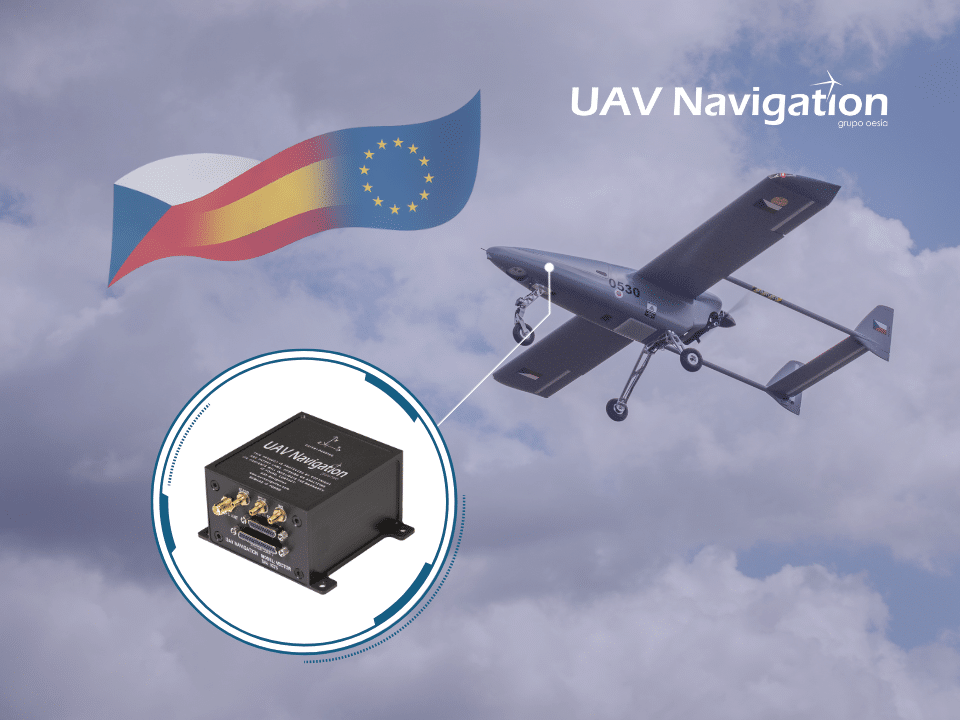
UAV Navigation-Grupo Oesía: UAV Navigation-Grupo Oesía Plays a Key Role in Achieving the First STANAG 4703 Certification and the EASA LUC at SAIL III for the Fixed Wing UAV Platform of its Client PRIMOCO UAV SE

UAV Navigation-Grupo Oesía provided the necessary documentation and evidence for the robustness and reliability of its autopilots, which were key to obtaining the STANAG 4703 certification and the EASA LUC.

● This achievement marks a significant milestone in the UAS industry, pioneering this first dual certification for a fixed-wing UAV platform.

Madrid, 10 April, 2025. – UAV Navigation-Grupo Oesía, a leading European manufacturer of guidance, navigation, and control systems for unmanned platforms, has collaborated with its client PRIMOCO UAV to obtain the STANAG 4703 certification of the One 150 UAV (Unmanned Aerial Vehicle) from Primoco UAV SE. This milestone marks the first time that an unmanned aircraft in its category has obtained both North Atlantic Treaty Organization (NATO) military certification (STANAG 4703) and the Light UAS Operator Certificate (LUC) at SAIL III from the European Union Aviation Safety Agency (EASA).

This dual certification is the result of five years of rigorous testing and development, during which UAV Navigation-Grupo Oesía played a key role by providing critical technology to ensure the reliability and robustness of the PRIMOCO One 150’s flight control system. Thanks to its cutting-edge autopilot capabilities, the UAV met stringent safety and operational requirements in shared airspace.

“This milestone not only reaffirms the quality and reliability of our navigation and control systems but also demonstrates our ability to support our customers in the most demanding certification processes worldwide,” stated Miguel Ángel de Frutos, Director and CTO of UAV Navigation-Grupo Oesía. “Our commitment to safety and technological innovation is our top priority, and this certification is a testament to that.”

The certification process included more than 200 verifications, 170 test flights, and nearly 50 ground tests, collecting an extensive volume of data that validated the performance of UAV Navigation-Grupo Oesía’s flight control system. The Spanish autopilot manufacturer has also contributed by providing evidence and a certification data pack confirming the robustness and reliability of the flight control system.

This advanced technology has been crucial in demonstrating the One 150’s ability to operate safely alongside manned aircraft and other certified UAVs in complex environments.

In addition to this military certification, the civilian EASA LUC obtained for SAIL III enables the One 150 to operate over urban areas with population densities of

up to 5,000 inhabitants per square kilometer, significantly expanding its range of civilian applications.

With this historical certification, UAV Navigation-Grupo Oesía reaffirms its position as a leader in guidance, navigation, and control technologies for unmanned aerial systems, contributing decisively and accompanying its customers in the certification processes to the development and certification of UAVs in both the military and civilian markets.

AJW Group announces A321 Power-By-the-Hour support contract with Air Transat

WEST SUSSEX, UK, 9th, April 2025, AJW Group, an independent global provider of aircraft component parts, repair, and supply chain solutions to the commercial, business, and defence aviation sectors, is pleased to announce the successful award of long-term Power-By-the-Hour (PBH) support program for Canadian airline, Air Transat’s A321ceo and growing A320neo family aircraft. AJW Group has enjoyed a longstanding partnership with Air Transat, supporting its Airbus A330 fleet since 2013. This trusted collaboration, built on operational excellence and reliability, has now evolved to include a comprehensive PBH support contract for Air Transat’s Airbus A320neo family and A321ceo fleet. This latest agreement underscores AJW Group’s ability to deliver flexible, tailored solutions that meet the evolving needs of modern airline operations. Under the agreement, AJW Group will manage the complete supply, repair, overhaul, and warranty support of rotable components for Air Transat’s narrow-body fleet across its primary base in Montreal, Quebec, and its operations in Toronto and Vancouver. A key component of this contract is AJW Group’s state-of-the-art MRO services, provided by AJW Technique, which will handle repairs for components within its extensive capability range. The close proximity of Air Transat to AJW Technique plays a critical role in streamlining maintenance operations, ensuring efficient repair management, rapid turnaround times, and seamless coordination of MRO services. This local advantage has significantly enhanced service delivery, reinforcing AJW’s commitment to operational efficiency and customer-focused support.

Air Transat has been voted World’s Best Leisure Airline by passengers at the Skytrax World Airline Awards six times. This recognition underscores their commitment to providing an outstanding travel experience. Recently, Air Transat has renewed its fleet with A321neo aircraft – the most energy-efficient aircraft in their category compared to previous generations. These new additions, covered under the PBH contract, mark a seamless transition from legacy CEO models to the advanced NEO variants. Scott Symington, Chief Commercial Officer at AJW Group comments:

“Our partnership with Air Transat has been built on trust, innovation, and our shared commitment to operational excellence. By adapting our support to meet the evolving needs of their fleet, we continue to provide a streamlined, cost-efficient maintenance solution. This contract extension is a testament to the success of our collaboration and the value of our tailored PBH programmes in optimising fleet performance.” Mario Lafrance, Vice-President Technical Operations at Air Transat added:

“We are delighted to continue the maintenance supporting partnership with AJW Group through their PBH solution, specifically tailored to meet our operational requirements. Our proximity to AJW

Technique will contribute to an efficient and timely service delivery. This partnership is a great example of how strategic collaboration can drive efficiency and improve service quality.”

This contract extension reinforces AJW Group’s position as the market leader in end-to-end supply chain solutions for the A320 family aircraft. Through long-term support, innovative fleet maintenance strategies, and a commitment to high service standards, AJW continues to set the benchmark for excellence in aviation support.

Airbus Taps VAS Aero Services to Manage Teardown of Three A380 Aircraft and the Sale of harvested USM Parts

VAS Aero Services, a global leader in aviation logistics and aftermarket services, has been selected by Airbus to manage the teardown of and redistribution of used serviceable material (USM) from three Airbus A380 aircraft being taken out of service.

In 2018, VAS partnered with international lessor, The Dr. Peters Group, on the
dismantlement of the very first A380 aircraft ever to be designated for teardown. With this
latest collaboration with Airbus on the teardown of three A380s, VAS will have managed the
dismantlement of 13 such aircraft in total.

“This project with Airbus is further proof of VAS’s expertise in A380 platform dismantlement
and USM parts harvesting and redistribution,” stated VAS CEO Tommy Hughes. “Early on we
identified the A380 platform as an aftermarket growth opportunity and we continue to
aggressively invest in end-of-service A380 aircraft to make critical components available to
the global jumbo-body aircraft operator market.”

VAS will manage the teardown of the aircraft (involving airframes MSN 61, 66, and 84)
through its partnership with Tarmac Aerosave, a leader in aircraft storage, maintenance and
recycling based in Tarbes, France. Harvested parts will be positioned in Europe for ready
access to customers throughout the EMEA market, leveraging VAS’s vital spare parts sales
network serving MROs and airlines across the region.

The aircrafts’ LRU engines will be made available for lease, as well as harvested for in-
demand USM parts, according to VAS.

With deliveries of Boeing’s 777X platform delayed until at least 2026, there is an increasing
reliance on the A380 to fill the need for large, long-haul aircraft, Hughes noted. That
demand is putting pressure on quality USM parts inventory availability for the existing A380
assets, estimated to be as many as 175 aircraft in operation worldwide.

“The timing is right for a program focused on retiring end-of-life A380 aircraft and
monetizing the residual value of their serviceable parts,” said Hughes. “As a Best Partner to
lessors and airline operators, VAS offers unparalleled expertise in aircraft teardown and
harvested parts re-sale through our worldwide aftermarket sales network. We help turn
aircraft retirement into revenue and a powerful return on investment,” says Tommy.

AJW Group Announces Strategic Partnership Agreement with Inter-Tec Aero Ltd.

AJW Group announced a strategic partnership agreement with Shannon, Republic of Ireland-based design and engineering consultancy, Inter-Tec Aero Ltd. This agreement appoints AJW Group to market and promote Inter-Tec Aero’s Part 21J services to its extensive global customer base.

The partnership enables AJW Group to expand its service offering to its global customer base and partner with Inter-Tec Aero on AJW led projects requiring Part 21J, which includes avionics and electrical systems, structures, cabin interiors, and structural repair solutions, to deliver tailored solutions that optimize aircraft performance and enhance passenger experience.

“With the signing of this agreement, we are expanding our service offering and enhancing our ability to deliver comprehensive solutions to the aerospace industry,” said Scott Symington, chief commercial officer of AJW Group. “This further strengthens our position as a provider of innovative services and solutions worldwide.”

Managing director and owner of Inter-Tec Aero Ltd., Fred Gorrie, also shared his excitement, “We are delighted to partner with AJW Group, their global reach and industry knowledge make them the ideal partner to help expand the market presence of our Part 21J services. This collaboration will allow us to provide our design and engineering solutions to a wider range of customers, ensuring aircraft operators benefit from innovative, efficient, and regulatory-compliant modifications that enhance safety, performance, and passenger experience.”