
Diatom Capital, a leading innovator in the aerospace industry, today announced that Midwest Aero Support (MAS) has been selected by multiple major U.S. airline carriers to provide an onboard wheelchair that is compliant with the updated Americans with Disabilities Act (ADA). These major carriers, as early adopters of this compliance, will be the first to fly this chair model.
The compliance is part of the Department of Transportation (DOT) rule (Title 14 CFR Part 382), which falls under the Air Carrier Access Act, and requires that any new aircraft for 60 or more passengers delivered after October 2026 have an ADA-compliant onboard wheelchair to ensure the rights of passengers. The rule mandates that the onboard wheelchair rolls directly in front of the lavatory door or fits inside the lavatory completely, which enables easier and more private lavatory access. All current airlines flying a non-compliant chair will be required to switch to the updated chair over a five-year period.
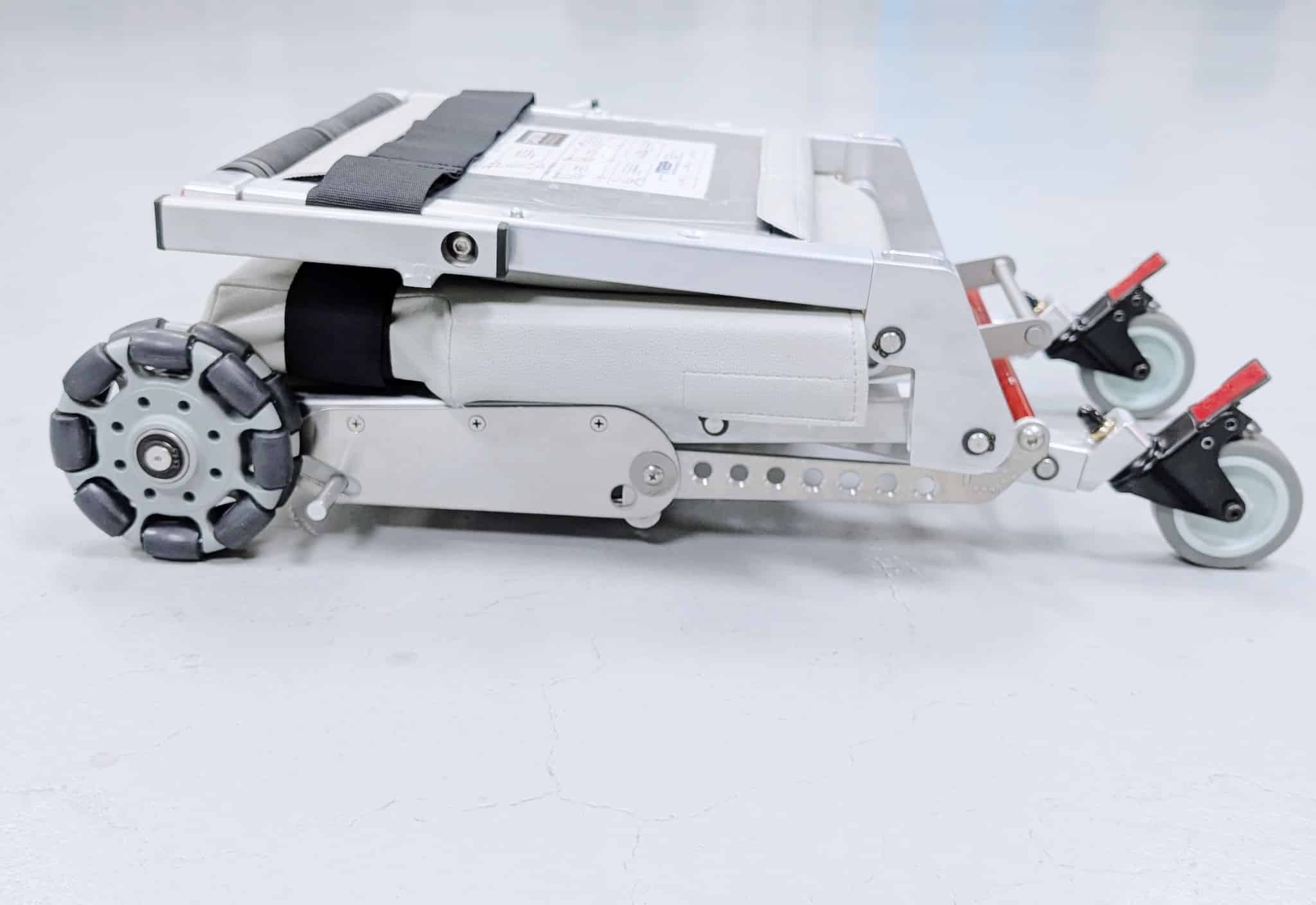
“MAS and its partners have been relentlessly working with customers customizing this onboard wheelchair for mobility and convenience. A small adjustment can make a big difference,” said Rick Ruppert, president of Midwest Aero Support. “We took as much weight out and put as many features in the onboard wheelchair as possible to ensure compliance with federal regulation while suiting the needs of passengers for navigating the aircraft aisles and lavatory. We hope to continue to bring additional upgrades to airlines and passengers to make travel even more accessible and comfortable.”
These carriers selected MAS to lead the design, manufacturing, testing, certification, packaging, delivery, and support for the onboard wheelchairs. MAS will also carry out an attrition-based replacement program with a designated pipeline to replace chairs and parts quickly and over time as needed.
This new model includes these features:
- Increased adjustability and comfort to fit passengers of different sizes without adding weight or storage. The chair back telescopes and the foot panel extends, accommodating passengers’ differing heights, and it also includes armrests. The chair will accommodate up to 500 pounds, and it will be 0.5 inches longer, but it will collapse into the same footprint for storage, so it will not take additional space when not in use. It weighs in at 19.2 pounds — several pounds less than the previous model.
- Streamlined directional mobility. The front two wheels will be omnidirectional, and the back two wheels will pivot on an axle, allowing the chair to move forward and in reverse without extraneous effort and movement.
- Reduces germs on high-touch surfaces. The seat pans will have antimicrobial covers, decreasing germ transfer.
- More accessible instructions label. In addition to descriptions for proper usage, the instructional label update will include a pictogram, which accommodates passengers’ language needs.
“Currently, U.S. airlines are not required to carry an onboard wheelchair on every flight and are generally required to provide one only when requested in advance; however, that will change under the updated Department of Transportation rule,” said Burt Mattice, president and co-founder of Diatom Capital. “With new compliance requirements taking effect beginning in late 2026, this is a critical time for airlines to prepare. There are a limited number of solutions that meet the new federal mandate, and Midwest Aero Support brings a proven track record of delivering ADA-compliant onboard wheelchairs to the airline industry. Our focus is on delivering compliant, practical solutions that help airlines meet regulatory requirements while improving the overall passenger experience. That is Aviation Simplified.”
To date, MAS has built and shipped 150 onboard wheelchairs per year to major airlines which comply with current ADA requirements. It has also provided onboard wheelchairs for charter buses that serve disabled quadriplegic veterans.