
Maintenance for aircraft wheels and brakes is more complicated than it might seem. Ian Harbison spoke to some of the leading players.
Nikolaj Jacobsen, CEO of TP Aerospace, says the MRO market for aircraft wheels and brakes closely mirrors global airline activity. These components are among the most cycle-driven parts of an aircraft — meaning their maintenance schedules are directly tied to how often an aircraft takes off and lands. Typically, aircraft wheels require servicing every 250 to 400 flight cycles, while steel brakes see maintenance between 800 to 1,000 cycles and 1,500 to 2,000 flight cycles for carbon brakes.
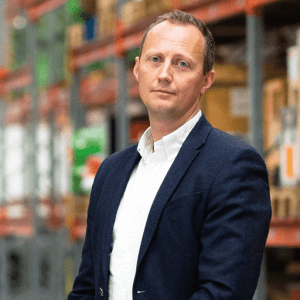
CEO, TP Aerospace
The company operates across 12 strategic locations worldwide, covering the full spectrum of commercial aircraft, from regional jets to widebodies, and it supports both passenger and cargo operators, with long-term service contracts for close to 1,000 aircraft globally.
Those locations are: Bangkok, Brisbane (opened in 2024), Brno, (also opened in 2024), Copenhagen (headquarters), East Midlands, Hamburg, Kuala Lumpur, Las Vegas, Melbourne, Orlando, Shenzhen (sales representative office) and Singapore.

He says this global footprint enables the company to keep a close eye on the state of the industry. In 2025, the year started with unexpected turbulence — largely due to U.S. tariffs and the economic uncertainty they triggered. While these factors have introduced some headwinds, the overall trajectory remains positive. Key indicators like Revenue Passenger Kilometers (RPK) and Available Seat Kilometers (ASK) are on the rise.
There are some regional imbalances that have been noted. North America and Oceania are showing signs of softness, with some U.S. carriers already adjusting capacity and adopting a more cautious outlook. In contrast, international markets in Asia Pacific and Latin America are experiencing robust growth. This divergence is reflected in the wheels and brakes segment as well — Asia Pacific is buoyant, while the Americas are more reserved. Europe remains relatively stable, with the exception of some transatlantic routes. He comments that these dynamics are shaping how and where the company invests in capacity, inventory, and talent.
A clear trend is emerging that airlines are increasingly seeking long-term partnerships with specialized providers like TP Aerospace. They’re not just looking for a repair shop — they want a strategic partner who understands their operational needs and can deliver tailored, efficient solutions that are agile and trustworthy. This shift spans all airline segments, from cargo to passenger and ACMI operators.
He says this is great news for the company, which prides itself on being more than a service provider. It is a value chain optimizer. By working closely with OEMs, maintaining robust inventory buffers and aligning with its airline partners, it helps reduce waste, increase efficiency and ensure continuity even during supply chain disruptions. The extensive network also contributes to efficiency, as customers can find a service center close to them. Recent examples include Ukrainian operator Supernova, which has a fleet of Boeing 737NG freighters and is mainly serviced by Brno, the Czech Republic, while the U.K.-based ACMI specialist Ascend Airways will have its existing and future planned fleet of 737MAX aircraft, support by East Midlands.
He adds that airlines today demand more than just repairs, they want predictability, transparency and peace of mind. They don’t want to worry about whether a specific fastener is stuck in a producer’s backlog. They want a partner who understands the intricacies of the wheels and brakes ecosystem and can proactively mitigate risks. The great thing is that OEMs also want a partner that can handle this part of the value chain and that is why the company partner with both sides.
TP Aerospace has embraced this shift, with a service model built around end-to-end lifecycle support, ensuring that customers can focus on flying while it handles the rest. From predictive maintenance to inventory planning, it is helping airlines turn uncertainty into reliability.
Interestingly, he says, the demand for specialized wheel and brake services is not confined to any one type of airline. Low-cost carriers, full-service airlines, cargo operators, and ACMI providers are all converging on the same need of operational reliability at a predictable cost. This convergence is driving a more unified approach to MRO partnerships, where flexibility and customization are key differentiators.

The company offers fully integrated exchange Flat-Rate Programs where the customer pays a fixed rate per landing and Land For Less (LFL) Programs that provide a less-integrated solution where customers pay a fixed fee per exchange event. In addition, it has the largest spares stock in the aftermarket and is an active purchaser of inventory, either serviceable or in need of repair. It also offers a 24/7 service for AOG situations or routine delivery. The third leg of the business is distribution of new OEM wheels and brakes piece parts and assemblies across all types and platforms.
He says innovation is a continuous journey. The company is constantly evaluating how to make the repair and overhaul processes more efficient and sustainable, especially as some steps are quite tough and labor-intensive and involve chemicals that it is actively working to reduce or replace. These improvements not only benefit the environment but also enhance employee safety and reduce costs, savings that can be passed on to customers and invested in upskilling the workforce.
Investments are also being made in automation and digital tracking, as well as a focus on AI and machine learning in the planning process. The latter helps to predict and mitigate supply chain disruption, again reducing the pain for airlines and OEMs.

Antavia
Laurent Bouissou is managing director of Antavia, which has been part of AMETEK MRO since 2007 but has a history of more than 30 years. The activities cover commercial, business, helicopters and military market sectors.

MD, Antavia
Corporate headquarters and a workshop are located in Campsas, just under 20 miles north of Toulouse-Blagnac Airport, with a larger facility, covering commercial, business and military aircraft in Le Mesnil-Amelot, on the edge of Charles de Gaulle Airport (CDG) and just eight miles northwest of Le Bourget. There is also a workshop in Singapore, which is growing.
Campsas is dedicated to supporting the ATR and Dassault production lines as well as the Airbus Transport International fleet of three Beluga ST and six Beluga XL.
For Le Mesnil-Amelot, proximity to CDG makes airline work important, particularly from Air France while a lot of business aviation work comes from Le Bourget, including Cessna, Dassault, Bombardier and Embraer types. As well as contracts with operators like NetJets, it works closely with Dassault Aviation Falcon Spares (DAFS) and Dassault Aviation Business Services (DABS), a worldwide service organization. Antavia works as well for the Dassault Production line in Merignac. In fact, it has just delivered the first set of wheels and brakes for the prototype Dassault Falcon 10X.

He notes that the business aviation market has high expectation of reduced turnaround times (TRTs) and quality. The company can often be expected to return a wheel in 48-72 hours, even if this includes 12-24 hours needed for pressure testing, as well as paint stripping, balancing, NDT (dye penetrant, eddy current and magnetic particle). In addition, Dassault, for example, requires that wheels are resprayed at every tire change. For DAFS, this can mean wheels being returned to a specific aircraft, while for DABS, with its worldwide network, they often go back into a pool.
Military work includes support for Boeing on the USAF C-17 fleet in Europe; for Sabena Technics for the French Air Force Airbus A330 tanker and VIP aircraft and the Lockheed Martin C-130 Hercules; and for Air France for French Air Force Boeing E-3F AWACS. He says it is an important and growing part of the business.
As a rough guide to the market split, he explains that Paris handles around 5,000 wheels a year, of which business aviation is 50%, military is 30% and commercial 20%.
He comments that airlines tend to have their own particular models. Some have their own wheels and brakes shop; some perform tire changes in-house but subcontract overhaul work; some subcontract specialized repairs; and some use outside shops for overflow work.
He adds that tire work is very cyclical. Tire wear is highly dependent on outside temperature, with a rule of thumb that every 1°C increase will cost 10 landings. His own airline experience showed a tire that would do 400 cycles in winter would only achieve 200 in summer. This is complicated with long haul services crossing continents and climate zones. A freeze or a heatwave over several weeks can also throw up unexpected wear levels. The other major factors affecting tire wear include use levels of thrust reverse and brakes, and runway and taxiway abrasion levels.
There are averages, he says, but there are always surprises. One customer forecasted 300 wheels in 1Q25 but only sent 180. Having recalculated their annual requirement, it dropped from 1,000 to 800 wheels. Recently, they delivered 20 wheels in one week. All these uncertainties, combined with demand for fast TRTs, means load planning is “our daily nightmare!”
On brakes, he says carbon is dominant, with aircraft like the Boeing 737, where there is an option of steel brakes, seeing a shift from steel to carbon. They are lighter and much more durable, but also very, very expensive. Also dominant are the OEMs. They control prices to third-party MROs and no PMAs are available. In fact, the carbon heatstack is their exclusive preserve and is often supplied as embodiment loan to the MROs, who can work on the rest of the system.
Another part of the Air France contract for French Air Force Boeing E-3F AWACS is steel brakes.
Finally, he adds, electric brakes are an upcoming requirement, with the Airbus A220 and Boeing 787, which will require investment in different test benches.
Safran
From an MRO perspective, Safran Landing Systems sees a trend towards carbon technology, as it offers lighter equipment and greater energy absorption capacity as well as faster cool down than steel. In 2023, 13% of commercial aircraft with 100 seats or more were equipped with steel brakes, compared with 87% with carbon brakes.
Now, the carbon brake production level is higher than before Covid due to the unprecedented production ramp-ups by the airframers and the growing maintenance needs of airlines, both driven by the strong recovery in air traffic since the pandemic.
The company adapts to the specific needs of each airline with a comprehensive range of services, from heat sink exchanges to “all inclusive” support including the supply of components and even tire change. As part of this tailor-made services offer, it provides cost-per-landing contracts, particularly interesting for airlines with large fleets, for which maintenance and repair costs are based on the number of landings made by the aircraft. This cost is variable depending on traffic levels, which is linked to revenues. This enables operators to manage their maintenance costs more predictably.

In order to offer increasingly responsive support and improve fleet availability for customers, Safran Landing Systems has its own MRO workshops in the USA and soon in Asia, as well as MRO partnerships around the world to cover major airports with very short turnaround times. In the USA, in particular, subsidiary Wheel & Brake Repair & Services relies on five repair stations strategically located in Miami (Florida), Milwaukee (Wisconsin), Las Vegas (Nevada) and Grand Prairie (Texas), to be as close as possible to customers, while wheels, brakes and heat sink are manufactured by a plant in Walton (Kentucky).
In addition, it is developing projects leveraging the potential of Artificial Intelligence, allowing it to better anticipate customers’ demand for carbon disk exchanges.

Each airline has its own support model, either by completely outsourcing the maintenance of its wheels and brakes, or by carrying out all or part of these operations in-house, through its own MRO workshop which, in some cases, may even provide maintenance services to other airlines. There are more and more requests from airlines to outsource their maintenance to maximize variable cost.
Today, supply rather than demand defines growth, whether on medium-haul or long-haul routes. More broadly, at the request of airlines, the trend is towards increasingly robust brakes, with a short turnaround time between overhauls and lightweight brakes, to reduce fuel consumption.

The company is able to remanufacture carbon brake disks as new by reusing/recycling up to 50% of the disk, depending on the configuration. While guaranteeing the same level of performance and safety, this process contributes to significantly reducing needs for materials and the energy associated with manufacturing.