Nighthawk Flight Systems Unveils Guardian Avionics System

Nighthawk Flight Systems, Inc., a developer of advanced compact federated avionics, is unveiling its Guardian large format glass cockpit avionics system. Unlike any system currently on the market, Guardian is a lightweight, customizable, and easily expandable system that operates seamlessly with the owner’s current cockpit avionics while providing unmatched situation awareness and reduced pilot workload.

“We developed Guardian to give general aviation aircraft an affordable system with all the functions and features of advanced glass systems, but better. We provide a much lighter, more affordable system with the best, most realistic synthetic vision on the market,” said Nighthawk Flight Systems, Inc. CEO Paul Martin. “We offer general aviation pilots, owners, and operators a far superior fully customizable glass cockpit, with unmatched simulated vision. We use “Smart I/O” to operate seamlessly with existing systems and sensors, on a single or multiple touchscreen displays.”

Unmatched Graphics

Guardian features revolutionary 3D imagery never before experienced on the market. The graphics display consolidates multiple sources of obstacle, flight environment, traffic, weather, terrain, satellite imagery, and more, displaying it in a high-resolution real-world 3D view on programmable touchscreen displays. Unlike other synthetic vision, Guardian’s imagery provides high detail that dramatically improves definition and situation awareness.

Light, Compact Design

Up to 50% lighter than current, equal-capability avionics system, the ingenuity behind Guardian is its compact computing center called the NEST. The NEST can be installed anywhere in the aircraft, connected to the lightweight, thin, touchscreen Guardian panel display through a single cable. The NEST houses individual ‘blades’ that provide mission computing (the MCU), air data/attitude/heading reference system (ADAHRS), and smart I/O (programmable input/output to connect to existing avionics). The MCU contains all computational and graphical information for display. The smart I/O pulls together information from existing onboard avionics including autopilot, GPS, radios, navigation aids, weather, ADS-B In, and more for access on the programmable displays.

The NEST can be fitted with additional blades for added capabilities not currently installed in the aircraft or to replace existing avionics such as radios, navigation, ADS-B, transponder, GPS, and more. Unlike a traditional multifunctional display (MFD) system, this allows individual capabilities to be quickly exchanged or upgraded without the need for a full system upgrade, leading to considerable savings down the line. The display can also be replaced independently if desired.

See a live demonstration of the Guardian display at Oshkosh 2025 in the Nighthawk Flight Systems space 326.  Contact Randy Jones, VP of sales and marketing for scheduling.

New Authorized PC-24 and PC-12 Service Center in Lugano Agno in Southern Switzerland

Pilatus has accredited Dassault Aviation Business Services at Lugano Airport in Ticino as an Authorized Service Center for the PC-12 and PC-24, specializing in line maintenance services. The company already offers maintenance and repair services for all Pilatus business aircraft at its Geneva site.

The accreditation of the Dassault Aviation Business Services site in Lugano marks a further expansion in the Pilatus network of Authorized Service Centers. PC-12 and PC-24 customers now enjoy even faster and more flexible access to line maintenance and services, and benefit from even better support for their Pilatus aircraft. 

André Zimmermann, vice president business aviation at Pilatus, points out: “Demand for our PC-12 and PC-24 Super Versatile Jet continues to grow worldwide, which is why we are constantly expanding our support network. We are confident that our ongoing successful partnership with Dassault Aviation Business Services and accreditation of the site at Lugano Airport will deliver a further improvement in our customer service.” 

“Both the PC-12 and the PC-24 are a popular choice for private, business and charter operations in Europe. We look forward to building on our longstanding relationship with Pilatus and to providing support for these fantastic aircraft”, adds Cyrille Pillet, vice president customer support & technical services at Dassault Aviation Business Services. 

GenNx360 Capital Partners Portfolio Company Precision Aviation Group Expands Global Footprint with Strategic Acquisition of Turner Aviation

GenNx360 Capital Partners, a New York-based private equity firm investing in industrial and business services companies in the U.S. middle market, announced that its portfolio company, Precision Aviation Group, (PAG), has acquired Turner Aviation, a highly regarded aviation maintenance, repair, and overhaul (MRO) services provider based in the United Kingdom.

The acquisition of Turner Aviation marks PAG’s entry into the EMEA (Europe, Middle East, and Africa) region and represents a key milestone in PAG’s strategic plan to expand its global MRO capabilities. Headquartered in Glasgow, Scotland, Turner Aviation has been serving the aerospace and defense industries since 1954 and is a UK Civil Aviation Authority (CAA) and EASA Part 145 approved repair station.

“The acquisition of Turner Aviation represents a significant milestone in the continued growth of PAG,” David Mast, president and CEO of PAG, said. “Their deep technical expertise, strong customer relationships, long-serving leadership team and strategic location make it an ideal partner for PAG. We are excited to build on Turner’s impressive legacy.”

Douglas Muirhead, managing director of Turner Aviation, added: “We are thrilled to become part of the growing PAG family. This acquisition will not only provide Turner with enhanced resources and a global network but also allow us to better serve our customers.”

Pratik Rajeevan, principal at GenNx360 Capital Partners and lead for the PAG investment, commented, “PAG’s acquisition of Turner Aviation underscores our strategy of partnering with management teams to build industry-leading platforms through thoughtful expansion. The Turner team’s reputation for quality and reliability makes this an outstanding step in broadening PAG’s reach and service capabilities across key global markets.”

GenNx360 acquired PAG in 2018 and continues to work closely with the management team to support the company’s organic growth initiatives and targeted add-on acquisitions. Turner Aviation marks PAG’s tenth add-on acquisition under GenNx360’s ownership. GenNx360’s PAG team includes Ron Blaylock Managing Partner; Lloyd Trotter, Managing Partner; Reece Zakarin, Vice President; and Jon Langenfeld, Associate.

Cessna Grand Caravan EX to Feature New Executive Interior Options, Expanding Opportunities for Elevated Missions

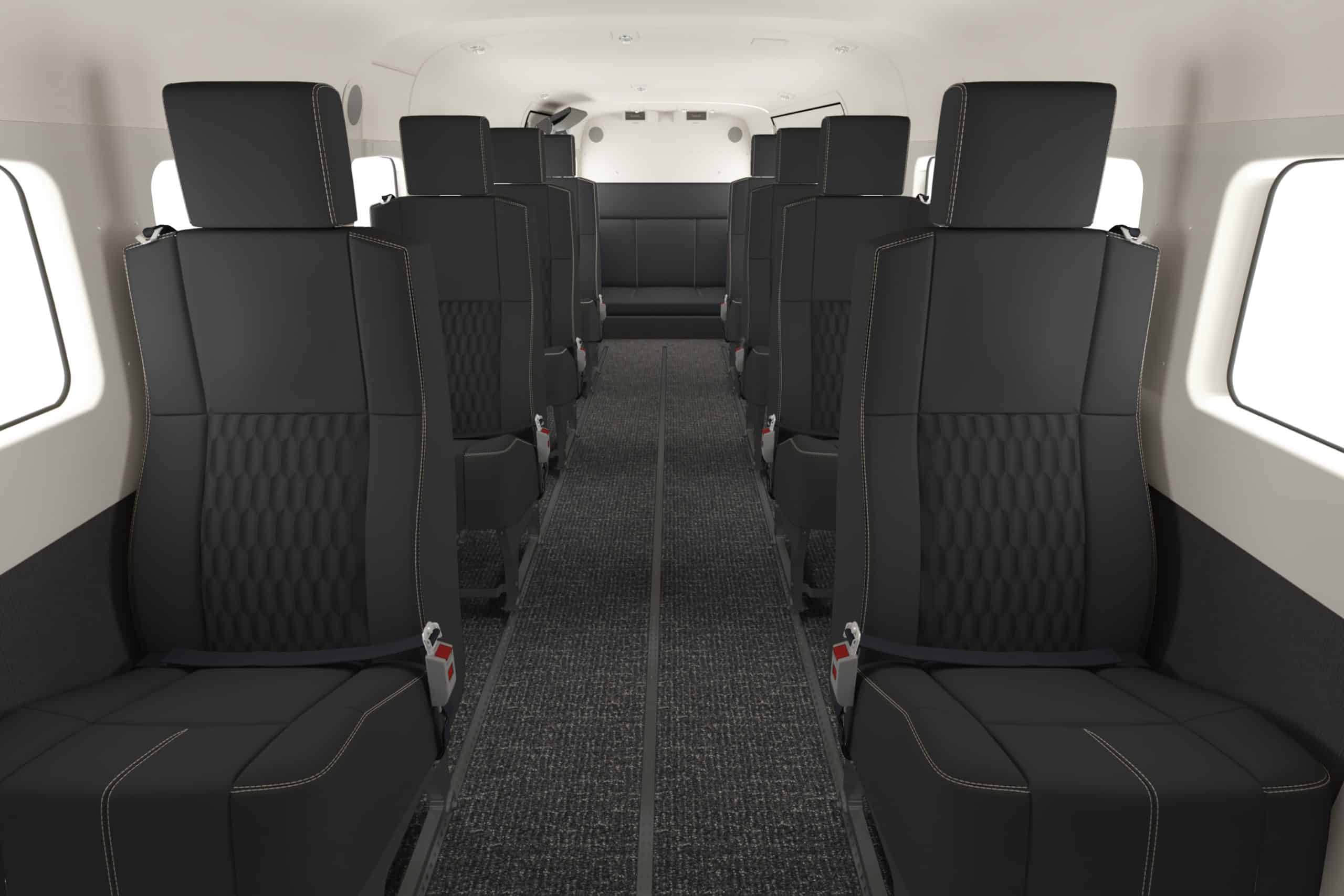
The legendary Cessna Grand Caravan EX will now feature three new executive interior schemes for customers to select when designing their aircraft cabin. The Lunar, Obsidian and Saddle Sport interiors join the existing Canyon and Savanna schemes, providing a broader range of standard choices. The new interior options are available to customers starting this month and allow them to further tailor the interior of their aircraft based on their personal preference or mission.

Premium versions of each of the new interiors are also available, featuring quilted seat stitching and plush carpet, providing an elevated aesthetic to the cabin.

“The Cessna Caravan family continues to prove its excellence as one of the most versatile aircraft in the industry,” said Lannie O’Bannion, senior vice president, sales & marketing. “Drawing from direct conversations with customers, these cabin enhancements are designed to elevate comfort and provide a more enjoyable cabin experience.”

In addition to the enhanced flight deck announced last year for the Cessna Caravan and Grand Caravan EX, both aircraft will now include eight USB-C chargers on the cabin sidewall as standard features. Each charger includes two ports, providing a total of 16 charging points to keep passengers powered and connected in flight.

Celebrating 40 years of adventures

The introduction of the new interiors aligns with the company’s celebration of the 40th anniversary of the Cessna Caravan single-engine utility turboprop. Aviation enthusiasts can view the new Lunar Premium interior cabin along with the added cabin USB-C plugs in the 40th anniversary Cessna Grand Caravan EX demonstrator aircraft which will be at the company’s static display (Booth #78) at EAA AirVenture in Oshkosh, Wisconsin, from July 21 to 27. This aircraft features a special paint scheme celebrating its 40th year of flight.

Advanced Motion Control Components for Critical Aerospace Applications

Advanced motion control technologies are essential to modern aerospace design, supporting a wide range of safety-critical and comfort-driven applications. In aerospace, motion control components—such as gas springs, actuators, and dampers—are integral to nearly every commercial aircraft, rocket, satellite, and space vehicle. These critical elements support flight safety and transport functions, from the dependable deployment of landing gear and cargo doors to the smooth, ergonomic operation of seating for pilots and passengers.

However, for aerospace manufacturers achieving the rigorous safety, reliability, and performance standards often requires more than standard off-the-shelf components—it demands specialized motion control solutions designed to deliver reliable performance under unique specifications and extreme conditions. “In many cases, the components must be fully or partially customized to meet specific application requirements. Even when development begins with a standard part, various modifications are frequently necessary such as changes in stroke length, force calibration, material composition, damping characteristics, and mounting hardware,” says Brian Ingoldsby, engineering manager at Bansbach Easylift of North America Inc., a global supplier of motion control devices, systems, and components since 1919.

According to Ingoldsby, the process of modification or customization begins with evaluating the specific functional requirements, such as whether the component must counterbalance a load, provide damping, or perform consistently under defined temperature, pressure, or altitude conditions. Material selection is particularly important, as components must often meet weight, corrosion resistance, and fatigue criteria unique to aerospace environments.

“In aerospace engineering projects, key design considerations typically include space constraints, force output, mounting geometry, material selection, and environmental exposure. These factors are assessed in close collaboration with the customer, often resulting in a fully customized product tailored to the exact specifications of the application,” says Ingoldsby.

The specialized motion control components also must meet all necessary testing and classification requirements to comply with FAA and EASA regulatory standards. Each part must meet the RTCA DO-160 testing standards, an international benchmark designed to ensure airborne equipment can withstand the harsh conditions encountered in aviation. This necessitates a deep understanding of certification protocols and the ability to manage the complete approval process.

For these reasons, a growing number of aerospace equipment designers are choosing to collaborate closely with motion control engineers from the earliest stages of a project. To facilitate such cooperation, leading companies like Bansbach assign dedicated engineers to provide input, explore design options, offer technical recommendations, and develop solutions that enhance overall system performance.

“The ultimate objective is to streamline the OEM’s design process, reduce their development time, and ensure that the final product meets the performance specifications,” says Ingoldsby.

Manual Motion Control

In aerospace systems, gas springs play a vital role in enabling safe, controlled, and ergonomic motion. From landing gear doors to access panels and cargo hatches that must remain safely open during maintenance or loading, gas springs provide the necessary force control and damping. Within the cabin, locking gas springs combine controlled motion with the ability to lock in a fixed position, a key feature in adjustable seating, stowable tray tables, and other reclining mechanisms.

Gas springs are also found on nearly every rocket, satellite, or space vehicle, as well as in equipment used for ground support and launch operations. One example is for separation events on rockets, where components are ejected during different flight stages. 

Dampers are widely used in aerospace applications to control motion, manage energy, and reduce vibration in various systems throughout an aircraft. Inside the cabin, dampers are used in seating mechanisms and overhead storage compartments to provide controlled motion. Dampers also play an important role in managing the operation of cargo doors, service panels, and passenger doors. Directional locking dampers allow manual force to override the position of the locking gas spring. This function supports both emergency use and maintenance operations.

Although gas springs and dampers share similar external appearances and basic operating principles across manufacturers, certain models are engineered with specialized design features that provide distinct advantages for aerospace applications.

Unlike some standard offerings that require OEMs to design around preset dimensions, Bansbach provides components that can be manufactured to match customer specifications. In this regard, Bansbach manufactures gas springs with rod diameters from 3 millimeters (0.12 inches) to 70 millimeters (2.75 inches), capable of lifting multiple tons.

Bansbach also incorporates innovative design elements into its products. These enhancements go beyond standard configurations and involve selection of materials, surface treatments, and internal components.

As with many aerospace components, aluminum is often selected due to its significant weight savings over steel.

Beyond material selection, advanced engineering features play a critical role in maximizing performance and extending product lifespan. For example, an integrated grease chamber can increase durability and support higher cycle counts than standard models. To further enhance longevity, the company applies a proprietary oven-cured surface treatment that improves corrosion resistance and creates a smooth, durable rod finish without compromising seal performance. As a result, treated gas springs typically last three to five times longer than conventional gas springs.

Along with mechanical durability, thermal performance is critical. Aerospace components must operate reliably across extreme temperature ranges. Consequently, additional considerations for aerospace applications include specialty seals and oils formulated for extreme environments. Components may need to withstand temperatures up to 200°C near engines, while others must perform reliably in subzero conditions. To ensure consistent performance across this wide temperature range, the company employs advanced seals engineered for both high- and low-temperature operation.

Automated Motion Control

Motion control components such as electric linear actuators provide precise, compact movement. Adoption within the aerospace sector remains limited. However, interest in the technology is steadily increasing and electric actuators hold significant promise for future aerospace applications.

Bansbach’s EasyE electric linear actuators are available in a range of lifting capacities, with customizable stroke lengths up to 1,500 mm and dynamic load capabilities up to 10,000 N. The linear design allows for a compact installation footprint, while available accessories—including controllers and handsets—simplify system integration. Turnkey actuator kits further streamline deployment by eliminating the need for separate component sourcing, programming, or integration.

The Value in High Quality Components

Using higher-quality, custom-engineered motion control components provides significant advantages for aerospace manufacturers. Whether through advanced gas springs, precision dampers, or electric linear actuators, the right components ensure that equipment will operate smoothly and reliably for the expected lifespan, while meeting the rigorous standards of modern aerospace.

By working closely with motion control experts, aerospace designers ensure components meet the highest safety standards, streamline certification, and reduce development risks.


Deadline Today for U. S. Agents for Service Designations

Today, July 7, 2025 is the deadline for U.S. Agents for Service on individuals with foreign addresses who hold or apply for certain certificates, ratings or authorizations.

The Federal Aviation Administration (FAA) and Department of Transportation (DOT) require individuals with foreign addresses, and no U.S. physical address of record on file with the FAA, who hold or apply for certain certificates, ratings, or authorizations to designate a U.S. agent for service of FAA documents.

The U.S. agent will receive service of FAA documents on the certificate holder or applicant’s behalf. This rule facilitates the FAA’s ability to accomplish prompt and cost-effective service of process and service of other safety-critical or time-sensitive documents to individuals abroad through service on their U.S. agents, the FAA says.

This final rule adds subpart C to part 3 of title 14 of the Code of Federal Regulations (14 CFR). Subpart C requires individuals who have a foreign address and no U.S. physical address of record on file with the FAA to designate a U.S. agent for service if they apply for a certificate, rating, or authorization issued under 14 CFR part 47, 61, 63, 65, 67, or 107, or hold a certificate, rating, or authorization issued under any of these parts.[1]

The U.S. agent will receive service of FAA documents on behalf of the certificate, rating, or authorization holder or applicant. This final rule facilitates the FAA’s ability to accomplish prompt and cost-effective service of process and service of other safety-critical or time-sensitive documents to individuals abroad through service on their U.S. agents.[2] This will conserve agency resources, ensure that lengthy delays in service of process do not compromise aviation safety, and provide individuals abroad with timely notice of FAA actions and the opportunity for more expedient due process.

Gogo Galileo HDX Coming to Cessna Citation Jet Models

Textron Aviation announced Gogo Galileo HDX will be available for aftermarket installation on Cessna Citation jets after Federal Aviation Administration (FAA) Supplemental Type Certification (STC) expected in late 2025. The global Low Earth Orbit (LEO) solution allows customers to enjoy one of the best possible in-flight connectivity and aviation experiences, no matter where their journey takes them.

By offering Gogo Galileo HDX as an aftermarket upgrade, the Textron Aviation support team is ensuring customers benefit from a global connectivity solution that delivers reliable performance. The system, which is purpose-built for business aviation, consists of two Line Replaceable Units (LRUs), a fuselage-mounted HDX antenna and the AVANCE technology router which minimizes installation downtime.

“Our customers expect to stay connected and productive while in the air and integrating the Gogo Galileo HDX system ensures they have access to high-speed internet in-flight,” said Brian Rohloff, senior vice president, Global Customer Support. “This advanced connectivity solution underscores our commitment to providing our customers with cutting-edge technology that enhances their flying experience.”

For jets, Textron Aviation’s supplemental type certificates are expected to include the Cessna Citation X+, X, Sovereign+, Sovereign, Latitude, XLS Gen2, XLS+, XLS, Excel, CJ4 Gen2, CJ4, CJ3+, CJ3, CJ2+, CJ2, M2 Gen2, M2, CJ1+, and CJ1.

Gogo Galileo HDX will be available for installation at domestic Textron Aviation Service Centers following STC approval by the Federal Aviation Administration (FAA) with European Aviation Safety Agency (EASA) type certification and Transport Canada Civil Aviation (TCCA) type certification to follow at a later date.

Teledyne FLIR OEM Unveils New Brand and Website to Strengthen Supply Chain and Accelerate Innovation in Infrared Imaging

Teledyne FLIR OEM, part of Teledyne Technologies Incorporated and the global leader in enabling thermal imaging innovation, announced the strategic evolution of the Teledyne FLIR OEM brand. The brand update is highlighted by the launch of a dedicated website at https://oem.flir.com/, streamlining original equipment manufacturer (OEM) access to technical resources and development support. 

It is designed to illustrate the four pillars of the Teledyne FLIR OEM approach: production reliability, innovative integrated solutions, flexible development collaboration and more than 30 years of certified quality. This update better supports the unique advantages that make Teledyne FLIR OEM the trusted and world’s largest-volume supplier of National Defense Authorization Act (NDAA)-compliant and International Traffic in Arms Regulation (ITAR)-free infrared imaging for OEMs.  

“We are a U.S.-based Other Transaction Authority (OTA)-friendly nontraditional defense contractor, uniquely positioned to support high-speed, high-volume development programs,” said Paul Clayton, president and general manager, Teledyne FLIR OEM. “We’re not just another supplier—we continuously work to be the lowest-risk choice for intelligent infrared imaging design and manufacturing. Our proven capabilities directly contribute to our customers’ mission success.”

Production Reliability: Teledyne FLIR OEM delivers thousands of infrared sensors, modules, and cameras daily across defense, professional, automotive, and uncrewed applications. By offering scalable, high-volume production, the company ensures not only product quality but also the predictability and consistency that mission-critical OEM applications demand.

Integrated Solutions: Through vertical integration, Teledyne FLIR OEM combines thermal imaging hardware and zoom lenses with embedded Prism™ software, providing artificial intelligence (AI) and smart infrared imaging at the edge for emerging autonomous operations. This end-to-end control of design and manufacturing enables the delivery of industry-leading performance, reliability, and value, giving OEM customers a decisive competitive edge.

Development Collaboration: The updated brand identity also reflects the Teledyne FLIR OEM commitment to supporting integrators with a more cohesive and accessible experience. From streamlined collaboration to faster time-to-market, the brand evolution reinforces the company’s role as a flexible, agile development partner for OEMs building next-generation systems.

Quality Excellence: Backed by more than three decades of certified quality manufacturing, the formalization of the Teledyne FLIR OEM brand provides the foundation of reliability that OEM integrators and developers need for long-term product success and customer satisfaction. 

OEM partners can explore the enhanced experience and access dedicated development support resources at the new website: https://oem.flir.com/.

Magellan Jets Unveils Fractional Ownership Program, Powered by Slate Aviation, with Bombardier Challenger 850

Magellan Jets has announced the launch of its new Fractional Ownership program, providing Clients with the opportunity to own shares in an elite fleet of Bombardier Challenger 850 aircraft. The offering is made possible through a joint venture with Slate Aviation, one of the nation’s leading operators of Challenger 850.

Fractional Ownership is the latest addition to Magellan Jets’ extensive suite of services, which already includes Jet Cards, On-Demand Charter Flights, and Aircraft Sales and Management. The program offers Clients a private aviation solution that combines the benefits of jet ownership with enhanced customization and potential financial benefits. It is designed to serve Clients originating in the Northeast and Southeast United States, with routes spanning the U.S., Canada and the Caribbean. Fractional Owners receive significant credits and benefits, including guaranteed repurchase terms. Shares start at 60 hours annually for a three-year term length, with supplemental lift advantages and roll-over flexibility in the event of under-flown and over-flown hours.

The Challenger 850, renowned as one of the largest and most luxurious heavy jets, is distinguished by its expansive cabin space, seating for up to 19 passengers, a fully equipped galley, and generous luggage capacity. Featuring brand new interiors, the aircraft provides an ideal environment for business travelers seeking productivity, families prioritizing privacy and comfort, and musicians, golfers and athletes that require extra luggage storage. With special touches by Slate Aviation, every flight in the Magellan Jets Fractional Ownership program is elevated with premium amenities, including attentive service from world-class flight attendants, gourmet dining options, top-shelf refreshments, and high-speed Wi-Fi.

“Our team is dedicated to delivering seamless, personalized solutions that meet the unique needs of every Client,” said Anthony Tivnan, founder and president of Magellan Jets. “The launch of our Fractional Ownership program is an exciting milestone, offering Clients even greater flexibility and peace of mind — all under the trusted Magellan Jets umbrella.”

The collaboration with Slate Aviation demonstrates Magellan Jets’ asset-light approach, leveraging its highly vetted network of top-tier operators and partners in the Magellan Jets Preferred Network.

“Our joint venture with Magellan Jets perfectly aligns with Slate Aviation’s vision of redefining private travel through innovation, luxury, and unwavering safety standards,” said Heather Maguire, co-CEO of Slate Aviation. “By combining Magellan Jets’ commitment to tailored Client experiences with Slate Aviation’s operational capabilities, we are proud to deliver an unparalleled level of service to Fractional Owners.”

Magellan Jets is actively selling shares and has seen unprecedented demand. Plane deliveries begin this month, ensuring that early buyers will be the first to experience the program’s benefits.

Cirrus Invests $13M to Expand Grand Forks Manufacturing Facility

Cirrus Aircraft has announced the expansion of its Grand Forks manufacturing facility during a groundbreaking event. Cirrus will invest $13 million to add 30,000 square feet to the current 165,000 square foot manufacturing facility. The expansion will support Cirrus aircraft manufacturing their single-engine piston aircraft, the SR Series and their jet, the Vision Jet, with additional equipment, storage, technical tools as well as new jobs expected to be added over the next five years.

“We have worked closely with the Grand Forks legislature and community to invest in the growth and expansion of a facility that not only supports manufacturing the best-selling single-engine piston aircraft and best-selling jet—right here in Grand Forks,” said Zean Nielsen, CEO of Cirrus. “Cirrus is deeply committed to safety, innovation, quality and contributing to the long-term economic vitality of the region.”

Cirrus invites more people to experience personal aviation through safety, innovation and quality. The SR Series and Vision Jet are embedded with advanced systems, including the Cirrus Airframe Parachute System (CAPS) and Safe Return Emergency Autoland as standard equipment. The company offers a total safety solution from Cirrus Approach Flight Training to its worldwide Authorized Network of Flight Training and Service Centers. To date, Cirrus has delivered over 11,000 aircraft, and the total fleet has surpassed 18M flight hours.

The Cirrus Grand Forks expansion is expected to be completed in the second quarter of 2026.