Platinum Tooling Announces New Manufacturers’ Representative Group

Platinum Tooling, an importer and master distributor of live tools, angle heads, Swiss machine products, knurling tools and marking tools manufactured by various international suppliers has a new sales representative firm. Located in Conway, South Carolina, Sellers Marketing offers high quality cutting tools, work holding and tool holding solutions in the Southeastern United States. 

Founded in 2014 as a technical firm with engineers from job shops, the addition of Application Sales Engineers has been key to its success. These team members include David Sellers (key accounts and Georgia), John Huggins (Western North Carolina and Tennessee), Justin Sellers (Maryland, Virginia and West Virginia), Lee Sellers (Northeastern Georgia, Eastern North Carolina and Eastern South Carolina) and John Paquette (Alabama). 

David Sellers said that the company serves all industries in the Southeast, “as we consider the region a ‘mixed bag’ of all industries, predominantly featuring job shops and privately owned production shops.” 

Regarding its working relationships, Sellers highlighted that, “Our team engages all sectors of the channel. We work from OEMs down and from end users up.” 

Lastly, Sellers expressed his excitement at working with Platinum Tooling, stating, “Platinum Tooling brings to our firm tooling that we did not have with our other product offering. Additionally, the diverse offering at Platinum allows my engineers to feel confident that they have an added solution to success.” 

BGL Announces the Sale of Velocity Maintenance Solutions to Bombardier

Brown Gibbons Lang & Company (BGL), a leading independent investment bank and financial advisory firm, announced the sale of Velocity Maintenance Solutions (VMS), a maintenance, repair and overhaul (MRO) services provider, to Bombardier, a Canadian-based aircraft manufacturer. The acquisition was completed through Bombardier’s U.S. subsidiary, Learjet Inc. BGL’s Aerospace, Defense & Government Services (ADGS) investment banking team served as the exclusive financial advisor to VMS in the transaction. The terms of the transaction were not disclosed.

Headquartered in New Castle, Delaware, and founded in 2021, VMS is a provider of MRO services to the business aviation end market. Operating 24/7 through both MRO facilities and mobile service teams, VMS provides domestic and international coverage. Its combination of core maintenance capabilities and specialized services has supported accelerated organic growth and positioned the Company as a market leader in business aviation maintenance services.

Alton Aviation Consultancy Reports Another Year of Record Growth in 2025

Alton Aviation Consultancy, an aviation advisory firm, reports another solid year of growth in 2025 as demand for premium aviation advisory services remains strong.

Continued growth in Alton’s advisory work increased across virtually all segments of the aviation value chain to include aircraft leasing and financing advisory, airline due diligence, restructuring, and fleet campaigns, and maintenance, repair, and overhaul (MRO) advisory, in addition to supporting airports and business and general aviation (BGA) sectors. Across all sectors, merger and acquisition (M&A) transaction advisory activity remained robust.

In 2025, the firm successfully completed more than 200 engagements for over 100 organizations, with approximately two-thirds coming from repeat clients. This further underscores the value delivered through Alton’s deep domain expertise, and the firm’s high degree of client responsiveness and commitment to excellence.

Alton extended its global footprint with the addition of its London office, strengthening its ability to support clients in the UK and Europe with regional insight across major aviation markets. The new entity builds on Alton’s established global platform which includes New York, Dublin, Dubai, Hong Kong, Beijing, Singapore, and Tokyo. The firm also had a strong year for talent development, with 16 employee promotions across its global team.

In addition, Alton continued to support global and local communities through its commitment to the Pledge 1% movement for corporate impact, electing to donate 1% of annual revenue to charity and dedicating 1% of employee time to volunteer work. In 2025, Alton’s lifetime charitable contributions exceeded the $1 million mark. 

“Our strong performance in 2025 was underpinned by the experience of our team and demonstrates the value of combining deep aviation expertise with practical, execution-focused advice,” said John Mowry, managing director, Alton Aviation Consultancy. “As market dynamics shift, investing in our people remains central to how we deliver consistent, high-quality outcomes for clients.”

Adam Cowburn, managing director, Alton Aviation Consultancy, added: “In 2026, we expect continued opportunities for M&A transactions, supported by improving market fundamentals, although supply chain challenges and broader macroeconomic factors will remain important considerations for industry stakeholders. Alton is well positioned to support clients as they evaluate complex opportunities and navigate an evolving market.”

Elliott Aviation Offers $50,000 Trade-In Credit for Pro Line 21 King Air Operators Upgrading to Garmin G1000 NXi

Elliott Aviation announced today a limited-time avionics incentive for King Air operators equipped with Pro Line 21 avionics. Operators who choose Elliott Aviation to upgrade to a Garmin G1000 NXi flight deck will receive up to $50,000 in trade-in credit for their existing avionics equipment. To qualify, customers must execute a signed quote and submit a deposit by May 31, 2026, and the aircraft must be inducted into Elliott Aviation by December 31, 2026.

This program is designed to make modernizing legacy avionics more accessible for King Air owners looking to improve reliability, safety, and long-term aircraft value. The trade-in credits are being offered through Elliott Aviation’s aftermarket avionics department, which specializes in upgrade programs, system integrations, and long-term avionics support.

Elliott Aviation is the worldwide leader in Garmin G1000 and G1000 NXi installations for King Air aircraft and has held that position for more than 15 years. With nearly 450 Garmin G1000 and G1000 NXi systems installed in King Airs, Elliott Aviation brings unmatched experience, proven processes, and deep technical expertise to every upgrade program. Elliott Aviation also delivers the shortest downtime in the industry for these upgrades, with a typical 15-day installation timeline.

“Avionics modernization is one of the most impactful upgrades an owner can make to their aircraft,” said Bill Forbes, SVP of Sales and Avionics Programs at Elliott Aviation. “By offering meaningful trade-in value for Pro Line 21 equipment, we’re helping operators reduce the barrier to upgrading while delivering a proven, reliable Garmin flight deck solution that enhances safety, dispatch reliability, and long-term value.”

In celebration of its 90th anniversary, Elliott Aviation recently announced a special incentive for customers upgrading to select Garmin full cockpit retrofit programs. For every qualifying Garmin cockpit installation completed in 2026, Elliott Aviation will include the customer’s first year of Garmin databases at no cost, along with a Garmin MARQ Aviation smartwatch.

The Garmin G1000 NXi upgrade provides King Air operators with faster processing, improved display clarity, enhanced situational awareness, and a modernized flight deck architecture designed to support future capability growth. For operators planning long-term ownership, the upgrade also strengthens residual value and marketability.

Elliott Aviation’s avionics team manages the entire upgrade process, including aircraft evaluation, system design, installation, certification, and post-install support. The program allows operators to consolidate modernization efforts with a trusted provider that has executed more Garmin cockpit retrofits for King Air aircraft than any other facility worldwide.

The trade-in credit applies to qualifying Pro Line 21–equipped King Air aircraft upgrading to the Garmin G1000 NXi. Projects must be contracted by May 31, 2026, and inducted by December 31, 2026. Availability is subject to shop capacity and aircraft configuration.

For more information or to schedule an evaluation, contact Elliott Aviation’s avionics team or visit elliottaviation.com.

Textron Aviation 2026 Safety Standdown Reaffirms Company Commitment to Safety

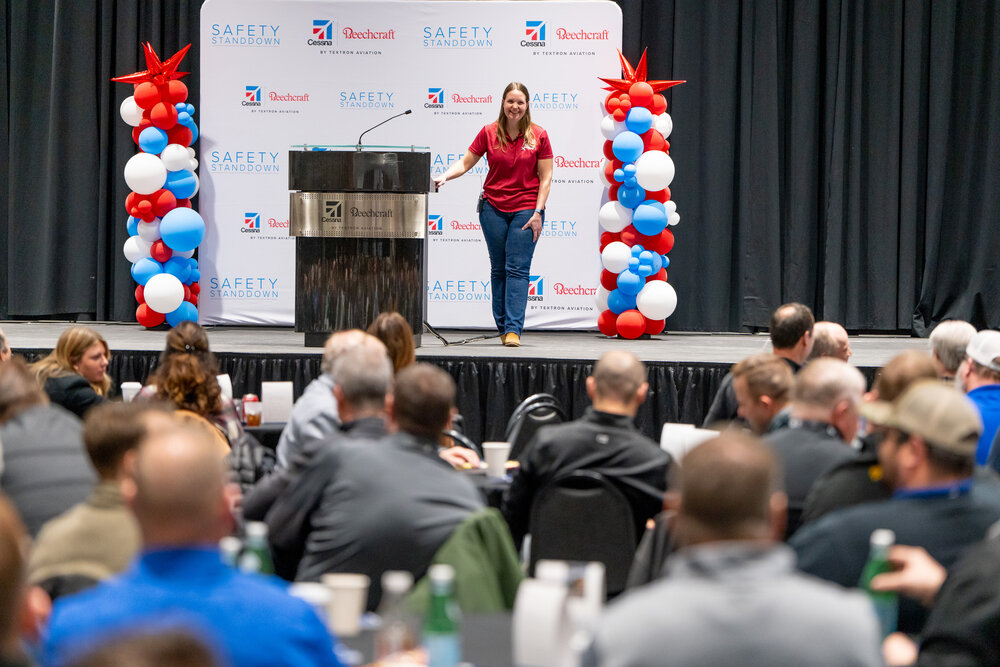
The Textron Aviation 2026 Flight Operations Safety Standdown brought together over 200 employees and industry partners to reaffirm the company’s unwavering commitment to a robust safety focus and continuous improvement. With more than 17,500 flight hours logged by the Textron Aviation flight teams in 2025, emphasizing the importance of operational excellence is crucial.

The Standdown is a day dedicated to learning and collaboration between the Textron Aviation flight department, Quality and Air Safety teams, the Federal Aviation Administration (FAA) and other industry groups.

The day’s agenda featured: 

  • Safety updates related to the company’s Flight Operations, including an overview of air safety investigations  
  • A status of the Design and Manufacturing Safety Management Systems (SMS)
  • An interactive session about the importance of pilot mental focus
  • A review of the relationship between pilots and Air Traffic Control
  • The importance of self-reflection and learning through reporting, reviewing safety data and conducting robust pre and post flight briefings
  • Crisis management
2026 safety standdown presentation.jpg

“The Standdown is an important day for our team to reflect on lessons learned and reinforce the importance of a safety mindset,” said Ron Draper, president and CEO. “Safety is a collaborative effort that requires all of us to emphasize the importance of quality and working diligently to prevent avoidable incidents.”

Safety Standdown provides a clear pause to refocus on what matters most – protecting every flight. Through reflection and shared learning, employees strengthen the mindset and habits that keep the company operating safely and responsibly.

Audit Initiated of FAA’s Oversight of Repair Station Certification Procedures

The Federal Aviation Administration (FAA) Reauthorization Act of 2024 mandated that the Office of the Inspector General’s office conduct a series of audits to assess how consistently FAA interprets and applies policy regarding supplemental type certificates, repair stations and technical standards orders. The OIG is initiating the third audit in the series and will focus on FAA’s consistency in certificating domestic repair stations.

All repair stations performing work on U.S.-registered aircraft must be certificated by FAA under 14 Code of Federal Regulations Part 145. To issue an air agency certificate, FAA inspectors carry out a five-phase process to thoroughly review, evaluate,and test the repair station’s programs, systems and intended methods of compliance. FAA authorizes six general ratings and subclasses that specify what work a repair station can do.

While FAA’s repair station certification procedures are standardized, individual FAA offices may interpret standards, which include orders, guidance and regulations, differently when evaluating system design, approving ratings, or assessing compliance. Accordingly, their objective will be to evaluate whether FAA has sufficient controls in place to provide reasonable assurance that inspectors are consistent in interpreting and applying standards when certificating domestic repair stations.

What Makes Nondestructive Testing Essential in the Aerospace Industry?

Nondestructive testing has become crucial for verifying the functionality and safety of many high-value items, for which methods that damage the items under test or render them unusable are too costly and generally infeasible. The aerospace industry is a good example because of its tight regulations. Nondestructive examination methods allow manufacturers and other relevant parties to meet stringent requirements while retaining items’ usability.

What Is Nondestructive Testing, and Why Is It Important in Aerospace?

Nondestructive testing refers to a range of processes that enable manufacturers to evaluate the structural integrity and performance of a product without damaging it. Besides the cost-saving benefits they offer, these options deliver high accuracy, making them widely used and preferred in the aerospace industry. Malfunctioning products risk lives, requiring engineers, testing team members and others to develop robust strategies that will verify whether a product can withstand the rigors of demanding environments and applications.

Aerospace manufacturers using these methods also enjoy supply chain advantages because they do not need to produce items merely to destroy them during testing. Instead, those that pass inspection eventually reach customers.

Nondestructive testing also offers excellent versatility, allowing practitioners to apply different methods depending on the aerospace components they want to examine. Relatedly, because these techniques do not damage the tested products, staff can run them several times to verify consistency within the results. That capability builds trustworthiness, which is especially useful in the aerospace industry due to its frequently mission-critical requirements.

How Does Nondestructive Testing Work?

Visual inspection is the simplest form of nondestructive testing. It is possible with either natural sight or optical instruments, depending on the products’ requirements and the perceived challenges of spotting abnormalities. Other options include ultrasonic testing, which uses high-frequency sound waves to find flaws above and below an item’s surface.

Eddy current testing relies on electromagnetic induction to detect issues in conductive materials, while radiographic testing encompasses the use of X-rays or gamma rays to create images that show components’ internal structures. This allows people to check parts such as mechanical assemblies for hidden defects.

Some providers — including FUJIFILM Corporation — also offer possibilities such as computed radiology and digital detector arrays. These both produce clear images that testing teams view with specialty software. These imaging-based approaches help companies reduce material waste while achieving the high accuracy the aerospace industry demands.

The processes for performing nondestructive tests depend on the chosen method. Workers should begin by deciding what they want to verify to narrow the assortment of appropriate tests.

Similarly, decision-makers should consider relevant particulars, including their available budgets and the number of items to examine. Because some methods require specialized training, those managing the testing process should also determine whether they need to invest in training or hire new personnel to meet goals.

What Advantages Does Nondestructive Testing Offer the Aerospace Industry?

Innovation defines the aerospace industry, and representatives from its most successful brands understand the importance of continually pushing the boundaries to meet emerging demands. Nondestructive testing also evolves to meet changing requirements and reflect technological progress.

For example, neutron imaging is a specialized method that allows penetrating high-density materials with a neutron source. Although this option traditionally required using nuclear reactors for imaging, some companies have developed alternative technologies that make them less necessary.

Nondestructive testing is also a respected and reputable method, appealing to people who want to embrace reliable methods that will give them strong returns on investment. Positive outcomes become even likelier when individuals from aerospace enterprises partner with brands that specialize in nondestructive testing and services.

Parties that rely on nondestructive testing have explored viable ways to automate parts of the process. These efforts keep accuracy levels high while increasing the overall volumes a business can test in a given time frame. Some recent experiments involved using automated ultrasonic testing on aerospace engine fan blades, which required scanning up to three layers of material, each with varying thicknesses.

Nondestructive testing has also become widely used in aircraft maintenance. That is primarily because experts can perform many techniques while keeping the tested items in service, which reduces overall downtime. Whether the examined product relates to a rocket launch or commercial flight, efficiency is crucial for keeping everything on schedule.

Considerations Before Using Nondestructive Testing for Aerospace Parts

Some nondestructive testing methods require equipment or supplies. Those interested in performing them should strongly consider partnering with experienced brands that can become a one-stop source for the items necessary for beginning or strengthening a quality-control program.

Fujifilm representatives have the knowledge and products to help clients establish internal nondestructive testing initiatives. They can also deliver formal training, ensuring the workforce possesses the skills and capabilities to capitalize on the selected approaches.

A January 2026 market research report about nondestructive testing indicated that the aerospace industry would show the highest compound annual growth rate, achieving an estimated 11.6% from 2025 to 2030. Leaders interested in exploring how to align these techniques with their testing goals should set several key performance indicators and relevant goals before implementing them into existing processes. Metrics will help them determine what is going well and what they should change to optimize results.

The overseeing parties must remember that implementing new processes takes time. They can improve outcomes by seeking advice from representatives with verifiable expertise in the nondestructive testing industry, such as team members from Fujifilm. Those experts can account for the factors specific to an aerospace company’s requirements and recommend the best ways forward.

Succeeding With Nondestructive Testing in the Aerospace Industry

Although non-destructive testing is not a universally applicable option for every aerospace industry situation, it offers numerous advantages that make it well worth considering. Leaders can anticipate the best results if they develop thorough plans and consult with experienced brands to customize their processes.

Banyan Air Service Launches King Air Maintenance Support in St. Augustine

Banyan Air Service is proud to announce the continued expansion of its maintenance, repair, and overhaul (MRO) footprint in Florida with its satellite facility at Northeast Florida Regional Airport in St. Augustine (KSGJ). In addition to supporting HondaJet and Pilatus PC-12 aircraft, the SGJ facility is now open for King Air 90 and 200 maintenance and service.

Banyan’s satellite location in St. Augustine is fully capable of supporting King Air 90 and 200 models, PC-12, and HondaJet operators with line maintenance, scheduled inspections, and heavy maintenance services, complementing Banyan’s flagship Fort Lauderdale Executive Airport (KFXE) MRO operation.

This expansion is a direct response to increased demand for Banyan’s turboprop and light jet maintenance services and reflects the company’s commitment to providing convenient, high-quality support across the state of Florida. The SGJ facility enhances Banyan’s ability to offer faster response times, increased maintenance capacity, and improved geographic coverage for owners and operators.

“We’re excited to continue growing our maintenance capabilities in St. Augustine and to welcome King Air aircraft into the facility while continuing our support of the HondaJet and PC-12 platform,” said Charlie Amento, VP/director of MRO Services. “This location allows us to better support operators in North Florida and beyond while maintaining the same standards of quality and expertise Banyan is known for.”

Staffed by experienced technicians, the SGJ facility delivers Banyan’s trusted level of service with a focus on efficiency, safety, and customer satisfaction. The site supports inspections, modifications, avionics support, AOG assistance, and heavy maintenance services for King Air, PC-12, and HondaJet aircraft.

Cirrus Unveils New G3 Vision Jet

Cirrus introduced the next evolution of its jet product line with the new Generation 3 (G3) Vision Jet. The G3 Vision Jet reveals a reimagined interior with premium materials and an expanded seating option for six adults, as well as ATC Datalink and over 30 refinements designed to create a new era smart and safe Personal Aviation.

The Vision Jet is recognized as the world’s first single-engine Personal Jet and the best-selling jet in aviation. Known for its V-tail design, a quiet and spacious cabin, safety systems, and intuitive Perspective Touch+ avionics, the Vision Jet was designed with the pilot and passengers in mind. Cirrus is now delivering the G3 Vision Jet.

“The G3 Vision Jet is a testament to our relentless innovation, continued investment in Personal Aviation and our owners who want to travel efficiently with award-winning safety features, the Cirrus Airframe Parachute System (CAPS) and Safe Return Emergency Autoland for peace of mind,” said Zean Nielsen, chief executive officer of Cirrus. “The G3 Vision Jet interior was engineered for excellence and comfort now offering expanded seating for increased mission capability. The Cirrus Perspective Touch+ flight deck adds new features for reduced pilot workload including ATC Datalink and Alerts-Linked Checklists while new Cirrus Spectra wingtips illuminate the ramp.”

A Reimagined Cabin

The G3 Vision Jet cabin supports expanded mission capability with pilot and passenger comfort in mind. Now the G3 can seat a total of seven occupants (six adults, one child) with the Premium and Arrivée trims or Xi Designed aircraft. The cabin showcases newly designed seating, tray tables, personal device mount locations and interior aesthetic enhancements to create a flexible, productive and streamlined environment able to adapt to every mission.

Cabin Seating Expands

  • The cabin now features a sleek, comfortable and convenient third-row bench seat to elevate the passenger experience by increasing spaciousness for seven passengers.
  • Enhanced bolstered seats tout fine-tuned ergonomics, adding support to the headrest, armrests and knee area for a comfortable journey.
  • The pilot and co-pilot seats can now be adjusted to their full aft range with single-hand operation, while the middle and third-row seats remain modular and can be removed or installed to serve the pilot’s mission.

Cabin Aesthetic Upgrades

  • All G3 seats feature a new hardshell back with hand-wrapped Alcantara.
  • Depending on the G3 Vision Jet trim, seatbacks are now part of the design experience and come equipped with carbon fiber at the Arrivée level.
  • Interior colorways are enhanced with two new Standard colors, five Premium offerings and a new collection of Arrivée colors now aligning with the SR Series product line.

Flight Deck and Exterior Light Enhancements

The G3 Vision Jet adds Perspective Touch+ flight deck features to reduce pilot workload, increase safety and maximize productivity:

  • ATC Datalink: Pilots can text to communicate with air traffic control to receive route updates, altitude assignments and more.
  • Automatic Database Updates: Flight data is always up to date, streamlining the preflight process with the Cirrus IQ PRO Advanced subscription.
  • Alerts-Linked Checklists: Provide quick access to relevant checklists in high-workload scenarios when a caution or warning alert may arise.
  • Taxiway Routing and 3D SafeTaxi: Increase situational awareness in airport environments with clear airport surface maps and directions when navigating an unfamiliar airport.
  • Cirrus Spectra Wingtips & Lights: New wingtip and landing lights are 2.7 times brighter while the signature Cirrus halo light distinguishes the jet on the ramp.

Yingling Aviation Installs Its First Collins Aerospace High-Definition Venue Cabin Management System

Yingling Aviation announced the successful installation of its first High-Definition Venue Cabin Management System by Collins Aerospace, further expanding Yingling’s capabilities in advanced cabin technology for mid- to large-cabin business aircraft.

Venue is widely regarded as the gold standard in cabin management systems and is installed on more than 1,800 factory-delivered and aftermarket aircraft worldwide. While this marks Yingling Aviation’s first Venue installation, the project benefited from a highly experienced team that has executed dozens of similar installations, resulting in a smooth and efficient process. Collins Aerospace provided onsite support during initial power-up and testing to ensure optimal system performance.

“Working with the Collins team is streamlined and painless,” said Josh Peterson, regional sales manager and avionics expert at Yingling Aviation. “Their Cedar Rapids-based onsite testing makes it easy for customers to experience exactly how the system will perform in their aircraft before delivery.”

Peterson noted that one of the standout features for customers is Collins’ Airshow® HD moving map software, which delivers a high-definition, real-time view of the aircraft’s position, weather, and arrival information while in flight.

“The biggest wow factor is the Airshow HD moving map,” Peterson added. “It gives passengers a beautiful, intuitive picture of where they are, paired with real-time flight information. When combined with the Venue app, customers also gain real-time awareness of their asset, which adds tremendous value.”

The Venue system modernizes the cabin by upgrading displays and interfaces with high-definition entertainment and intuitive touchscreen controls for passengers. For operators facing obsolete or unsupported cabin systems, Venue provides a future-ready solution designed to support long-term operation while enhancing both passenger experience and aircraft value.

With this first Venue installation complete, Yingling Aviation continues to demonstrate its commitment to delivering trusted, forward-looking cabin upgrades that combine technical expertise, OEM collaboration, and a customer-focused approach.