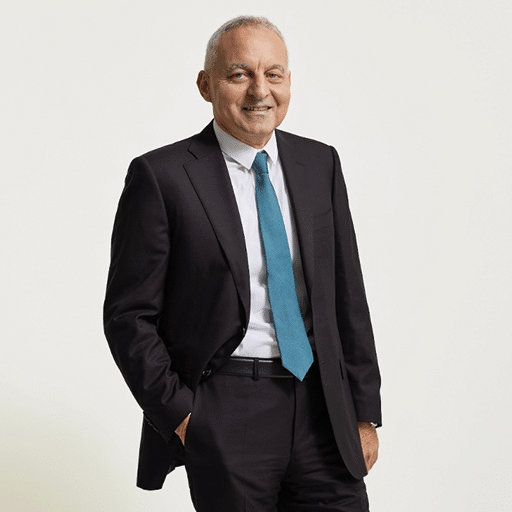
Astronautics Corporation of America has signed an agreement with Radia for the design and development of a complete avionics system solution for their WindRunner cargo aircraft.
“The opportunity to work collaboratively with Radia on the avionics architecture for their one-of-a-kind WindRunner aircraft is an exciting project for all of us at Astronautics,” said Eytan Saletsky, Astronautics director of system solutions. “We look forward to applying our avionics products and system integration expertise to a platform that will reshape global aerospace logistics.”
The WindRunner is the largest aircraft ever built by volume and is designed for large-scale logistics in locations with limited infrastructure — serving energy, aerospace and defense, and emergency response missions.
FDH Aero, an independent supply chain solutions partner for the aerospace and defense industry, announced the formation of FDH Hardware, a unified division comprising its five legacy hardware brands within a cohesive, focused structure.
The newest of FDH Aero’s core divisions, FDH Hardware follows the formation of FDH Electronics and FDH Defense Aftermarket. This new FDH Hardware collective brings a deeper technical expertise and a more coordinated approach to supporting both OEM and aftermarket customers worldwide.
“The creation of FDH Hardware is an important step toward improving and simplifying the global supply chain,” said Matt Lacki, president of FDH Hardware. “I’m excited about the technical depth and operational strength this collective team brings, and we’re eager to apply the lessons learned from the formation of FDH Electronics and FDH Defense Aftermarket to deliver even greater flexibility, reliability and product breadth for our customers and supplier partners.”
The company says the move comes as OEMs continue to accelerate production across the globe while supply chains remain strained due to geopolitical challenges, creating significant bottlenecks in regions where aircraft parts are difficult to source. By unifying these companies under one coordinated division, FDH Hardware says it will simplify access to inventory, expertise and support while empowering regional teams to make decisions on the ground. This will offer customers access to a faster, more tailored service without the added complexity of managing multiple vendors.
“By consolidating backend systems and inventory, expanding our talent pool, and maintaining regional autonomy, we’ve created a model that combines the scale of a global distributor with the responsiveness of a local partner,” added Lacki. “We’ve seen how well this strategy works for FDH’s other core divisions and we already see how our hardware customers are benefiting from new efficiencies that we’re bringing to their operations.”
FDH Hardware now offers customers broader access to a complete line of aerospace fasteners, from specialized items to C-class parts, all rigorously tested and inspected to meet the highest industry standards. FDH Aero’s continued investment in its hardware division reinforces its commitment to setting a new standard for supply chain responsiveness, reliability, and customer-focused service across the aerospace and defense industry.
Safran Electrical & Power, a world leader in electric aircraft systems, and Saft, a subsidiary of TotalEnergies, which develops advanced batteries for a wide range of industrial sectors including aerospace, have signed an exclusive partnership to develop a high voltage battery system for aviation, paving the way for the next generation of aircraft.
The new high-voltage battery system is designed to meet the growing demand for aircraft electrification. It will revolutionize onboard energy by delivering unprecedented power levels, allowing more energy to be stored and supplied over longer durations. Thanks to the combined expertise of Safran and Saft, the system incorporates high-performance lithium-ion cells, cutting-edge technologies in thermal runaway containment, system management, and safety-related algorithms, ensuring the highest safety standards.
The battery’s performance is fully scalable: modules and cells are engineered for easy adaptation to various aircraft configurations. Its modular design, with length-adjustable modules, allows seamless integration, meeting diverse installation constraints across aircraft platforms. Leveraging the latest battery technologies — from today’s lithium manganese ferro phosphate (LMFP), to solid-state cells in the near future — this new system will guarantee optimized performance tailored to the stringent requirements of aviation.
“Our initial collaboration with Saft has shown the powerful synergy between our two companies, and we are thrilled to move forward,” said Bruno Bellanger, Safran Electrical & Power CEO. “We aim to bring to market a groundbreaking high-voltage battery system — a true game-changer for the industry. As the industry charts its path towards net-zero emissions by 2050, electrification will be a cornerstone of the transformation, and we are determined to lead the way.”
“We are delighted to combine our expertise with Safran to leverage our complementary skills and pool our resources,” said Cedric Duclos, Saft CEO. “Joining forces with Safran will enable us to accelerate the innovation in high voltage battery systems to meet safety, performance and emissions reduction.”
This collaboration is part of the strategic alliance between Safran and TotalEnergies signed in 2021 to jointly develop technical and commercial solutions for reducing the carbon footprint of aviation. Saft and Safran have been working together as part of an aviation battery research consortium with the support of the French Civil Aviation Authority (Direction Générale de l’Aviation Civile-DGAC).
Rolls-Royce launched the first of two Durability Enhancement Packages, that will more than double the duration Trent 1000 engines remain in service before needing scheduled maintenance. This marks an important milestone on Rolls-Royce’s transformation program into a high performing, competitive, resilient and growing business.
Increasing “Time on Wing” for the Trent 1000 will bring significantly improved asset utilization, reduced maintenance burden and provide far greater fleet planning certainty for customers, the company says. It says the durability enhancement complements the reliability that the Trent 1000 already has.
The enhancement package has been installed in new engines since January 2025, ready for delivery to customers at the earliest opportunity post-certification. They will now be distributed to maintenance facilities globally, to be retrofitted to engines that are already in service. Within two years all of the Trent 1000 fleet will have been upgraded.
The upgraded components have already been enhancing durability since 2022 on the Trent 7000 engine. It is performing better than expected, and in some cases more than tripling Time on Wing. This proven in-service performance gives Rolls-Royce full confidence in the same benefit reading across to Trent 1000 customers.
The new technologies — part of the Trent fleet £1bn durability enhancement program — will contribute to Rolls-Royce meeting its mid-term targets to increase average Time on Wing across all modern Trent engines, which incorporates the Trent 1000, Trent 7000, Trent XWB-84 and Trent XWB-97. The company announced earlier this year that this target would double from its initial ambition of a 40% average increase to 80% by 2027.
Tufan Erginbilgic
CEO,
Rolls-Royce
“The Trent 1000 is an important engine for us and today marks a new chapter in its story,” said CEO, Tufan Erginbilgic. “When upgraded, we’re confident that our customers and their passengers will benefit from increased durability, thanks to the proven enhancements that have already surpassed our expectations on the Trent 7000. As part of our ongoing transformation, the investment we have made in new technologies will see the Trent 1000 deliver for Boeing, our customers and our investors. It’s a win-win for everyone involved.”
The first phase of durability enhancement includes a 40% increase in cooling to the new high pressure turbine blade. There are also updates to the combustion system, fuel spray nozzles and engine electronic controller software.
Rob Watson
President Rolls-Royce
Civil Aerospace
“Today is an important day for Rolls-Royce, our customers and our partnership with Boeing,” said Rob Watson, president of Rolls-Royce Civil Aerospace. “We know that the same enhancements have already tripled Time on Wing in some cases for the Trent 7000, so we are confident it will deliver for Trent 1000 customers. To do so at pace, we began installing the enhancements into new engines prior to today’s certification to reduce the lead time as much as possible. They will now enter the fleet immediately.”
Phase two of the Durability Enhancement Package is currently being tested at Rolls-Royce’s facility in Derby, U.K., and will bring a further 30% improvement in Time on Wing across the Trent 1000 and Trent 7000 fleets. It features advanced coating on combustor tiles in non-benign environments; cooling and coating changes to high pressure nozzle guide vanes; weight reduction and coating improvements to high pressure turbine blades; and a redesigned combustor-to-turbine interface taken from the latest variant Trent XWB-84 EP. This further enhancement will start entering the Trent 1000 fleet from early 2026.
Safran and Bombardier Inc. signed a letter of intent to explore new opportunities for collaboration and foster the joint development of innovative, high-performance and reliable technologies for defense.
This initiative will enable the two companies to leverage their complementary technological expertise and create a conducive framework for innovation and the rapid industrial scaleup of new solutions.
Olivier
Andriès
CEO,
Safran
“Strengthening our long-standing partnership with Bombardier is a highly strategic move for both our groups,” said Olivier Andriès, CEO of Safran. “By combining our strengths, we’ll be well placed to accelerate innovation and deliver the advanced defense technologies of tomorrow.”
“This collaboration between Bombardier and Safran will foster the development of new solutions by leveraging our respective areas of expertise,” said Éric Martel, president and chief executive officer of Bombardier. “Bombardier and its more than 18,000 people stand ready to help our nations, and others, meet their evolving defense needs.”
The aerospace sector was identified as a priority by French Prime Minister François Bayrou and Quebec Premier François Legault in a joint statement issued in June, highlighting the commitment of their respective governments to strengthening economic ties between Quebec and France.
Mankiewicz has been recognized by Airbus as part of the Supply Chain & Quality Improvement Program (SQIP). For the third consecutive year, Mankiewicz received the Accredited Supplier award in the “Materials & Parts” category — at the highest achievable level. This prestigious status is awarded to suppliers who consistently demonstrate outstanding performance in product quality, delivery reliability and collaborative partnership. With this award, Mankiewicz reaffirms its position among the top-tier suppliers in the Airbus network.
In addition to the Accredited Supplier recognition, Mankiewicz received the Special Award for Digitalization. The award honors a digital system developed to optimize internal material management processes. The program ensures optimal information and material flow across departments, enhancing transparency, efficiency and supply chain integration.
“We are incredibly proud of our entire team,” said René Lang, executive managing director aviation at Mankiewicz. “Receiving both the Accredited Supplier status and the digitalization award is a strong validation of our commitment to customer service, quality, and digital progress. We look forward to continuing our close and trusted collaboration with Airbus.”
Aircraft engineering and maintenance solutions provider, HAECO, announced the successful completion of its first Reverse Bleed System (RBS) installation for the LEAP-1A engine, including fuel nozzle replacement, via its on-wing services team in London, U.K. This achievement marks the third location performing LEAP-1A engine modification following similar milestones at HAECO’s Hong Kong and Dallas facilities, the company says.
HAECO Global Engine Support, an operating company under HAECO Group, provides round-the-clock on-wing and in-shop engine support services from its extensive network spanning the Asia Pacific, the Americas, and Europe. The company says the successful LEAP-1A RBS modification is a result of the “trusted partnership between HAECO and major engine OEMs.”
“We are delighted to announce this significant milestone of completing the LEAP-1A RBS installation successfully,” said Corné van Rooij, general manager of HAECO Global Engine Support. “This accomplishment not only showcases our technical expertise but also reflects the strong collaboration and trust by OEMs, enabling us to enhance our engine service offerings with cutting-edge solutions for our airline customers.”
In early 2025, HAECO partnered with the city of Dallas to relocate to an expanded engine facility, enhancing its capabilities for the industrialization and repair of next-generation aircraft engines, such as LEAP. In addition to LEAP-1A RBS installations, HAECO Global Engine Support offers 24/7 on-wing and near-wing engine support, inspections and repairs, and offers a network of EASA- and FAA-approved hospital shops for all major engine types. It also operates engine storage facilities and serves as a center for the lease redelivery of major engine models offering borescope inspection, general visual inspection, inventory check and engine preservation.
At its London facility, HAECO Global Engine Support provides on-wing and near-wing engine services for a wide range of engine types, including the RB211-524, -535, Trent 500, 700, 800, 900, 1000/7000, XWB, and LEAP-1A.
Barfield, a subsidiary of Air France Industries KLM Engineering & Maintenance (AFI KLM E&M) in the Americas, continues to expand its participation in the UAV (unmanned aerial vehicle) industry by signing a partnership agreement with Parrot, a design and manufacturing drone company. This agreement is a milestone in the development of Barfield’s UAV growth strategy.
“We are excited to be partnering with Parrot. They bring state-of-the-art solutions to the market with a high focus on technology, reliability, resilience and customer satisfaction. This is exactly what Barfield strives to deliver to the MRO and UAV industries,” said Gilles Mercier, CEO at Barfield.
“Barfield’s expertise in the aerospace supply chain, with its customer focus strategy to deliver exceptional products and services, is a perfect fit to support Parrot’s new generation of micro-drones in the USA, where Parrot has the latest and unique technology for defense, federal agencies, law enforcement and enterprise. This is an important step forward in strengthening our U.S. distribution and support development strategy,” declared Chris Roberts, senior vice president and chief revenue officer at Parrot Group Global.
MTU Aero Engines reports it is working “steadily and with determination” on its Flying Fuel Cell (FFC). The experts are making good progress, and they have reached some important milestones. The design for the Flying Fuel Cell has been nailed down, stack manufacturing for the demonstrator has started, the eMoSys electric motor was successfully tested for the first time, and the first test cell went into operation in Munich.
“With the successful critical design review for our first electric 600-kilowatt powertrain, we are wrapping up the design phase and starting on manufacturing and assembly,” said Barnaby Law, FFC head engineer at MTU Aero Engines. Recently, production of the ultramodern fuel cell stacks also began in Munich.
Meanwhile, work was progressing on the electric motor for the FFC powertrain, which MTU is developing with its subsidiary eMoSys in Starnberg. An important milestone was reached here, too: in a challenging series of tests, the 600-kilowatt motor reliably had a maximum continuous output of 600 kW for the first time. “The tests confirmed a high efficiency rate of more than 96 percent, both during takeoff and at cruising altitude,” said Law.
At the same time, the FFC testing infrastructure was being built at the facility in Munich. It consists of two test cells that include a hydrogen infrastructure as well as cooling water and pressurized air supply. Current status: the fuel cell stack test cell is finished and is now being put into operation. It is designed for stacks with up to 500 kilowatts of electrical power per unit. The second testing setup, the system test cell, is currently under construction and will be used to test the entire engine system.
The company reports that research activities are also going well at the European level. As part of the HEROPS clean aviation research project (Hydrogen-Electric Zero Emission Propulsion System) — building on MTU’s FFC — technologies are being developed for a climate-neutral, hydrogen-driven electric powertrain that will be able to power regional airplanes starting in 2035. Led by MTU, there are seven partners working on this project. First, they will analyze powertrains with an output of up to 1.8 megawatts and then they will build a HEROPS ground demonstrator. It will prove that the groundbreaking new technologies are feasible, and that they can be scaled up to outputs between two and four megawatts using a modular engine architecture.
GE Aerospace is making significant investments in its test infrastructure to accelerate the development of next-generation hypersonic propulsion systems. These upgrades at sites in Evendale, Ohio, Bohemia, New York and Niskayuna, New York will enable the company to conduct higher-Mach, mission-relevant testing at a scale not previously possible.
Evendale, Ohio: GE Aerospace is upgrading a test facility to provide dedicated test support for larger hypersonic propulsion systems than previously possible. These enhancements will also allow testing at higher Mach numbers and enable more relevant simulation of actual flight conditions.
Bohemia, New York: GE Aerospace has been upgrading the test cell facilities on site, following the 2022 acquisition of Innoveering, a company specializing in hypersonic propulsion technologies.
Niskayuna, New York: GE Aerospace is expanding hypersonic testing capabilities at its Research Center, to support the evaluation of larger propulsion systems as well as evaluate and refine a range of next-generation hypersonic propulsion technologies.
“This investment significantly accelerates GE Aerospace’s ability to meet future hypersonic propulsion needs,” said Mark Rettig, vice president and general manager of Edison Works Advanced Programs at GE Aerospace. “By enhancing our infrastructure, we’re not only enabling more representative and scalable testing but also demonstrating our ability to deliver advanced technologies faster and more efficiently, ensuring our customers have the cutting-edge solutions they need when they need them.”
The test cell expansion comes on the heels of GE Aerospace’s successful development and testing of a hypersonic dual-mode ramjet that went from concept to test in less than 11 months followed by testing of a liquid fueled ramjet 10 months after initial concept definition.
We use cookies on our website to give you the most relevant experience by remembering your preferences and repeat visits. By clicking “Accept”, you consent to the use of ALL the cookies.
This website uses cookies to improve your experience while you navigate through the website. Out of these, the cookies that are categorized as necessary are stored on your browser as they are essential for the working of basic functionalities of the website. We also use third-party cookies that help us analyze and understand how you use this website. These cookies will be stored in your browser only with your consent. You also have the option to opt-out of these cookies. But opting out of some of these cookies may affect your browsing experience.
Necessary cookies are absolutely essential for the website to function properly. This category only includes cookies that ensures basic functionalities and security features of the website. These cookies do not store any personal information.
Functional cookies help to perform certain functionalities like sharing the content of the website on social media platforms, collect feedbacks, and other third-party features.
Performance cookies are used to understand and analyze the key performance indexes of the website which helps in delivering a better user experience for the visitors.
Analytical cookies are used to understand how visitors interact with the website. These cookies help provide information on metrics the number of visitors, bounce rate, traffic source, etc.
Advertisement cookies are used to provide visitors with relevant ads and marketing campaigns. These cookies track visitors across websites and collect information to provide customized ads.