What Makes Nondestructive Testing Essential in the Aerospace Industry?

Nondestructive testing has become crucial for verifying the functionality and safety of many high-value items, for which methods that damage the items under test or render them unusable are too costly and generally infeasible. The aerospace industry is a good example because of its tight regulations. Nondestructive examination methods allow manufacturers and other relevant parties to meet stringent requirements while retaining items’ usability.

What Is Nondestructive Testing, and Why Is It Important in Aerospace?

Nondestructive testing refers to a range of processes that enable manufacturers to evaluate the structural integrity and performance of a product without damaging it. Besides the cost-saving benefits they offer, these options deliver high accuracy, making them widely used and preferred in the aerospace industry. Malfunctioning products risk lives, requiring engineers, testing team members and others to develop robust strategies that will verify whether a product can withstand the rigors of demanding environments and applications.

Aerospace manufacturers using these methods also enjoy supply chain advantages because they do not need to produce items merely to destroy them during testing. Instead, those that pass inspection eventually reach customers.

Nondestructive testing also offers excellent versatility, allowing practitioners to apply different methods depending on the aerospace components they want to examine. Relatedly, because these techniques do not damage the tested products, staff can run them several times to verify consistency within the results. That capability builds trustworthiness, which is especially useful in the aerospace industry due to its frequently mission-critical requirements.

How Does Nondestructive Testing Work?

Visual inspection is the simplest form of nondestructive testing. It is possible with either natural sight or optical instruments, depending on the products’ requirements and the perceived challenges of spotting abnormalities. Other options include ultrasonic testing, which uses high-frequency sound waves to find flaws above and below an item’s surface.

Eddy current testing relies on electromagnetic induction to detect issues in conductive materials, while radiographic testing encompasses the use of X-rays or gamma rays to create images that show components’ internal structures. This allows people to check parts such as mechanical assemblies for hidden defects.

Some providers — including FUJIFILM Corporation — also offer possibilities such as computed radiology and digital detector arrays. These both produce clear images that testing teams view with specialty software. These imaging-based approaches help companies reduce material waste while achieving the high accuracy the aerospace industry demands.

The processes for performing nondestructive tests depend on the chosen method. Workers should begin by deciding what they want to verify to narrow the assortment of appropriate tests.

Similarly, decision-makers should consider relevant particulars, including their available budgets and the number of items to examine. Because some methods require specialized training, those managing the testing process should also determine whether they need to invest in training or hire new personnel to meet goals.

What Advantages Does Nondestructive Testing Offer the Aerospace Industry?

Innovation defines the aerospace industry, and representatives from its most successful brands understand the importance of continually pushing the boundaries to meet emerging demands. Nondestructive testing also evolves to meet changing requirements and reflect technological progress.

For example, neutron imaging is a specialized method that allows penetrating high-density materials with a neutron source. Although this option traditionally required using nuclear reactors for imaging, some companies have developed alternative technologies that make them less necessary.

Nondestructive testing is also a respected and reputable method, appealing to people who want to embrace reliable methods that will give them strong returns on investment. Positive outcomes become even likelier when individuals from aerospace enterprises partner with brands that specialize in nondestructive testing and services.

Parties that rely on nondestructive testing have explored viable ways to automate parts of the process. These efforts keep accuracy levels high while increasing the overall volumes a business can test in a given time frame. Some recent experiments involved using automated ultrasonic testing on aerospace engine fan blades, which required scanning up to three layers of material, each with varying thicknesses.

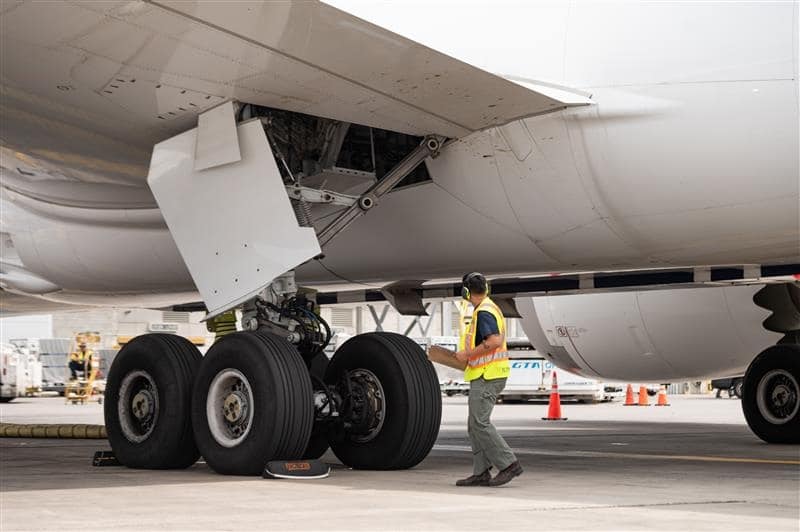
Nondestructive testing has also become widely used in aircraft maintenance. That is primarily because experts can perform many techniques while keeping the tested items in service, which reduces overall downtime. Whether the examined product relates to a rocket launch or commercial flight, efficiency is crucial for keeping everything on schedule.

Considerations Before Using Nondestructive Testing for Aerospace Parts

Some nondestructive testing methods require equipment or supplies. Those interested in performing them should strongly consider partnering with experienced brands that can become a one-stop source for the items necessary for beginning or strengthening a quality-control program.

Fujifilm representatives have the knowledge and products to help clients establish internal nondestructive testing initiatives. They can also deliver formal training, ensuring the workforce possesses the skills and capabilities to capitalize on the selected approaches.

A January 2026 market research report about nondestructive testing indicated that the aerospace industry would show the highest compound annual growth rate, achieving an estimated 11.6% from 2025 to 2030. Leaders interested in exploring how to align these techniques with their testing goals should set several key performance indicators and relevant goals before implementing them into existing processes. Metrics will help them determine what is going well and what they should change to optimize results.

The overseeing parties must remember that implementing new processes takes time. They can improve outcomes by seeking advice from representatives with verifiable expertise in the nondestructive testing industry, such as team members from Fujifilm. Those experts can account for the factors specific to an aerospace company’s requirements and recommend the best ways forward.

Succeeding With Nondestructive Testing in the Aerospace Industry

Although non-destructive testing is not a universally applicable option for every aerospace industry situation, it offers numerous advantages that make it well worth considering. Leaders can anticipate the best results if they develop thorough plans and consult with experienced brands to customize their processes.
Banyan Air Service Launches King Air Maintenance Support in St. Augustine

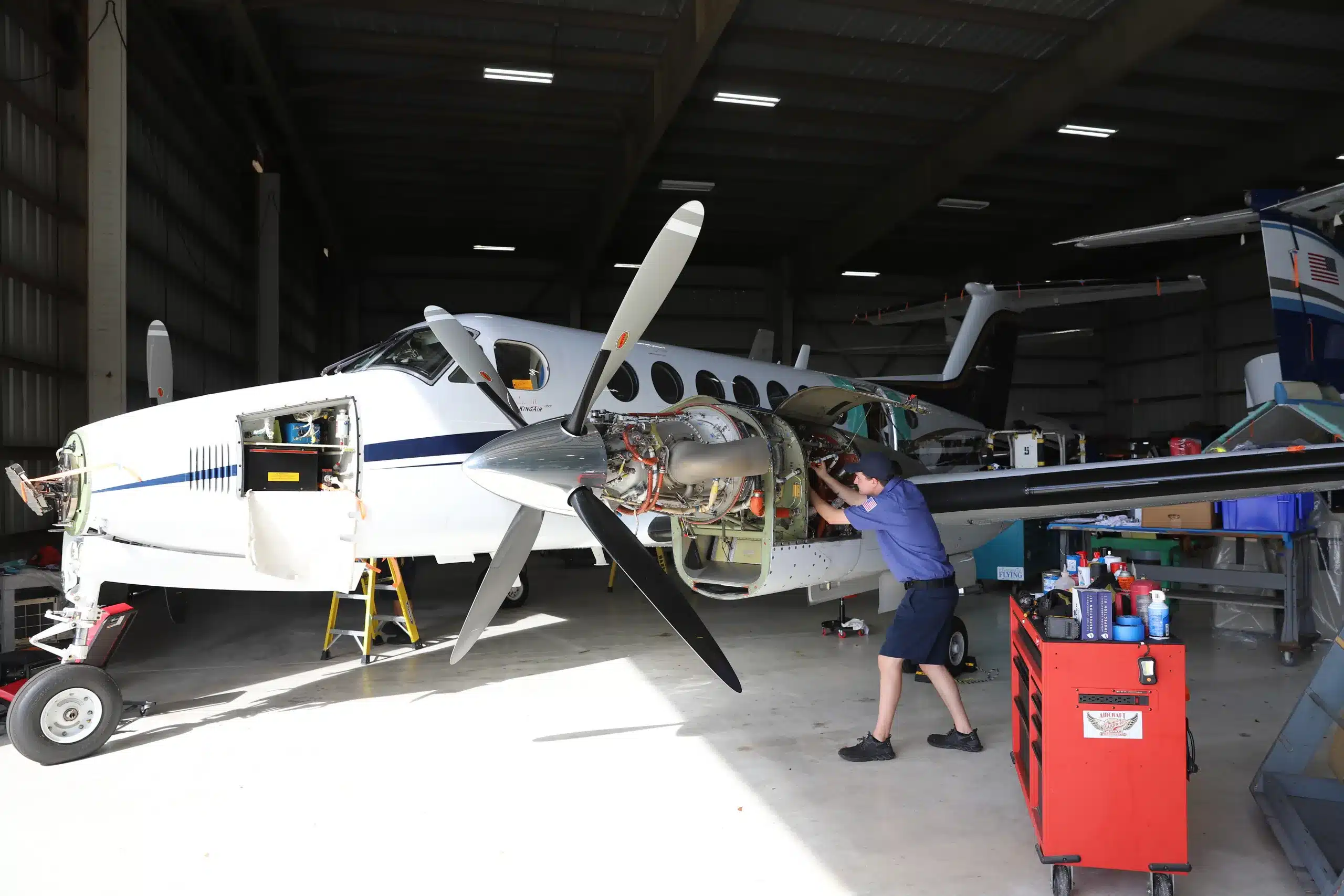
Banyan Air Service is proud to announce the continued expansion of its maintenance, repair, and overhaul (MRO) footprint in Florida with its satellite facility at Northeast Florida Regional Airport in St. Augustine (KSGJ). In addition to supporting HondaJet and Pilatus PC-12 aircraft, the SGJ facility is now open for King Air 90 and 200 maintenance and service.

Banyan’s satellite location in St. Augustine is fully capable of supporting King Air 90 and 200 models, PC-12, and HondaJet operators with line maintenance, scheduled inspections, and heavy maintenance services, complementing Banyan’s flagship Fort Lauderdale Executive Airport (KFXE) MRO operation.

This expansion is a direct response to increased demand for Banyan’s turboprop and light jet maintenance services and reflects the company’s commitment to providing convenient, high-quality support across the state of Florida. The SGJ facility enhances Banyan’s ability to offer faster response times, increased maintenance capacity, and improved geographic coverage for owners and operators.

“We’re excited to continue growing our maintenance capabilities in St. Augustine and to welcome King Air aircraft into the facility while continuing our support of the HondaJet and PC-12 platform,” said Charlie Amento, VP/director of MRO Services. “This location allows us to better support operators in North Florida and beyond while maintaining the same standards of quality and expertise Banyan is known for.”

Staffed by experienced technicians, the SGJ facility delivers Banyan’s trusted level of service with a focus on efficiency, safety, and customer satisfaction. The site supports inspections, modifications, avionics support, AOG assistance, and heavy maintenance services for King Air, PC-12, and HondaJet aircraft.

Cirrus Unveils New G3 Vision Jet

Cirrus introduced the next evolution of its jet product line with the new Generation 3 (G3) Vision Jet. The G3 Vision Jet reveals a reimagined interior with premium materials and an expanded seating option for six adults, as well as ATC Datalink and over 30 refinements designed to create a new era smart and safe Personal Aviation.

The Vision Jet is recognized as the world’s first single-engine Personal Jet and the best-selling jet in aviation. Known for its V-tail design, a quiet and spacious cabin, safety systems, and intuitive Perspective Touch+ avionics, the Vision Jet was designed with the pilot and passengers in mind. Cirrus is now delivering the G3 Vision Jet.

“The G3 Vision Jet is a testament to our relentless innovation, continued investment in Personal Aviation and our owners who want to travel efficiently with award-winning safety features, the Cirrus Airframe Parachute System (CAPS) and Safe Return Emergency Autoland for peace of mind,” said Zean Nielsen, chief executive officer of Cirrus. “The G3 Vision Jet interior was engineered for excellence and comfort now offering expanded seating for increased mission capability. The Cirrus Perspective Touch+ flight deck adds new features for reduced pilot workload including ATC Datalink and Alerts-Linked Checklists while new Cirrus Spectra wingtips illuminate the ramp.”

A Reimagined Cabin

The G3 Vision Jet cabin supports expanded mission capability with pilot and passenger comfort in mind. Now the G3 can seat a total of seven occupants (six adults, one child) with the Premium and Arrivée trims or Xi Designed aircraft. The cabin showcases newly designed seating, tray tables, personal device mount locations and interior aesthetic enhancements to create a flexible, productive and streamlined environment able to adapt to every mission.

Cabin Seating Expands

  • The cabin now features a sleek, comfortable and convenient third-row bench seat to elevate the passenger experience by increasing spaciousness for seven passengers.
  • Enhanced bolstered seats tout fine-tuned ergonomics, adding support to the headrest, armrests and knee area for a comfortable journey.
  • The pilot and co-pilot seats can now be adjusted to their full aft range with single-hand operation, while the middle and third-row seats remain modular and can be removed or installed to serve the pilot’s mission.

Cabin Aesthetic Upgrades

  • All G3 seats feature a new hardshell back with hand-wrapped Alcantara.
  • Depending on the G3 Vision Jet trim, seatbacks are now part of the design experience and come equipped with carbon fiber at the Arrivée level.
  • Interior colorways are enhanced with two new Standard colors, five Premium offerings and a new collection of Arrivée colors now aligning with the SR Series product line.

Flight Deck and Exterior Light Enhancements

The G3 Vision Jet adds Perspective Touch+ flight deck features to reduce pilot workload, increase safety and maximize productivity:

  • ATC Datalink: Pilots can text to communicate with air traffic control to receive route updates, altitude assignments and more.
  • Automatic Database Updates: Flight data is always up to date, streamlining the preflight process with the Cirrus IQ PRO Advanced subscription.
  • Alerts-Linked Checklists: Provide quick access to relevant checklists in high-workload scenarios when a caution or warning alert may arise.
  • Taxiway Routing and 3D SafeTaxi: Increase situational awareness in airport environments with clear airport surface maps and directions when navigating an unfamiliar airport.
  • Cirrus Spectra Wingtips & Lights: New wingtip and landing lights are 2.7 times brighter while the signature Cirrus halo light distinguishes the jet on the ramp.

Yingling Aviation Installs Its First Collins Aerospace High-Definition Venue Cabin Management System

Yingling Aviation announced the successful installation of its first High-Definition Venue Cabin Management System by Collins Aerospace, further expanding Yingling’s capabilities in advanced cabin technology for mid- to large-cabin business aircraft.

Venue is widely regarded as the gold standard in cabin management systems and is installed on more than 1,800 factory-delivered and aftermarket aircraft worldwide. While this marks Yingling Aviation’s first Venue installation, the project benefited from a highly experienced team that has executed dozens of similar installations, resulting in a smooth and efficient process. Collins Aerospace provided onsite support during initial power-up and testing to ensure optimal system performance.

“Working with the Collins team is streamlined and painless,” said Josh Peterson, regional sales manager and avionics expert at Yingling Aviation. “Their Cedar Rapids-based onsite testing makes it easy for customers to experience exactly how the system will perform in their aircraft before delivery.”

Peterson noted that one of the standout features for customers is Collins’ Airshow® HD moving map software, which delivers a high-definition, real-time view of the aircraft’s position, weather, and arrival information while in flight.

“The biggest wow factor is the Airshow HD moving map,” Peterson added. “It gives passengers a beautiful, intuitive picture of where they are, paired with real-time flight information. When combined with the Venue app, customers also gain real-time awareness of their asset, which adds tremendous value.”

The Venue system modernizes the cabin by upgrading displays and interfaces with high-definition entertainment and intuitive touchscreen controls for passengers. For operators facing obsolete or unsupported cabin systems, Venue provides a future-ready solution designed to support long-term operation while enhancing both passenger experience and aircraft value.

With this first Venue installation complete, Yingling Aviation continues to demonstrate its commitment to delivering trusted, forward-looking cabin upgrades that combine technical expertise, OEM collaboration, and a customer-focused approach.

A New Chapter for Wright International as Canadian Aviation Continues to Diversify

Canada’s aviation market is diversifying as passenger numbers from non-US international destinations increase. Flexible and tailored MRO services are playing a vital role in enabling global airlines and leasing companies to ramp up their presence in Canada. Donatas Dockus, CEO of MRO provider FL Technics – affiliated Wright International, reveals how the company’s global roots and local precision are enabling airlines worldwide to operate in Canada with greater confidence and agility.

Tapping into an International Network

Transborder travel between the US and Canada remains substantial: according to aviation data platform OAG, it is the 5th most flown country-to-country crossing in the world. Nevertheless, the volume of US-Canada flights has dropped in 2025. However, strong growth in other international flights helps pick up the slack from this drop. According to Statistics Canada, the non-US international sector has increased significantly since 2022. Passenger numbers on these flights grew from 25.6 million in 2022 to 38.9 million in 2024.

Wright International, a member of FL Technics Group, which in turn is part of the Avia Solutions Group, is well positioned to support the increased volume of international flights from non-US locations. “Along with our Transport Canada approvals, we have authorizations for many other regions, including Saudi Arabia, Egypt and Europe. This makes us a trusted partner for carriers from these regions who are already operating in Canada or looking to expand here,” says Donatas Dockus, CEO of Wright International.

Beyond licensing, there is a wealth of international know-how within the Wright International team that can support global carriers and leasing companies in their operations in Canada.

“Personally speaking, I have been in the FL Technics Group for 13 years, including work across Europe and in Asia,” says Dockus. “Within FL Technics and the wider Avia Solutions Group, there are connections and experts who can support airlines from anywhere in the world. Within Wright International, we can offer the engineering solutions needed in the North American region, combined with a deep understanding of international aviation. For example, we could comfortably support European leasing companies with engineering solutions and annual inspections here in Canada, removing the need for them to send their own teams,” says Dockus.

Overcoming Geographic Challenges

Having worked in MRO teams on multiple continents, Dockus is aware of the unique challenges Canada poses. “Geography and climate play a major role – distances are vast and many airports are in remote locations,” he explains. “Weather is by far the toughest factor for line maintenance and AOG support. Despite extreme conditions, our teams are there for customers when it matters most, even responding to call-outs at 4am in minus-30-degree temperatures.”

Another distinctive feature of Canadian aviation is that the population is widely and unevenly distributed. “Recruiting and hiring is a challenge in MRO operations across the globe,” comments Dockus. “In Canada, this challenge is a little more acute, as some locations are remote and have relatively small populations, which is less common in regions like Asia or LATAM. The solution is simple – we make careful calculations in terms of new stations, and then invest in training and developing the local talent needed to support long-term operations.”

Flexibility and Tailored Solutions

Wright International is now entering an exciting and dynamic phase of its 27-year history as it looks to expand its tailored line maintenance services to more airlines and additional locations.

“We operate in Toronto, Vancouver, and Montreal, and have recently added a new station in Halifax. We also have seasonal stations in Quebec City, Ottawa, and Winnipeg. This ongoing expansion puts us in a strong position to offer flexible line maintenance solutions across Canada,” explains Dockus.

In total, Wright International now operates seven stations at international airports across Canada: Toronto Pearson (YYZ), Montreal-Trudeau (YUL), Ottawa Macdonald-Cartier (YOW), Winnipeg James Armstrong Richardson (YWG), Vancouver (YVR), Halifax Stanfield (YHZ), and Québec City Jean Lesage (YQB). “Each of these stations boasts certified personnel with the capability to service a wide range of narrow-body and wide-body aircraft, including Boeing and Airbus models and regional aircraft,” says Donatas Dockus.

At present, Wright International works on the Airbus A220, A320 family, A330/330 NEO, A340, and A350, and the Boeing 737 family, 777, 787, 757 and 767, along with regional aircraft including Embraer.

Wright International currently holds the following approvals: TCCA (Transport Canada AMO), EASA, GACA (Saudi Arabia), 2 REG, CAAF (Fiji Authority), Egyptian CAA, Moroccan DAC, DGCA (Turkish), and QCAA (Qatar). It provides line maintenance up to ‘A’ level checks, along with AOG support. “We offer a 24/7 service in Toronto, Vancouver, and Montreal. Our experienced engineers carry out thousands of routine checks per month. And our depth in experience allows us to handle unexpected occurrences in an efficient and safety-conscious manner. We also have major storage facilities for spares and components in Toronto,” comments Dockus.

“Naturally, Wright International works closely with airlines to carry out thorough evaluations and deliver precise, safe and efficient AOG support. Our on-call maintenance support can be set up at any airport that our clients operate from,” Dockus continues. “We also provide a call-out service where we will fly our team to more remote airports and provide AOG support there. We can also support aircraft leasing companies with engineering services anywhere in Canada.”

“In summary, we have a wide range of highly flexible services available that can be tailored to the needs of individual airlines and leasing companies.”

“Going forward, we are working on further strengthening our team’s operational capabilities to enable us to support even more airline partners. We are ready to offer bespoke packages to new partners and build attractive packages with our existing partners as well,” adds Dockus.

A Customer-Centric Approach

Wright International says it places a lot of focus on after service and open communication. “Being available is very important,” comments Dockus. “We dedicate a lot of our time and energy to ensure we deliver on our promises and aim to provide maintenance without delays. We also prioritize after service to ensure the entire process is smooth for our customers.”

Part of the company’s flexible approach is a readiness to support seasonal operators in Canada. “We are continuously looking at trends in terms of where airlines are flying to in Canada, and are exploring new locations for seasonal deployments,” he adds.

Long-Term Vision

Wright International’s long-term vision is to achieve national coverage while simultaneously training up its team for various aircraft types. “We are targeting ongoing growth over the long-term, which means bringing on new clients, deepening our relationships with existing clients, and expanding our coverage in Canada,” explains Dockus. “And we want our team to be ready and available to support every type of aircraft, including next-generation models that are coming online. This will require extensive investment in our people, as manpower will remain a key challenge to overcome.”

“This growth will be building on our existing brand and work at Wright International,” Dockus concludes. “We offer high levels of flexibility and tailoring for our clients, and our ambition is to combine this with even wider and more comprehensive coverage.”

Vantage Aviation Expands FBO Network, Adds Pittsburgh Allegheny County

Vantage Aviation has expanded to support aircraft owners and travelers in western Pennsylvania. The aviation services provider has completed its acquisition of fixed-base operations (FBO) at Allegheny County Airport (AGC), serving Pittsburgh and surrounding areas.

The AGC location, formerly operated by Corporate Air, is the sixth of the growing Vantage Aviation FBO Network – all since the fall 2024 launch of the company.

“The acquisition of the Corporate Air FBO at Allegheny County Airport represents an important milestone for Vantage Aviation,” said CEO Ryan Maxfield. “AGC is a critical business aviation airport, and this transaction allows us to strengthen our presence in a market with sustained demand from corporate, charter and owner-flown operators.”

Vantage Aviation says the AGC facility gives corporate and general aviation aircraft owners and travelers the closest access to downtown Pittsburgh, with ramp space to accommodate even the largest ultra-long-range business jets. The 24-hour facility includes 110,000 square feet of hangar space, an 11,600-sq-ft FBO terminal and office space of more than 24,000 square feet.

In addition, Vantage Aviation also offers aircraft management and charter services at AGC. It plans to launch a renovation of the facility later this year. Vantage Aviation acquired the assets of Corporate Air, following that company’s bankruptcy filing in 2025.

“This transaction enhances our ability to support based aircraft, transient charter traffic, and managed fleets with a seamless customer experience,” Maxfield added. “Allegheny County Airport continues to play a vital role in the region’s business aviation activity, and we’re excited to be part of its continued growth.”

The AGC location, which will be in demand for this spring’s NFL Draft in Pittsburgh, joins Vantage Aviation FBOs in Duluth, MN; Greenville, SC; Richmond, VA and one being constructed in Rifle, CO, coming online later this year.

ALTEA Celebrates the Delivery of the New Strategic Reach Falcon 6X Aircraft to Department of Defence Ireland

ALTEA, the multidisciplinary aircraft procurement and completion specialists, successfully supported the Government of Ireland in the procurement of their new strategic reach aircraft, a factory-new Falcon 6X delivered on schedule last December, just under a year after the Government announced its purchase. The aircraft, the first military registered Falcon 6X and the second delivered by Dassault to a European state, replaces a Learjet 45 which was operational for more than two decades and is set to enter service in a matter of weeks.

On delivery, the Chief of Staff of the Defence Forces, Lieutenant General Rossa Mulcahy commented that the aircraft represents a significant milestone for the Irish Air Corps. “This aircraft represents a major step forward in the State’s strategic reach, delivering enhanced capability in airlift, medical evacuation, and government transport. Its range, performance, and advanced systems will enable us to support Irish citizens and Defence Forces personnel across the globe with greater speed, safety, and flexibility.

“The arrival of the Falcon 6X also comes at an important moment in our development as we progress toward becoming an Air Force. It reflects not only an investment in modern equipment, but in the future role, ambition, and operational reach of Ireland’s air capability.”

The acquisition of the aircraft followed a tender competition under the negotiated procedure set out in the Defence & Security Directive 81/2009/EC to acquire a new mid-sized strategic reach aircraft for air transport and broader utility use. ALTEA was specifically responsible for defining and formalizing the requirements, specifications, award criteria and scoring of the tender. ALTEA also provided advice on the terms of the procurement contract.

Jean Sémiramoth, ALTEA Partner, has been primarily responsible for the programme. “ALTEA provide a highly experienced team to manage projects of this scale and sensitivity,” he observes.  “Working with complete trust and discretion, we collaborated closely with the team at the Irish Air Corps and Department of Defence over a nine-month period to strengthen the State’s transport with an aircraft ideally suited for a range of operations including airlift, and medical evacuation capabilities, while supporting defence forces’ missions such as evacuating citizens, transferring patients, and transporting supplies abroad. Remarkably, our team was able to quickly establish and formulate key objectives: working closely with all stakeholders allowed ALTEA to meet their needs for rationalising and expediting the whole process, effectively and efficiently.”

Manufactured by Dassault Aviation and configured for up to 14 passengers, the future-proofed, new-generation jet aircraft with advanced fuel efficiency has a maximum range of over 5,500 nautical miles with a maximum operating speed of 690 miles per hour. The Falcon 6X can comfortably reach destinations such as the Western Coast of the USA from Baldonnel in Ireland.

Robin Dunlop, ALTEA Partner responsible for interiors and completions, explains: “The Falcon 6X is designed to meet a multiplicity of operational requirements and as such the interior is flexible, hard-wearing, and practical.  It features a modern suite of avionics, secure communications, and the latest operational and safety equipment.”

VSE Corporation to Acquire Precision Aviation Group

VSE Corporation, a leading provider of aviation aftermarket distribution and repair services, announced today that it has entered into a definitive agreement to acquire Precision Aviation Group, Inc. (PAG), a portfolio company of GenNx360 Capital Partners (GenNx), for total upfront consideration of approximately $2.025 billion in cash and equity.

Founded in 1996 and headquartered in Atlanta, Georgia, PAG is a best-in-class global provider of aviation maintenance, repair, and overhaul (MRO) services, distribution, and supply chain solutions serving commercial, business and general aviation (B&GA), rotorcraft, and defense end markets. PAG operates 29 locations worldwide, employs more than 1,000 people, serves over 10,000 customers globally, and completes more than 175,000 repairs annually. PAG expects to generate approximately $615 million of adjusted revenue1 for the fiscal year ended December 31, 2025.

The acquisition is expected to significantly expand VSE’s scale and enhance its engine and component service capabilities across the aviation aftermarket, while maintaining a focused strategy centered on high-value, high-margin, mission-critical, and differentiated services. Together, VSE and PAG will create a more diversified, globally scaled aviation aftermarket platform with broader technical capabilities and an expanded portfolio of proprietary repair and solutions content designed to strengthen customer support, extend asset life, and reduce total cost of ownership.

“This acquisition represents a pivotal moment for VSE and a major milestone in our strategy to build a scaled, differentiated, higher-margin aviation aftermarket platform,” said John Cuomo, president and CEO of VSE Corporation. “We have long admired PAG and view it as an exceptional strategic fit within the VSE portfolio. PAG adds a differentiated parts and services model, new and highly complementary capabilities, a best-in-class sales organization, a scaled MRO footprint, deep technical expertise, and strong customer and supplier relationships across growing commercial, B&GA, rotorcraft, and defense end markets.

“This transformational transaction is expected to significantly expand our scale, increase our proprietary solutions content, and further strengthen our position as a mission-critical partner to aviation operators worldwide. Together, we expect to deliver meaningful value for our customers, suppliers, employees, and shareholders through enhanced growth, greater diversification, and near-term margin expansion,” concluded Cuomo.

“We have built a reputation for customer responsiveness, expansive technical capabilities and dependable support for operators worldwide. Joining VSE represents an important next chapter for PAG,” said David Mast, CEO of Precision Aviation Group. “VSE shares our commitment to technical excellence, operational discipline, and world-class customer service. We are excited to combine our platforms to broaden capabilities, strengthen global reach, and accelerate long-term growth for the benefit of our customers, employees, and partners.”

“We are incredibly proud of the exceptional platform we have built at PAG and believe VSE is the ideal strategic partner to accelerate its next stage of growth,” said Pratik Rajeevan, principal at GenNx360 Capital Partners. “Our significant equity rollover reflects our conviction in PAG’s momentum and in VSE’s ability to scale the platform, enhance capabilities, and deliver even greater value for customers,” added Ron Blaylock, Founder and Managing Partner of GenNx360 Capital Partners.

FlightSafety International Receives FAA Approval for Gulfstream G700 Full Flight Simulator in Singapore

FlightSafety International Inc. (FSI) announced the Federal Aviation Administration (FAA) has approved FlightSafety’s new Gulfstream G700 Level D Full Flight Simulator (FFS), located at the company’s Singapore Learning Center. The approval expands access to G700 training to the Asia-Pacific region.

Gulfstream G700 training is now in operation at the Singapore Learning Center, joining existing training programs in Farnborough, UK, and Savannah, GA. The G700 FFS, engineered and manufactured by FSI, supports training for Gulfstream GVIII type rated pilots under FAA approval and is part of a highly configurable simulator platform designed to expand training capability over time. Following additional regulatory approvals, the simulator will support training for Gulfstream GVII and GVIII type ratings, enabling training across four Gulfstream aircraft models, including the G500, G600, G700, and G800. This expanded capability is anticipated to be available later this year.

The FAA-approved G700 FFS is part of FSI’s continued investment in its Singapore operations to better support customers throughout Asia-Pacific. The addition of the G700 simulator follows recent enhancement of the Singapore Learning Center, including the construction of a new simulator bay, classroom and briefing room additions, and refreshed customer spaces.

“The FAA approval is an important step forward to expand access to Gulfstream training in the Asia-Pacific region,” said Daryl Deacon, Singapore Center Manager, FlightSafety International. “The G700 simulator delivers an exceptionally accurate and immersive training environment, allowing FlightSafety to support operators with the level of realism and precision required for today’s most advanced aircraft.”

FlightSafety has long supported Gulfstream pilots worldwide and officially established a learning center presence in the Asia-Pacific market in 2009 to expand training access to customers in the region. The Singapore Learning Center opened in 2022. The FAA approval builds on FSI’s recent Gulfstream G700 EASA and UK CAA certification at FSI’s Farnborough Learning Center in the UK, further strengthening the company’s long-term investment in Gulfstream training access worldwide.

AkzoNobel Aerospace Coatings to Expand Local Support in the Middle East  

AkzoNobel Aerospace Coatings, the manufacturer of aerospace coatings solutions for aircraft worldwide, is preparing to launch a new color blending and distribution facility in Dubai. The strategic location of the new site will strengthen AkzoNobel’s ability to support commercial aviation operators, MROs, OEMs, and industry partners across the region, with locally blended and stocked coatings solutions tailored to individual customer requirements.  

Serving as a regional hub for the Middle East, the new site is scheduled to be operational in Q2 2026. From Dubai, AkzoNobel will offer local blending of Aerobase, Aerodur 3001, Eclipse colors, as well as streamlined access to primers, topcoats and thinners held in stock. 

Color blending at the facility will be supported by automated and precision control processes to ensure repeatable, reliable color accuracy in line with the standards applied across AkzoNobel’s global network.  

Xavier Rijmenans, EMEA sales director, AkzoNobel Aerospace Coatings says the new facility underpins AkzoNobel’s long-term commitment in the region: “We work closely with established partners in the Middle East who rely on our trusted solutions. By expanding our color blending and distribution capabilities, we are not only reducing lead times but also strengthening regional support — helping customers to scale their operations and respond to increasing demand in the region. 

“With a model already proven across Asia, Europe and North America, customers across the region will benefit from enhanced access to locally blended, high-quality coatings.”