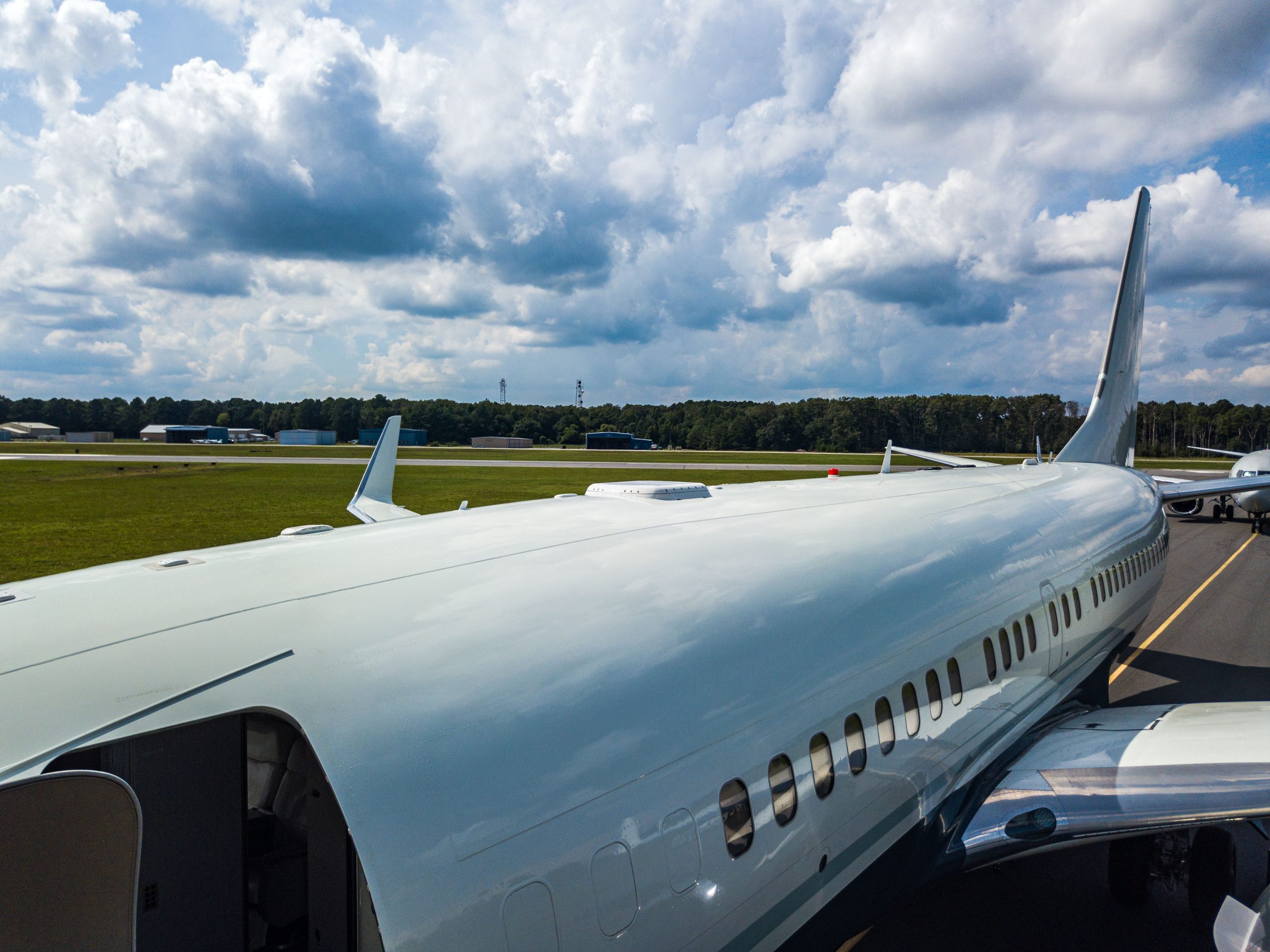
Honeywell Expands Flight Management System Guided Visuals Offering to Europe

Honeywell announced it is expanding its Flight Management System (FMS) Guided Visuals offering into Europe to equip pilots with greater situational awareness and safer approaches while flying into challenging airports. The technology improves the likelihood of a stable approach by offering a precise, repeatable flight path that can be fully coupled to the autopilot or flown manually.

Since 2023, Honeywell’s FMS Guided Visual (FGV) approaches have been available in North America and provide lateral and vertical guidance to the runway during visual approaches. Now, in addition to more than 30 North American airports that currently use the technology, the FMS offering will soon be available at six European airport/runway combinations, some of which are procedure overlays for existing Visual Maneuvers with Prescribed Tracks.

“Stabilized approaches offer pilots a range of benefits, from preventing overbanking and potential stall conditions to helping maintain situational awareness in conditions that make it difficult to identify the runway. They also offer the added ability to prevent steep approaches, which can otherwise lead to additional brake wear, noise from maximum thrust reversers, and runway overrun,” said Jim Johnson, senior manager of Flight Technical Services at Honeywell Aerospace Technologies. “By integrating our FMS technology, pilots can now make a safer, more stabilized approach to challenging airports in a more efficient manner.”

Today, Honeywell says there are more than 600 customers using Honeywell FGV approaches on their aircraft in North America. Since the technology’s integration, pilots flying into select challenging North American airports have told Honeywell that FGV approaches provide a consistent and reliable flight path to runways that do not have a precision approach.

“Honeywell has taken all the variability out of the visual approach,” said Mark McIntyre, a G650 captain. “It allows me to fly visual approaches with the same precision and passenger comfort we experience using Instrument Approach Procedures. It’s a fantastic improvement to our safety profile and helps us deliver a safe, comfortable approach for our passengers. Given FGV procedures’ low-cost, easy implementation and significant contribution to safety, there really is no reason not to use an FGV whenever it’s available.”

FGV approaches are available as an addition to current FMS Navigation Database subscriptions and require no hardware or software updates to use. They are titled “RNAV H” and may be loaded directly from the FMS navigation database. The “H” is used to differentiate it from other RNAV instrument approaches.

Honeywell High-Speed Cabin Connectivity System Selected By Gulfstream

Honeywell announced it is partnering with Gulfstream to certify JetWave X, Honeywell’s high-speed in-flight connectivity system, for Gulfstream’s GIV, GV, G450, G500, G550, G600, G650 and G700 aircraft. Honeywell’s JetWave X system will enable users to fly with highly reliable, ultra-high-speed connectivity typically found in homes and offices.

“Business jet operators are looking for globally consistent, high-network capacities for passengers to stay truly connected,” said Jason Wissink, president, Services and Connectivity, Honeywell Aerospace Technologies. “With JetWave X, users will be able to easily connect Viasat’s existing GX and Viasat satellites, and the system will enable them to add additional modem architectures in the future to provide access to new satellite networks – such as the ViaSat-3 Ka-band satellite network – as they become available. For OEMs and MROs, a simplified product architecture will not only make the system easier and faster to install than the current-generation JetWave system, but it will also offer an economical upgrade path for existing JetWave customers.”

JetWave X will continue to be supported with the same around-the-clock (24/7) white glove service provided today by Honeywell. Specific availability dates by platform will be announced at a later date, with most expected to be available during the first half of 2026 depending upon completion of STCs.

Since first launching in 2017, Honeywell says JetWave systems have become one of the bestselling connectivity products for long-range and ultra-long-range aircraft, with unbeatable onboard connectivity. Following the introduction of JetWave X, Honeywell will continue to support the current generation of JetWave systems that are installed and operating today. These existing systems could experience a performance boost from higher speeds with the recently announced JetXP in-flight connectivity experience plans.

Honeywell to Boost Slate Aviation Fleet with Next-Gen High-Speed Cabin Connectivity

Honeywell announced that Florida-based Slate Aviation has selected Honeywell’s JetWave X satellite communications system to bring high-speed internet across its private fleet of up to 35 Bombardier CRJ-200 and Challenger 850 aircraft.

With JetWave X, passengers on Slate-operated flights will enjoy connection speeds of up to 200 megabits per second, representing a dramatically faster option than current solutions. JetWave X allows every traveler onboard to stream, join live video calls and work across multiple devices simultaneously. The system also includes Honeywell’s Advanced Data Control features, designed to optimize bandwidth and improve customer experience.

“Fast, reliable connectivity is now a core part of the premium travel experience,” said Jason Wissink, vice president and general manager, Services & Connectivity, Honeywell Aerospace Technologies. “JetWave X lets Slate offer performance to customers that they are used to in their home or office, with the consistency you need for video calls anywhere they fly. Just as important, the system is simple to install on the aircraft and easy to upgrade as networks expand.”

“JetWave X will enhance the end-to-end experience offered by Slate Aviation, providing our customers with fast, reliable, high-speed connectivity,” said Heather Maguire, partner, Slate Aviation. “Honeywell’s connectivity offerings are best-in-class, and we’re excited to expand our work with them.”

JetWave X is engineered to deliver uninterrupted global coverage and high performance, and is designed for simple upgrades from older systems. It connects to Viasat’s Ka-band network – including ViaSat-3 and Global Xpress satellites – and features an open architecture to ensure compatibility with future Ka-band networks, making it network-agnostic. JetWave X has also been selected by leading business jet OEMs, including Bombardier and Dassault.

Honeywell continues to support the current generation of JetWave systems operating across approximately 2,000 business jets, with JetXP experience plans providing higher speeds today and a cost-effective upgrade path to JetWave X when operators are ready.

Introducing CAE CORe: An Enhanced Data-Driven Training Method, Filling a Gap in Business Aviation

As traditional regulation prescribes, pilots train regularly for emergency situations that, fortunately, most will never encounter outside of a simulator. However, there is a gap when it comes to emerging threats that are not typically covered during a standard task-based training session. This leaves pilots less well-equipped to deal with new risks. 

Approximately 95% of business jet operators manage fleets of five aircraft or fewer, with more than 80% operating a single aircraft. Due to the limited number of aircraft and pilots, these operators often lack the volume of data required to generate sufficient feedback for driving meaningful improvements in advanced pilot training. As a result, business aviation pilots, much like those in small airlines, typically continue to follow traditional training regulations.

However, the operational parameters are known to be much more diverse, calling for more practical, real-world training in addition to minimum requirements fulfilled by task-based instruction in business aviation. In line with its commitment to delivering industry-leading pilot training, CAE is challenging the norm in business aviation by evolving data-driven training approaches. By aggregating and analyzing objective simulator data, CAE is identifying, defining, and ultimately delivering pilot training solutions that meet the current and emerging needs of business aviation.

The company has therefore created CAE’s Continuously Optimized Recurrent (CORe) training. CORe training modules are created from data gathered by CAE Rise (Real-time Insights and Standardized Evaluations, which gathers and aggregates anonymized pilot performance data from thousands of business aviation pilots during CAE training sessions), as well as other robust sources — data from OEMs, operators and other trusted sources — including EASA’s DATA4SAFETY database —specifically tailored to meet the changing needs of business aviation pilots.

The data-based CORe training exercises aim to address risks and prepare pilots with responses to situations that fall outside the scope of traditional training compliance. Powered by CAE Rise, CAE can analyze millions of data points from simulator training looking for patterns and clues that can help predict, and even prevent, potential problems in the future. As a result, pilots in training aren’t just reacting to the taskbased scenarios they see year after year in recurrent training. Instead, they’re constantly being challenged with new, real-world scenarios that require a more nuanced skillset and set of judgements. 

As emerging issues are identified, relevant findings are incorporated into new simulator scenarios. Since a simulator is a contained environment, it’s a safe space to assess how well pilots respond to various issues; it exposes them to the risk while an instructor observes a pilot’s behavior and/or facilitates learning and the application of appropriate responses. This is where the role of instructors becomes more important than ever, as they guide pilots through the complexity of both emerging and unseen systemic risks with true-to-life scenarios aimed at honing the critical skills necessary to make life-saving decisions under pressure.

CORe training is aircraft, device and authority agnostic, addressing recurring risks in regular maneuvers and suboptimal pilot reactions to emerging threats, supporting overall industry improvement.

CORe creates learning scenarios that enrich knowledge and equip pilots to better respond in situations where data has shown opportunities to improve safety, efficiency, or where specifications are desired and possible — all with the goal of ensuring all pilots that CAE trains are completely ready for the moments that matter.

Download CAE’s new white paper at: https://www.cae.com/content/docs/Civil_Aviation/Brochures/CAE_CORe_Continuously_Optimized_Recurrent_Training.pdf

ACI Jet and CMS Complete Inflight Cabin Management System STC For Challenger 604, 605 and 650 Aircraft

ACI Jet announced the completion of the first article installation for Cabin Management Solutions’ (CMS) inflight entertainment and cabin management system on a Challenger 605. The milestone marks the first time ACI Jet has partnered directly with an OEM in engineering and certification of a Supplemental Type Certificate (STC), securing a share of licensing rights to the STC in the process.

The STC-approved installation brings CMS’s Elite 4K video, Elevate high-resolution audio, and Evolve cabin management system to Challenger 604, 605, and 650 aircraft. The upgrade includes dual 24” 4K60 monitors, a new digital audio amplifier, premium cabin speakers, and dual high-power subwoofers, delivering immersive, cinema-grade entertainment with simplified installation and long-term reliability.

Wireless touchscreen switches connect seamlessly to CMS’s backbone, eliminating invasive panel and woodwork removal. Each switch is fully customizable, offering operators unmatched flexibility and passengers an intuitive experience that echoes the sophistication of a high-end home theater.

“Beyond unlocking CMS’s groundbreaking new technology to one of business aviation’s most capable and reliable airframes, ACI Jet gained valuable insight into the inner workings of this system and is already bringing that expertise to repair station customers,” said Brian Ford, avionics manager at ACI Jet. “Our goal with this project wasn’t merely to secure our first share of STC licensing, but as installers and maintainers ourselves, to develop a well-designed STC package for the next installer.”

ACI Jet’s “Fly Like New” mission emphasizes extending the life and value of proven airframes through cutting-edge technology and OEM partnerships. This project underscores that vision by marrying CMS’s modular, drop-in architecture with ACI Jet’s engineering support and MRO expertise.

CMS has built its reputation by challenging legacy cabin management systems—often plagued by long lead times and costly installations—with solutions that are modular, scalable, and elegantly integrated. “Bringing 4K video and high-resolution audio into reach for a broader audience is exactly why CMS was founded,” said Jesse Beard, manager of technical sales and systems engineering.

The current STC applies to the Challenger 605 aircraft, with specific deviation packages and drawings available through CMS for Challenger 604 and 650 installations. The first Challenger 604 to utilize this STC is currently in work and will pair the CMS system with a Starlink connectivity installation. Both installations are occurring during a scheduled major landing gear overhaul on the aircraft–a perfect example of the efficiencies delivered when bundling services with a capable dealer and installer.

Looking ahead, CMS and ACI Jet are already in discussions to bring this technology to Bombardier Global-series aircraft, further strengthening their partnership and expanding options for operators worldwide.

For Challenger 604/605/650 operators, the CMS upgrade now available represents lower install costs, reduced downtime, simplified maintenance, and a passenger experience surpassing the latest aircraft. For ACI Jet customers, the shared licensing rights deliver a direct pathway to more innovative and cost-effective modifications in the years ahead.

EAA AirVenture Oshkosh Dates Confirmed Through 2029

Dates for the EAA AirVenture Oshkosh fly-in convention at Wittman Regional Airport in Oshkosh, Wisconsin, have been confirmed through 2029. Upcoming event dates are:

  • 2026: July 20-26
  • 2027: July 26-August 1
  • 2028: July 24-30
  • 2029: July 23-29

“EAA AirVenture is one of the aviation community’s major highlights each year, so announcing the dates for the next several years is important for enthusiasts around the world to begin planning their trips to Oshkosh,” said Jack J. Pelton, EAA CEO and Chairman of the Board. “We also realize that AirVenture’s dates affect the scheduling of many other aviation events, as well as other activities in Wisconsin, so it’s important to have these dates finalized for multiple years in advance.”

The Experimental Aircraft Association’s fly-in convention was first held in 1953 and has occurred in Oshkosh since 1970. More details regarding highlights of EAA AirVenture Oshkosh 2026 will be announced as they are confirmed.

Veryon AIRE Redefines Aviation Maintenance with AI-Powered Intelligence Across the Entire Fleet

Veryon, a leading provider of information services and software solutions for the aviation industry, today announced Veryon AIRE, a groundbreaking AI-powered data intelligence platform designed to redefine how operators maximize aircraft availability, airworthiness, and reliability.

Veryon AIRE combines the industry’s largest de-identified dataset with proven data science and decades of real-world aviation expertise to power agentic, conversational, and predictive maintenance capabilities. Its applications insights help operators transform unscheduled events into more scheduled, expected outcomes, which means maintenance teams gain efficiency, foresight, and confidence in every decision.

“For more than 15 years, Veryon has been applying AI to aviation problems, and the introduction of Veryon AIRE brings all our capabilities and expertise together to unify and power our portfolio,” said Kris Volrath, senior vice president of product at Veryon. “By combining the power of artificial intelligence with our all-in-one maintenance platform, we’re delivering a next-generation solution that helps our customers reduce costly downtime and maximize time in the air.”

With Veryon AIRE, operators can expect:

  • Smarter, Faster Fixes: It recommends most likely fixes to boost first-time fix rates and enables technicians to ask publication-specific questions and jump directly to troubleshooting steps.
  • Intelligent Fleet Management: It automates routine work, reduces maintenance expenses, and optimizes critical maintenance tasks and inventory management
  • Enhanced Reliability: It surfaces chronic patterns, rogue components and short-life parts, and trend degradation early, before they escalate into unexpected AOGs.

How AIRE Powers the Veryon Portfolio

Veryon AIRE brings generative AI to life across the product suite in three distinct ways: conversational intelligence, predictive analytics, and decision support. Together, these capabilities enhance efficiency and deliver insights for every operator.

  • Veryon Diagnostics: Veryon AIRE functions as an advanced analytics engine that mines logbook data and aircraft manuals to deliver insights such as global versus operator fix rates for each make and model, quick references to troubleshooting steps, and detailed defect history tied to the initial symptom.
  • Veryon Tracking: VeryonAIRE acts as a conversational AI interface that allows operators to interact directly with their maintenance and inventory data, including viewing aircraft maintenance status, managing inventory and planning for maintenance, and staying continuously compliant.
  • Veryon Publications: Veryon AIRE enhances technical publications with a conversational AI interface that makes complex information instantly actionable by enabling inquiries about work instructions for specific work orders or maintenance tasks and identifying the exact parts required for maintenance.

Experience Veryon AIRE in Action

Operators and industry leaders can see Veryon AIRE firsthand at upcoming events:

  • NBAA Business Aviation Convention & Exhibition (BACE) |October 14–16 | Las Vegas, NV | Booth #825
    • Education Session: Less Data, More Action: How to Use Maintenance Insights to Reduce Downtime & Improve Troubleshooting | October 14 | 1 p.m. PDT | Room W231
  • MRO Europe|October 14–16 | London, UK | Booth #546
  • Airline & Aerospace MRO & Flight Operations IT Conference APAC| October 15–16 | Bangkok, Thailand | Booth #41
    • Vendor Showcase: October 15 | 14:00-15:30 | Wasukri Room

Visit Veryon at these shows to see live demonstrations of Veryon AIRE across Tracking, Diagnostics, and Publications, and discover how predictive maintenance, intelligent fleet management, and smarter fixes are reshaping aviation reliability. Pre-book your demo to see Veryon’s new AI-powered features and secure your entry into our raffle to win a pair of Beats headphones.

Celebrating Innovation in Surface Engineering: Indestructible Paint Ltd is a Finalist in the Surface Engineering Awards 2025

Birmingham-based high-performance paints and coatings manufacturer Indestructible Paint has been shortlisted in two categories for the Surface Engineering Association (SEA) Awards 2025.

The shortlisting recognizes the pioneering work the company has done to develop more environmentally sustainable, chromium-free coatings for demanding applications in the aerospace industry, preparing for proposed changes to REACH (Registration, Evaluation, Authorization and restriction of Chemicals) legislation in the UK and EU.

In the SEA Awards’ Environmental category judges will explore Indestructible Paint’s research and development program to replace chromium trioxide and chrome salts in high-performance aerospace coatings to reduce their impact on the planet. The company now produces chrome-free primers, sacrificial coatings (CFIpcote) and diffusion coatings (CFIPAL).

These same innovations have won a place in the awards program’s Process Innovation category. This is because the new products offer improved performance against exacting aerospace industry specifications. Indestructible Paint has enhanced both oxidation resistance and stability at high temperatures, and users can also now achieve cleaner diffusion layers, which allows clean, thin film and multi-layer coatings to be produced, creating the best coating structure for protecting the component in service. The pure aluminide scale formed in service provides the protection. The cleaner structure ensures there is no opportunity for oxidation to penetrate the coating.

“We’re proud that the dedication and talents of our team are being recognized in this year’s SEA Awards program,” said Brian Norton, CEO at Indestructible Paint.

“Innovation and collaboration are at the heart of everything we do at Indestructible Paint. We’re looking forward to bringing together our team, customers and industry partners to celebrate our success in improving essential surface coatings — and to cheer on the other finalists, who are all making important advances in their respective specialisms.”

The SEA Gala Dinner and Awards will take place on Friday, 17 October at Goldsmiths’ Hall in the City of London.

Astronautics’ AeroSync System on Pilatus PC-24

Astronautics Corporation of America announced that its AeroSync Max has been introduced as the line-fit connectivity system for the Pilatus PC-24 Super Versatile Jet. The system enables operators to securely and automatically capture, store and transfer flight data, improving aircraft operations and reducing downtime.

AeroSync Max combines an airborne communications server, connectivity module and ground server software to provide seamless and secure data transfer between aircraft and operator systems.

With AeroSync Max, PC-24 operators benefit from:

  • Security & Compliance: Certified to EASA ED-203A standards for cybersecurity, with direct data transfer to Pilatus’ CrystalCare servers—no third-party intermediaries.
  • Operational Efficiency: Automatic flight and maintenance data downloads after every flight, faster Wi-Fi-enabled downloads in the hangar, and predictive services to prevent disruptions to flight readiness.
  • Reliability: A robust cellular and Wi-Fi network for consistent data transmission, reducing Aircraft on Ground (AOG) events and minimizing downtime.

Since entering service 18 months ago, Pilatus’ predictive services have already prevented multiple events and significantly reduced delays caused by maintenance issues.

“Astronautics is proud to partner with Pilatus to provide PC-24 operators with a certified and secure connectivity system that is improving aircraft operations and availability,” said Matt Frei, Astronautics’ director of connected aircraft solutions.  “Because data is transferred directly to Pilatus’ ground server without intermediaries, operators can trust that their information remains private—supporting the trusted relationships Pilatus has built with its owner-operators.”

AeroSync Max has achieved European Union Aviation Safety Agency (EASA) ED-203A certification, demonstrating cybersecurity protection throughout the aircraft life cycle.  This milestone also marks AeroSync’s first fixed-wing certification.  The system was previously certified by both EASA and FAA for use on helicopter platforms.

Gogo Announces First Gogo Galileo FDX STC as ALOFT AeroArchitects Receives Approval Covering Boeing Business Jet BBJ737-Series Aircraft

 Gogo confirmed that the first Supplemental Type Certificate (STC) for the Gogo Galileo FDX terminal has been issued by the Federal Aviation Administration (FAA). Generated by ALOFT AeroArchitects, the inaugural certificate covers Boeing 737NG-based BBJ (Boeing Business Jets) 1 and BBJ2, and BBJ MAX models, and can be modified to support subsequent Boeing BBJ 737 STC variants. Gogo worked closely alongside the ALOFT engineering team to develop the STC. An initial Gogo Galileo FDX installation has already been completed on an undisclosed customer’s Boeing BBJ 737-700IGW that was previously without connectivity.

Complementing the advanced technology terminal, Gogo’s FlightDeck Freedom (FDF), datalink service has also been activated to support crew operations.  FDF supports trip planning, flight tracking, automated real-time weather information, geo-notifications, security events, and other critical flight path data for improved situational awareness,enhancing operational efficiencies.

“We are extremely pleased to confirm this approval. This first FDX STC marks another major milestone as we strive to deliver multi-orbit, multi-band connectivity for all types of aircraft. We’re even more proud that the customer has trusted Gogo to be its first connectivity provider and flight deck datalink service,” says Chris Moore, CEO, Gogo. “It clearly demonstrates that Gogo is still the only company that can fulfill every aspect of an aircraft’s operational nose-to-tail connectivity needs from a single resource.” 

Leveraging the full potential of the Eutelsat OneWeb low-earth orbit (LEO) satellite constellation, the FDX terminal supports global, high-speed broadband with up to 195Mbps download and 32Mbps upload speeds throughout the cabin. The Gogo Galileo FDX terminal is purpose-built for business aviation and optimised for super-midsize, long-range and executive airliner aircraft types. The terminal allows multiple passengers using multiple devices to simultaneously enjoy an at-home digital experience at altitude for improved productivity, enhanced entertainment, and increased data speeds. 

“Our customer needed to equip secure, global connectivity, and as a first-time user, knew that the technology would be supported wherever they flew. The Gogo Galileo FDX terminal meets those needs, and was also, despite being our first install, straightforward to fit,” says Scott Meyer, CEO, ALOFT. “We’re dedicated to ensuring our customers get the right solution for their needs, and in this instance, we not only did that, but also succeeded in generating the very first Gogo Galileo FDX STC. It’s a great achievement and we’re looking forward to working on more installs.” 

The second variant in the Gogo Galileo portfolio is now available to support the some 200 Boeing BBJ737s in the global fleet that regularly fly international legs. Comprising just two line-replaceable units (LRUs), the full-duplex FDX, flat-panel, electronically steered antenna (ESA), and either an SDR Gateway or AVANCE router platform, installation is minimally invasive, resulting in reduced downtime. The software-driven architecture is future-proofed and optimized for rapid switching between satellites, as required to deliver uninterrupted broadband service. Subsequent approval from the European Aviation Safety Agency, EASA, is expected to follow later in 2025.