Avantus Aerospace Acquires Fastener Innovation Technologies

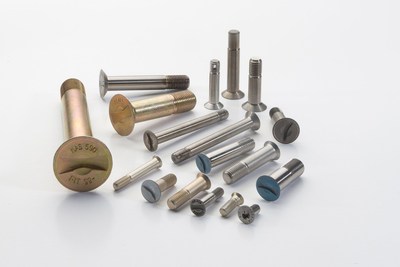
Avantus Aerospace, a C-Class and composite parts maker for the aerospace and defense industry, announced the acquisition of Fastener Innovation Technology Corporation (FIT) in Rancho Dominguez, Calif.

FIT manufactures high-strength specialty fasteners for military and commercial aerospace applications and has a natural fit with other companies in the Avantus group, including Lamsco and Fastener Technology Corporation (FTC), which was acquired by Avantus in December 2019.

FIT, founded in 1979, has built a reputation as an innovative and reliable supplier with a broad range of specialty fastener qualifications and, under the guidance of President Larry Valeriano, has expanded their applications to more than 25 aircraft platforms. Some customer relationships span multiple decades, such as those with Boeing (including BDSI), Incora (Wesco), Raytheon, and Lockheed Martin. The existing management team will continue to operate and grow the business under the guidance of Avantus Fastener President Dennis Suedkamp, aided by Avantus’ additional resources.

Avantus CEO, Brian Williams, said: “The FIT team have built an innovative, specialty fastener business with an excellent reputation. We believe our combined strength will allow us to better serve our customers. We look forward to making further acquisitions that complement our existing product and geographic offering.”

Larry Valeriano commented: “FIT’s great customer relationships and long tradition of manufacturing excellence make it an ideal fit for an organization like Avantus Aerospace that shares its values. Together we are well positioned to capitalize on the long-term growth opportunities that lie ahead in the fastener and C Class marketplace.”

Dennis Suedkamp added: “We look forward to enhancing our combined technical and manufacturing resources, while also supporting the development of our employees and the success of our customers.

Avantus Aerospace, is owned by Inflexion and Auctus Industries. Inflexion is a leading European mid-market private equity firm, investing in high-growth, entrepreneurial businesses with ambitious management teams working in partnership with them to accelerate growth. Auctus Industries is a specialist investor in aerospace businesses, focusing on off-market deal sourcing and the execution of buy-and-build acquisition strategies.

Back to the (Electric) Future Howard Fuller

There is an ancient Chinese curse that I’ll paraphrase: “May you live in interesting times.”

In aviation right now, we are indeed living in such an era. The airlines are largely grounded and being an A&P Mechanic is not the guarantee of industry respect or lifelong employment it once was. In General Aviation, one can watch the grass growing among the training aircraft at most small airports. With the cost of avgas at record levels, training is a luxury even well-to-do individuals can ill-afford. The news is not all bad, however.

Significant progress is being made in electric aircraft, with a few flight schools employing early electric powered gliders for their main training aircraft. In the U.K., for example, Skyborne Airline Academy, based at Gloucestershire Airport, has recently ordered ten all-electric light trainers from Bye Aerospace (www.byeaerospace.com) of Broomfield, Colorado.

Bye expects their E-Flyer 2 to be the first all-electric aircraft to receive FAR 23 certification. The critical design review took place on June 5 and the next phase of the flight test program is currently underway. The company says its aircraft will reduce operating costs by a factor of five over equivalent piston-powered training aircraft, as well as generating far less noise and zero inflight emissions.

Another manufacturer, Pipistrel, (www.pipistrel-usa.com) headquartered in Slovenia, produces an extensive line of light aircraft including several that are all-electric. With the available, interchangeable long wings, the Alpha Electro serves as a self-launching two-place sailplane that is eminently suitable for training, thus eliminating the need for towplane services. It is also usable for airplane training when employing the optional short wings.

In the transport category, all major engine manufacturers are moving ahead with electric powerplants, some with prototype engines in flight test programs using transport category aircraft.

In the U. S., while the traditional Part 23 manufacturers are still offering piston-powered trainers in very limited production numbers, the winds of change are blowing strong from Wichita to Vero Beach.

Siemens, (www.siemens.com) the European electrical conglomerate, has developed a 260KW aircraft powerplant that appears ideal for medium-performance singles and twins. That portion of Siemens was recently acquired by Rolls-Royce.

On the West Coast, Harbour Air has flown a DHC-2 Beaver on floats with the MagniX 500, a 750hp electric powerplant. That motor is slated to eventually replace the PT-6 in several airframe models, including the balance of the Harbor Air fleet and is flying today in a Cessna Grand Caravan electric prototype. Do you see the trend developing here?

It appears to this writer that the only limitation at present is battery capability, but that technology is also leaping ahead at lightspeed, with Elon Musk at the forefront. I long ago learned not to discount Mr. Musk’s capabilities in the electric propulsion field. In my neighborhood, it seems like one out of three new cars is a Tesla 3 lately. Tesla stock is worth more than GM, Ford and Fiat-Chrysler combined, so he must be doing something right.

Tomorrow’s General Aviation airports may well be located closer to the population centers due to their being in compliance with stricter noise limitations. The new light aircraft will fit right in with quieter electric powerplants. FAA and EASA regulations will almost certainly still encompass strict airframe maintenance requirements, however, even though it is highly unlikely that the mandated training curricula for A&P schools will keep pace with the new technology. I would suggest that if you want to keep your skills up-to-date, you may want to look into attending a factory school at one of the above electric motor manufacturers.

Well, take it or leave it, there’s the general aviation future for you. As Lawrence Fishburn famously says in The Matrix, “I can only open the door for you…it’s up to you to step through.”

Howie Fuller

Formerly with Wyvern Consulting Howard Fuller in formed independent consultancy JTI Air Holdings to continue aviation safety audits. Currently developing alternative-powered fixed and rotary wing aircraft both manned and unmanned.

Jet Aviation Commits to Sustainable Aviation in First Business Aviation Sustainability Summit

Jet Aviation confirms its ongoing commitment to sustainable aviation in the industry’s first ever (virtual) sustainability summit hosted earlier this week by the Business Aviation Coalition for Sustainable Aviation Fuel (SAF Coalition). The company was the first, exclusive provider of SAF in Switzerland through its pilot program during WEF 2020. It continues to invest in sustainable solutions, recently delivering industry-leading weight values in its quietest ever VIP cabin interior.

Jet Aviation President and GAMA Chairman David Paddock joined a panel of industry and OEM leaders and U.S. government officials earlier this week in the first-of-its-kind Virtual 2020 Business Aviation Sustainability Summit on the importance of sustainability to the industry, and the significance of sustainable aviation fuel (SAF) in particular. Addressing questions to the panel on sustainability, technology, operations, infrastructure and alternative fuels, Paddock emphasized the need to invest in solutions for owners and operators and the importance of public-private partnerships in driving awareness, understanding, research and development.

“We intend to make SAF available when and wherever possible throughout the Jet Aviation global network,” says Paddock. “Further to our initiatives in Zurich during WEF, we offer a SAF blend to customers on an ongoing basis at our Van Nuys location and we continue to work with government officials, industry bodies and partners to help increase production and availability of SAF for our customers.

“We are always looking for ways to adopt new technologies and develop innovative solutions. In our Completions business, we have invested considerably in research and development to improve our designs, including reducing fuel consumption through lighter weight cabins and lower power consumption, and are also exploring the use of sustainable materials. Similarly, we are constructing new buildings and adding new equipment to existing facilities with sustainability in mind, including incorporating solar panels, electric vehicles and recycling systems.”

Recent sustainable efforts introduced at Jet Aviation include new fume pipes and skylights (Basel), facilities built to LEED standards (Boston-Bedford, Burbank, Van Nuys and Palm Beach), as well as low flow water fixtures, a white roof and a heat-reducing tarmac (Palm Beach).

Daubert Cromwell – New OEM Test Results Are In for Safecote CLV

Daubert Cromwell says extensive OEM testing on their Safecote CLV shows it is an excellent long-term corrosion protection option for exposed, threaded areas on machinery, machine parts and equipment stored outdoors.

The company says their product is:

• Environmentally safe
• Water-based, low VOC
• Alternative to tape, caps, and plugs, where corrosion can form underneath
• No removal necessary

The study evaluated options to replace tape, caps and plugs that typically protect threaded areas on machinery and machine parts stored outdoors. When corrosion forms beneath those covers, it can compromise the joint and cause damage. Applying Safecote CLV on internal threads proved to provide long term protection for exposed bolt holes, making it ideal for use on metal parts, components, engines, sub-assemblies and spares.

Environmentally safe Safecote CLV leaves a waxy film on ferrous metal surfaces that hardens to a firm, water- resistant coating in about 90 minutes. The milky taupe- color coating has excellent resistance to high humidity and salt spray, for optimal protection of machinery during export and storage.

Various scenarios of bolt hole testing showed Safecote CLV to be most effective in protecting the threads over long periods of time, with negligible impact on torque coefficient. Further, it does not have to be removed before putting the part back into operation. Rental equipment stored on dealer lots, for example, can be used immediately.


Southeast Aerospace Secures Brazilian Validation (ANAC) Approval On Part 25 & Part 29 ADS-B STCs

Southeast Aerospace, located at Orlando Melbourne International Airport, has received Brazilian Validation (ANAC) approval of both their ADS-B Part 25 & Part 29 Approved Model List (AML) Supplement Type Certificates (STCs).

SEA will offer these solutions to the Brazilian civil aviation market as flexible and affordable ADS-B solutions to facilitate continued flight in U. S. airspace due to the January 1st 2020 FAA mandate.

The Part 25 ADS-B STC #ST00835DE is available for non-TCAS II aircraft needing to meet the mandate for around $50,000 installed. Southeast Aerospace says this is a convenient and cost effective ADS-B solution consisting of dual Garmin transponders GTX-3X5R and Gables G7614/G7534 control head.

SEA’s Part 29 ADS-B STC #SR00925DE is available for non-TCAS II, legacy Part 29 helicopters, utilizing a Gables G7614 Control Head, a remote Garmin GTX-3X5R or panel mounted GTX3X5. The remote mount feature offers the customer ease of installation with existing XPDR controllers installed.

Oracle Lighting Launches Three New Vehicle/Room COVID-19 Neutralizing UV Light Devices

Oracle Lighting, an innovator in LED lighting solutions, introduced three new COVID-19-killing Ultraviolet Light sterilization devices recently. Now available, the Mini Sterilization Lamp, Room Sterilization Lamp, and Telescoping Mobile Room Disinfection Device join Oracle Lighting’s popular A.I.R. Solo Personal UV Irradiation Face Mask in the company’s lineup of germ-fighting products.

“With over a decade of experience working with UV lighting applications, the Oracle Lighting team was ready to develop effective sanitizing solutions as soon as this global virus emerged,” explains Justin Hartenstein, Oracle Lighting director of product development. “The quality of the air we breathe and the cleanness of surfaces we contact are important factors that impact our overall health and well-being. Today, more than ever, we need to be mindful of contaminated surfaces we interact with every day. Our new UVC devices neutralize pathogens, harmful bacteria, and coronavirus (including COVID-19) without the use of toxic chemicals.”

The UVC Room Sterilization Lamp (p/n 38W-UV-C) is tested and proven to properly disinfect and inactivate 99.99 percent of bacteria and viruses. Common workspaces such as offices, waiting rooms, and communal areas can benefit from the same UV-C technology that has been used in hospitals and labs for cleaning and disinfecting rooms for years.

Additional UV-C Room Sterilization Lamp details include:

  • Input Power – Standard 110V Wall Outlet
  • Output Power – 38 Watts
  • Wavelength – 254nM UVC
  • Material – Quartz Glass Tube
  • Irradiation Angle – 360 Degrees
  • Irradiation Range- 400 Square Feet
  • MSRP: $119.95

“The new mini UV sterilizer (p/n 3W-UV-CB/W) is perfect for sanitizing surfaces in vehicles and small rooms, as well as sanitizing PPE,” Hartenstein continued. “Simply place this portable, battery powered lamp in the cup holder of your car or in a room and press the power button when you exit the vehicle or room. The device will turn on and sanitize for 15 minutes and then automatically shut down, eliminating bacteria, viruses, and even odors.

Additional mini UV sterilizer details include:

  • Input Power- USB Charger (5V DC)
  • Output Power – 3 Watts
  • Wavelength – 254nM UVC
  • Material – Quartz Glass Tube
  • Irradiation Angle – 360 Degrees
  • Irradiation Range- 200 Square Feet
  • Available in Black or White
  • MSRP: $49.95

“Perfect for large commercial spaces such as schools, office buildings, clinics, hotels and more, the new portable high power UVC Telescoping Mobile Room Disinfection Device is a trolley system that emits a high intensity ultraviolet light that disinfects surfaces of larger spaces,” Hartenstein added. “Designed with safety in mind, this sterilizer features radar detection which automatically shuts the device off if pets or other unexpected visitors enter the room while it is in operation. This device also features Two-In-One Cleaning, with both UVC light and Ozone to not only disinfect surfaces but also deodorize and purify the air.”

Additional Telescoping Mobile Room Disinfection Device details include:

  • Automatic Telescopic Function
  • Input Power – Standard 110V Wall Outlet
  • Output Power – 150 Watts
  • Material – Quartz Glass Tube
  • UV Wavelength: 185nm (Ozone) 254nm (Without Ozone)
  • Range: 1200 sq. ft. (Ozone) 800 sq. ft. (Without Ozone)
  • Certifications: CE, RoHS, FCC
  • MSRP: $499.95

Note: The ozone produced contains odor and room should be ventilated after disinfection. Ozone feature is optional and can be special ordered without ozone.

Recently launched and now available, the A.I.R. Solo (Antimicrobial Irradiation Respirator) is a wearable UVGI face mask that is designed to be worn under common face masks in order to protect both users and those around them, killing live viruses such as coronavirus, pathogens, bacterium, or other microorganisms attached to the fabric’s surface.

“We are all familiar with the CDC statement ‘Your mask protects me; my mask protects you’,” said Troy Organo, co-inventor of the product. “The A.I.R. Solo provides protection against viruses for both the user and others. High-risk individuals cannot simply rely on others to respect their health safety. The Solo provides benefits to the user while also sanitizing outgoing air to protect others. While this product is beneficial for high-risk individuals, it is for anyone going into a higher-risk environment such as public transportation, flying, or even for simply going to the grocery store.”

The A.I.R. Solo is an extra layer of protection to help mitigate exposure to COVID-19 and other viruses as the country begins to re-open. Now shipping, the A.I.R. Solo has been designed and engineered in the USA with a special pre-order introductory price of only $119.95.

This device also benefits those who wear cloth face coverings, according to Hartenstein. “Studies have shown that respiratory pathogens on the outer surface of cloth masks can actually result in self-contamination, which is exactly what they are intended to prevent,” he said. “Because of this, we see the unique UV irradiation benefits of A.I.R. Solo as the best sanitization scenario for helping to mitigate exposure to COVID-19 and other viruses.”

Wavelengths between 200-300 nanometers, such as the UV-C LEDs integrated into the A.I.R. Solo provide the most effective germicidal function. This is because the wavelength of UV-C irradiation utilizes photons to inactivate the virus which prevents the cell from replicating and infecting the body if inhaled. The A.I.R. Solo’s UV-C LED emitters are integrated into the airflow partition of the device which is designed to scrub the air and sterilize the cloth mask simultaneously.

Research has shown effectiveness of UV-C LEDs against Coronavirus. A recent study by Sensor Electronic Technology, Inc. (SETi) has demonstrated 99.9 percent effectiveness against COVID-19 and determined that COVID becomes even more sterile when placed closer to the UV-C source. The A.I.R. Solo is designed to channel the incoming air within 5mm of the UV-C source providing increased effectiveness and sterilization.

Is the A.I.R. Solo safe?

For years hospitals and labs have used ultraviolet light for disinfection and medical sanitation against viruses. Commonly known as “Ultraviolet germicidal irradiation,” UVGI is a disinfection method that uses short-wavelength ultraviolet light to kill or inactivate microorganisms by disrupting their DNA in a manner which renders the cells inactive and unable to perform cellular functions. Multiple tests have demonstrated that no measurable amount of UV-C light is directed towards the user wearing the device.

“UV-C light has been used in many applications such as the purification of drinking water for decades,” explained Hartenstein. “While UV-C is part of the normal spectrum of sunlight, it is invisible and can cause sunburn with direct skin exposure. This was taken into account when developing the A.I.R. Solo, and the UV light is outward and away from the user to prevent any direct skin exposure. Testing has shown that no measurable amount of UV-C light is directed towards the user wearing the device.”

Ultraviolet germicidal irradiation (UVGI) is a disinfection method that uses short-wavelength ultraviolet C (UVC) light to kill or inactivate microorganisms by destroying nucleic acids which, in turn, disrupts their DNA, rendering them inactive by leaving these cells unable to perform vital cellular functions. UVGI is already used in a variety of applications, such as food, air, and water purification. The application of UVGI to disinfection has been an accepted practice since the mid-20th century. UV-C radiation has often been presumed to be the most potent carcinogen of all UV. However, studies such as one from CIE show this is a misconception based upon a lack of appreciation of the very shallow penetration depth of 254 nm radiation in human skin. Today it is considered that UV-C radiation, if appreciably carcinogenic at all, is far less carcinogenic to humans than solar UV-B radiation, the company stresses.
Aero Precision/Kellstrom Defense Announce New Identity

Aero Precision/Kellstrom Defense announced they are now operating under a combined identity, AllClear. AllClear provides excellence in sustainment solutions to U.S. and allies around the world. They now offer the widest application support for over 40 platforms and are steadfast on providing the safest mission-ready solutions to the aerospace and defense market.

In March of 2020, Aero Precision acquired Kellstrom Defense. Since the acquisition, rapid integration implementation has taken place across the nine locations, eight subsidiary companies and four business segments all while they focus on the bigger mission mindset of their dedication to serving the aviation aftermarket industry.

AllClear capabilities include distribution, in-house repair capabilities, repair services management, engineered products, manufacturing and logistics management. Under the AllClear Holdings LP, are an additional eight companies with expertise in space, business jet and manufacturing and engineering. The companies are as follows: DAC International, NASAM, TAVCO, Aerospace Welding, Airborne Technologies, AllClear Repair Services, AllClear Korea, Williams Aerospace & Manufacturing. AllClear plans to continue to grow their capabilities organically and inorganically to offer unrelenting solutions to be the most valued sustainment solutions provider globally by exceeding every mission-ready expectation.

“We envisioned a company that employs the most knowledgeable and engaged team that is attentive to customer’s needs and maintains a continual mission-ready mindset. With AllClear we will provide the right solutions every time. The AllClear name solidifies our mission-ready mindset and precision focus,” said Darryl Mayhorn, CEO of AllClear. “I am so delighted to share our new identity with the world and exceed all of your expectations for sustainment solutions.”

Airbus Corporate Jets Inks First A321LR Order for Two Aircraft

Airbus Corporate Jets (ACJ) has won the first A321LR order for two aircraft from Lufthansa Technik, which they say highlights the market appeal and versatility of the A320neo Family. The aircraft will be multi-role capable and can be equipped for various types of missions, such as troop transport, different MedEvac role setups (medical evacuation) and will be operated by the German Air Force (Luftwaffe). Lufthansa Technik has now placed a total order of five Airbus aircraft on behalf of the German Government: three ACJ350-900s and two A321LRs. The A321LRs will be able to fly up to 163 passengers, up to 6 intensive care patients and up to 12 medium care patients, depending on the installed configuration, with a maximum range of 4,200nm/7,800km or 9.5 flight hours.

“We are thrilled Lufthansa Technik has become the launch customer for the ACJ long-range version of the world’s best-selling A321neo,” said Benoit Defforge, ACJ president. “The ACJ320 Family features the widest cabin of any single-aisle aircraft in the sky, providing the greatest passenger comfort and intercontinental range. Lufthansa Technik and the German Government have a long-standing relationship with Airbus and we are proud of this new milestone order with us.”

The A321LR is a member of the A320neo Family with more than 7,400 orders by more than 110 customers. It delivers 30% fuel savings and nearly 50% reduction in noise footprint compared to previous generation competitor aircraft, according to the company.

Featuring a huge cabin for business jet use, while being similar in size to competing large-cabin aircraft, the ACJ320neo family has similar operating costs. Airbus says it can do this because its lower maintenance and training overheads – part of its airliner heritage – deliver a similar total cost when combined with fuel and navigation and landing charges.

Around 12,000 Airbus aircraft are in service worldwide, supported by a globe-spanning network of spares and training centers, giving corporate jet customers unmatched support in the field. Airbus corporate jet customers also benefit from services tailored to their particular needs, such as the “one call handles all” corporate jet customer care center (C4you), and customized maintenance programs.

Combined with the inherent reliability that comes from aircraft designed to fly many times a day, the aircraft is “dependable and available when customers need it.”

Airbus corporate jets are some of the world’s most modern aircraft family. Features include the protection and simplicity of fly-by-wire controls, the benefits of Category 3B autoland, and time and cost-saving centralized maintenance on all systems.

Around 200 Airbus corporate jets are in service on every continent, including Antarctica, highlighting their versatility in challenging environments.

Avionics Digital Smart Meter

OTEK’s model APM was specifically designed to replace the “needle” meter standard in many aircraft. The APM model conforms to military and commercial 1″ diameter standards with a depth of 2.15″. Additionally, the model conforms to respective Mil-Standards of 461D, 704F, 130K, 810F, and 889B2 as well as being RTCA-160F compliant.

The APM can be loop powered, eliminating the need for an external power supply and expensive wiring. The <100mW loop power adds a burden under 5 VDC max to the loop and has an operating range of 3-36mADC. The APM features 4-20mA or a VDC signal input, 0-5VRMS/VDC for intensity control, and 5-48VDC power input. The 4 digit (9.9.9.9) display comes in standard red, green or blue. The display can also be NVG3 compliant (green display only).

The APM is conducive for an altitude up to 50,000’ and weather conditions from -20°C to 70°C. The accuracy and linearity of the APM is +0.05%. It weighs 1.5 oz and its display consists of 0.25” high efficiency LED’s. The APM also adheres to a Cyber Security Exempt status, as it was designed without any digital assets. As with all OTEK products, the APM carries our exclusive lifetime warranty. For more information visit http://www.otekcorp.com or contact us at 520-748-7900 or sales@otekcorp.com.

American Fiber and Finishing Introduces the Aerospace Industry’s Only AMS 3819D-Compliant Wiper

American Fiber & Finishing, Inc. (AF&F) has introduced the only knit wiper that meets the updated AMS3819D standard. Published by SAE International, AMS 3819D is the aerospace industry quality standard for wipers used for cleaning aircraft primary and secondary structural surfaces. To meet the standard, cloths must meet rigorous specifications and manufacturing requirements.

The wipers are 100% cotton and are Class 2, Grade A, Form 1. They are manufactured in a controlled process and not exposed to potential contaminates like silicone, oils, and grease or made from recycled textiles. The AMS 3819D specification eliminates recycled and reclaimed materials, thus ensuring a clean-wiped surface to which paint will adhere. The standard also requires all materials to be tested, approved and listed on AMS QPL.

“We are committed to maintaining exceptional standards of quality and innovation in the aerospace industry and in all of the industries we serve,” says Paul Robichaud, president and chief quality officer. “Our focus on quality assurance, integrity and innovative R&D have made us a leader in the aerospace wiper industry. The introduction of our AMS 3819D wipers demonstrates AF&F’s on-going commitment to excellence.”

The product is an exact cut wiper, measuring 15” x 15”. The exact cut reduces waste and disposal costs. The AMS 3819D-compliant wipers are available and in-stock immediately to meet the updated standard, which went into effect on July 1, 2020.