FL Technics Strengthens Middle East Operations with New Aircraft Components Warehouse in Dubai

FL Technics, a global provider of MRO solutions and part of Avia Solutions Group, has announced the opening of a new EAMS warehouse in Dubai, strengthening its component support capabilities across the Middle East and Africa.

Strategically located in one of the world’s fastest-growing aviation markets, the new facility will enable faster delivery of critical aircraft components to regional customers, reducing lead times and improving operational reliability.

“Component availability is one of the key factors in aircraft maintenance. By placing our warehouse closer to customers in the Middle East, we can respond faster to their needs and support them more efficiently,” says Viktor Bulanov, Head of Sales and Customer Support Unit – Engine, Airframe and Materials Services at FL Technics.

Until now, components for the region were shipped from FL Technics’ global logistics hubs in Europe, Asia, and North America, including Vilnius, Kaunas, Frankfurt, Singapore, and Miami. While this model successfully supported customers worldwide, growing demand in the Middle East highlighted the need for a dedicated local stock point – now established in Dubai.

The company’s presence in Dubai is closely linked to the development of Al Maktoum International Airport (DWC), which is set to become one of the world’s largest aviation hubs. By establishing its warehouse nearby, FL Technics positions itself at the center of the region’s future aviation ecosystem.

The Dubai warehouse will primarily store critical rotable components – high-value parts, without which an aircraft cannot operate. By positioning these components closer to customers in the Middle East, FL Technics significantly reduces delivery times, helping airlines minimize aircraft-on-ground (AOG) situations and maintain operational continuity. Inventory selection is driven by the company’s extensive operational data, ensuring that the most critical and frequently required components are available where they are needed most.

“Our inventory decisions are data-driven. We analyze usage patterns and customer demand to ensure the right components are available where they are needed most,” Bulanov explains.

The opening of the warehouse aligns with Avia Solutions Group’s broader and long-term expansion strategy in the Middle East. The Group continues to strengthen its presence in the region across multiple aviation business segments, with growing operational scope and ambitious plans for further development. The new FL Technics warehouse in Dubai is part of this wider commitment to being closer to customers and supporting the region’s rapidly evolving aviation ecosystem.

Yonder Establishes Partnership with airBaltic

Yonder has established a new partnership with airBaltic on management platform, further strengthening the airline’s commitment to safe, efficient, and digitally enabled operations. The partnership will support the airline in streamlining the management of operations manuals, company documents, and OEM revisions while giving crews faster, role-based access to the information they need.

Yonder will be used to manage the airlines manuals in a structured XML format, leveraging dynamic modular content. This enables pilots, cabin crew and ground personnel to see only the information relevant to their role and mission, reducing information overload and improving day-to-day usability.

Through automation of OEM manual imports, revision handling and compliance monitoring, Yonder will help the airline further reduce manual effort in keeping documentation up to date and aligned with regulatory changes. This frees subject matter experts to focus on safety and operational quality rather than repetitive administrative tasks.

The collaboration underlines a shared focus on operational safety, regulatory compliance, and user-centric design. With Yonder, airBaltic can link documentation directly to regulations, enabling proactive identification and handling changes that impact manuals and company documents.

End users will benefit from Yonder’s intuitive reader, offering offline capability, powerful search, and role-based filters, while ensuring that critical procedures, checklists, and updates are always accessible and up to date – whether in the cockpit, cabin, or on the ground.

“We are thrilled to welcome airBaltic to the Yonder community,” said Beat Reusser, chief customer officer, Yonder. “From the very first workshops, their team impressed us with how highly motivated and technically up to speed they are. This level of preparation and professionalism contributed significantly to the speed and overall success of the implementation, and it is exactly the kind of partnership that allows smart documentation to unlock its full potential.”

Magnetic MRO Opens Fifth Hangar at Tallinn Airport, Expanding Capacity and Creating Hundreds of Jobs

Magnetic MRO, a global provider of aircraft maintenance, repair, and overhaul (MRO) services, has announced the opening of its fifth hangar at Tallinn Airport (EETN). The expansion significantly increases the Magnetic Group’s base maintenance capacity and is expected to create 80 direct jobs and 240 indirect positions across local aviation sector.

“Capacity on its own is not the story – capability is,” said Jan Kotka, Managing Director at Magnetic MRO. “The extra capacity at our Tallinn facility lets us scale critical checks, integrate more digital and data-driven processes, and introduce services our customers are asking for – setting a higher bar for turnaround, transparency, and total cost of ownership.”

The new hangar:

· Three heavy maintenance bays

· 8,800 sqm of additional space

· Designed to meet LEED Silver certification standards for energy efficiency

· Features a 150-kW solar power system

· Includes specialized aircraft maintenance platforms (tail docks, wing platforms, and access stairs)

With this expansion, Magnetic MRO has reached what the company describes as a “sweet spot” capacity – balancing demand and capability in the heavy maintenance segment. Future growth will focus on expanding the Magnetic Group’s engine workshop capabilities and developing talent through Magnetic Academy.

According to Aavo Kuus, Business Development Manager at Magnetic MRO, “Continued growth at Tallinn Airport ensures airlines get what matters most: access they can rely on and predictable outcomes. That reliability is why customers choose Magnetic MRO.”

The hangar has been operational since the first days of January 2026. Today, all three bays are active and supporting ongoing base maintenance operations. The facility is staffed by experienced Magnetic MRO engineers and technicians, ensuring continuity of service quality and safety standards.

Magnetic MRO has also introduced a distinctive visual element to the facility by commissioning renowned Estonian street artist Von Bomb (Indrek Haas) to create artwork on the hangar doors – reflecting the company’s belief that technical excellence and creativity can coexist in aviation.

This investment marks a strategic milestone in Magnetic MRO’s growth, reinforcing Tallinn as a key hub in the company’s global operations while the company explores opportunities for geographic expansion in the future.

ST Engineering and LOT Polish Airlines Extend Partnership with Multi-Year Nacelle MRO Agreement

ST Engineering’s Commercial Aerospace business today announced the expansion of its longstanding partnership with LOT Polish Airlines, securing a five-year nacelle maintenance, repair and overhaul (MRO) agreement to support the airline’s 15-strong Boeing 787 Dreamliner fleet. This exclusive agreement not only extends ST Engineering’s nacelle MRO support for LOT Polish Airlines’ 787s, but also strengthens the collaboration with the introduction of a structured refurbishment programme that embeds predictive maintenance methodologies into nacelle lifecycle management.

The structured refurbishment programme will shift nacelle lifecycle management for LOT Polish Airlines from a reactive maintenance model to a more data-driven planning framework, thereby enhancing cost governance, operational resilience and asset integrity. Leveraging soft time-based scheduling and predictive reliability modelling, the programme aims to minimise unscheduled removals, increase turnaround performance and optimise total cost of ownership for the airline’s 787 operations.

Henrik Scholtfeldt, Head of Global Nacelle MRO, ST Engineering, said, “This agreement reflects LOT Polish Airlines’ continued trust and confidence in us to keep their Boeing 787 Dreamliner fleet flying safely. By including predictive maintenance in our partnership, we are able to further strengthen our service consistency and support LOT Polish Airlines in reaching higher cost efficiency and operational resilience.”

Wiktor Radon, Technical Operations Managing Director, LOT Polish Airlines, said, “This programme is a strategic investment in operational efficiency and long-term value creation for fleet resilience. Predictive maintenance provides measurable advantages: fewer unscheduled events, assured turnaround times, and enhanced aircraft availability — outcomes that underpin our financial objectives and reinforce service continuity for our customers.”

ST Engineering’s Commercial Aerospace business has over 50 years of experience in providing aircraft engine nacelles MRO solutions. Its global nacelle MRO network includes MRO facilities in Stockholm, Baltimore, Melbourne and Xiamen, as well as over 10 additional service centres and asset pools worldwide to provide round-the-clock support and availability to asset pools of exchange units. Its nacelle MRO programmes have been certified by multiple aviation authorities, and are approved by major aviation OEMs such as Boeing, Airbus, Safran and Collins Aerospace, enabling it to provide OEM-aligned repairs to a global clientele.

FL Technics’ Multilayered Approach to USM

Used serviceable material (USM) is a cost effective and practical option for aircraft maintenance and component replacement, provided stringent airworthiness processes are followed. Arunas Ganiprauskas, head of the procurement and products unit at FL Technics, a provider of MRO services, explains how it ensures only genuine, safe parts go back onto airplanes.

Benefits and challenges with used serviceable material

Used serviceable material plays a vital role in aviation maintenance. It can provide a cost-effective option for safely repairing aircraft and help to address supply chain challenges. Nevertheless, unlocking these benefits is not always straightforward, explains Arunas Ganiprauskas. “Used serviceable material can be a cost-effective alternative to new parts, but only when proper processes and controls are in place,” he comments. “The EASA, FAA and other civil aviation authorities have regulated frameworks for these materials, with documentation and traceability both required.”

Arunas also notes that other cost considerations must be weighed up. “Buyers should take into account shipping, duties, and potential shop visits when calculating the cost,” he adds. “Whether the part is overhauled, repaired, or “as removed” will also affect the price. In summary, there are a lot of careful considerations that need to be made in terms of cost, regulation, and airworthiness.”

Trust but verify

To navigate these challenges and ensure the airworthiness of parts, FL Technics follows a number of rigorous steps. The company’s approach follows a principle of trust but verify, says Arunas. “We source parts only from trusted suppliers with a strong reputation, and we immediately reject any parts that do not have strong paperwork,” he comments. “However, along with trusting our suppliers and the documentation, we also carefully verify for ourselves via checks and inspections. To enter our system, a part must come from a trusted supplier, and be certified and fully traceable,” explains Arunas.

Parts from trusted sources

The process begins with carefully sourcing used serviceable material from reliable suppliers. “The authorities have strict policies for preventing Suspected Unapproved Parts (SUP) from entering the supply chain,” says Arunas. “FL Technics only uses approved suppliers that have valid release certificates. Furthermore, we monitor regulatory alerts regarding any potential bogus parts.”

Along with following official procedures, FL Technics employs its own rigorous standards. “We vet our sources carefully. Our internal assessment follows EASA regulations and is a strong safeguard for ensuring the quality of the supplier’s system,” comments Arunas.

Ensuring traceability

With a reliable supplier selected, the next step is to ensure the traceability of the part being ordered. “Our internal verification is multifaceted and includes mapping out the complete ownership chain for the part,” comments Arunas. “We deploy a range of specialized tools to ensure there are no gaps, inconsistencies, or potential risks in terms of compliance, and we also check for any ownership breaks or sanction exposure risks.”

These traceability assessments require the establishment of a complete trail of all the part’s identifying information, including part numbers, serial numbers, reason for removal, and hours and cycles where this is applicable. “We pay particular attention to Life-Limited Parts (LLPs),” adds Arunas. “We crosscheck all serial numbers and documentation against our own internal systems and industry databases. If we find mismatched numbers, unusual formatting, or unfamiliar issuing organizations, we quarantine the part for further investigation.”

Thorough traceability is especially important because of the persistent problem in the aircraft spares market of counterfeit parts or SUPs. “Any part we receive must come with an EASA Form 1 or an FAA Form 8130-3,” explains Arunas. “For Hard Time (HT) and LLPs, we also require complete traceability records that tell us the part’s operating history and life limits, along with its compliance with Airworthiness Directives (ADs) and Service Bulletins (SBs).”

“If any of the necessary documents are missing, we will not use the part,” says Arunas. “Similarly, an unclear maintenance history or gaps in the paperwork can be grounds for rejection.”

Inspection and works

“We verify that Part-145-approved repair stations have performed detailed inspections, including includes visual and dimensional inspections, Non-Destructive Testing (NDT), functional or bench testing, and, if needed, repair and overhaul in accordance with the documentation. Any parts with exposure to extreme conditions or that have an incomplete history receive additional scrutiny. The part is rejected if gaps identified cannot be resolved.”

Only when required, the part is then repaired or overhauled in full compliance with approved documentation.

Unlocking the benefits of used serviceable material

FL Technics deploys a rigorous approach, ensuring that only parts that are certified, fully traceable, and from a trusted source enter its system. By doing so, it ensures used serviceable material can be a valuable part of the supply chain, providing a safe and cost-effective solution to help keep fleets flying.

From Concept to Certified Reality: Inside Aviation Interior Design and Production

Aircraft modifications may look simple from the outside, but every interior upgrade or structural change follows a tightly controlled, highly regulated process. Engineering, compliance, and production work closely together to turn designs into certified, airworthy solutions.

Donaldas Barkauskas, Head of Design & Production, and Pavel Olenskij, Head of Airworthiness, oversee how their Design Organisation Approval (DOA) and Production Organisation Approval (POA) teams manage these processes.

How design and production work together

In aviation, interior design and production are not separate field. At FL Technics, they operate as a single, certified end product.

“The Design Office develops the engineering solution – whether it’s a small interior modification or a more complex aircraft refurbishment – and prepares the full technical documentation package,” explains Pavel Olenskij. “Once this phase is complete, production manufactures the part itself. The customer receives not only the physical component but also a single installation document that clearly explains how that part must be installed on the aircraft.”

This integrated DOA–POA cooperation simplifies the process for operators, leasing companies, and ACMI providers. Instead of coordinating multiple suppliers, customers receive a complete, compliant solution – from concept to installation – delivered under one roof.

Evaluating customer requests

Aircraft operators naturally want solutions tailored to their operational and commercial needs. However, not every idea can be safely or legally implemented.

“A customer comes with their needs, and that’s completely natural,” says Donaldas Barkauskas. “Airlines usually work with a small number of trusted design organizations. Their engineers come to us to discuss their ideas and check whether those ideas can realistically be materialized on the aircraft.”

Meeting safety and regulatory requirements

Compliance with safety and regulatory requirements is non-negotiable in aviation. But many operators go further.

“Regulations differ between regions, such as Europe and the United States,” Pavel notes. “Some aircraft owners and operators prepare in advance for potential transitions between jurisdictions. That forward planning saves both time and money later.”

Above regulatory alignment, there is another group of customers focused on high-value, creative solutions. “These operators invest in solutions that improve the working environment for crews and create a better experience for passengers,” Pavel continues. “Compliance keeps you safe. Smart choices create value. The real advantage comes from combining both.”

Choosing the right DOA or POA partner

Choosing a DOA or POA partner isn’t about finding a “one-size-fits-all” organization. Only a limited number of design and production organizations can handle a broad range of aircraft modifications, which is why FL Technics combines its certified capabilities with a trusted partner network to deliver end-to-end solutions.

“Operators don’t want requests rejected – they want a partner who can take care of all requested work scope,” says Donaldas Barkauskas. “We work with trusted partners for different scopes and processes, so when a customer comes to us, they know we can manage the entire project quickly and reliably. For airlines, leasing companies, or ACMI providers, having one partner who can solve all the headaches is essential.”

Understanding client expectations and being upfront about what’s possible saves time, reduces costs, and accelerates delivery – all without compromising safety or compliance. The real advantage lies in choosing a partner who doesn’t just say “yes,” but one who says, “we know how to get it done.”

Will AI reshape aircraft design and production?

Aviation design and production have always balanced two worlds: the technical and the managerial. AI already shows strong potential on the managerial side – from process optimization and workflow management to customer support and improving the passenger experience. When it comes to technical decisions, however, progress will inevitably be slower. Aviation remains a conservative, heavily regulated industry, and every new technology must pass rigorous oversight before it can be applied to an aircraft.

That said, major industry players are steadily moving toward AI adoption. While these early steps may seem modest, they point to a future where design, production, and aircraft engineering become more efficient, more data-driven, and increasingly optimized – without compromising safety or compliance.

From design to certification

Aircraft design and production demand forward-looking engineering, regulatory awareness, and disciplined execution. Success in this field depends on more than technical capability alone. It requires open communication with customers, honest evaluation of feasibility, deep regulatory expertise, and seamless cooperation between design and production teams. By combining all these elements, FL Technics ensures every approved idea – from a minor interior update to a major modification – reaches the aircraft as a safe, certified, and fully documented solution.

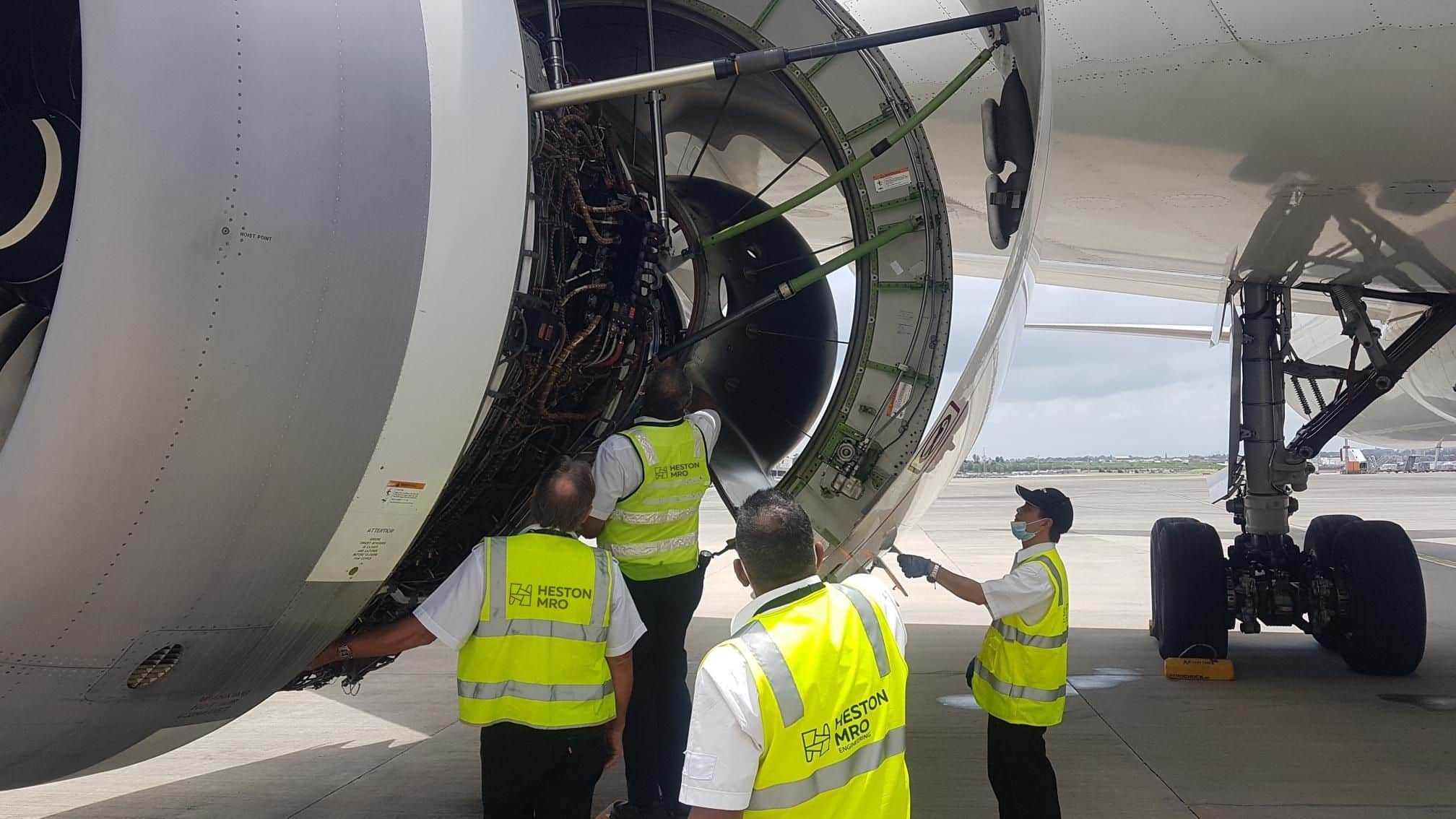
Heston MRO Expands to New Zealand with New International Line Station in Auckland

Heston MRO, the largest independent MRO organization in the Australasian region, is proud to announce the opening of its newest international line station at Auckland Airport (AKL), New Zealand.

The new station is established and operated in a strategic partnership with Fieldair, a New Zealand MRO provider. This expansion marks Heston MRO’s first permanent footprint in New Zealand, directly responding to the needs of its international customer base that operates flights into both Australia and New Zealand. By expanding its geographical offering, Heston MRO is strengthening existing customer relationships with a broader regional reach and expanded capabilities.

The Auckland station provides a comprehensive range of capabilities for both wide body and narrow body aircraft, ensuring seamless support for long-haul and regional carriers. The partnership combines Heston MRO’s extensive Australasian presence with Fieldair’s local expertise to offer:

Part 145 Engineering: Full line maintenance support and aircraft certification for international fleets;

Part 147 Technical Training: Localized technical training solutions to support the regional aviation workforce;

Joint NDT Services: Advanced Level 2 Non-Destructive Testing capabilities provided through the collaborative resources of both Heston MRO and Fieldair, covering Australia and New Zealand.

“The opening of the Auckland station is a natural evolution of our customer relationships,” said Asta Zirlyte, CEO of Heston MRO. “Many of our existing airline partners who rely on us across major Australian airports also fly into New Zealand. By expanding our geographical offering to Auckland, we can now provide them with the same high-quality, ‘Total Technical Care’ solutions across their entire Pan-Tasman network.”

“We are excited to partner with Heston MRO to bring this international line station to Auckland,” said Brett Richmond, CEO of Fieldair. “Fieldair has a long history of keeping New Zealand’s aircraft flying, and this collaboration allows us to combine our deep local knowledge with Heston MRO’s global customer reach. Together, we are providing a unique,full-service capability that will benefit international carriers and strengthen the local aviation sector.”

LAUNCH Announces Acquisition of JMC Aviation; Jeff Martin to Lead Combined Organization as CEO

Oak Brook, IL and Exeter, UK — January 14, 2026 — LAUNCH Technical Workforce Solutions, a leading provider of technical workforce solutions and services to the aviation industry, today announced the acquisition of JMC Aviation, a global engineering solutions and aviation recruitment specialist headquartered in Exeter, United Kingdom. JMC Aviation provides a wide range of technical solutions across the UK, European Union and Canada, among other geographies.

The acquisition brings together two highly complementary organizations and creates the largest specialized provider of technical aviation solutions, globally. By combining LAUNCH’s U.S. market leadership with JMC’s established international presence, the acquisition establishes a global leader of workforce solutions and technical services to manufacturing and MRO/aftermarket customers within the commercial aerospace, business & general aviation, defense and rotary end markets. In combination, LAUNCH will now be able to offer a broader range of capabilities, including an expanded suite of modifications and a mobile repair team, furthering its commitment to creating a global technical services offering. The transaction also expands LAUNCH’s pool of technical talent, deepening its ability to deliver comprehensive workforce solutions on a global scale.

LAUNCH is a portfolio company of Capitol Meridian Partners, a private equity firm with deep expertise in the aviation sector. Equity financing in support of the transaction was provided by Capitol Meridian Fund I, L.P. and its affiliates, with participation from members of both management teams. Debt financing for the transaction was provided by LAUNCH’s existing lenders, MidCap Financial and Marathon Asset Management. Terms of the transaction were not disclosed.

In connection with this transaction, LAUNCH’s Executive Chairman, Jeff Martin, will add the title of CEO of both organizations. Jeff brings more than 33 years of aviation experience, along with extensive senior executive and board leadership. His depth of expertise uniquely positions him to guide LAUNCH through the Company’s next chapter of innovation, growth, and expansion while continuing to shape its strategic vision.

“This acquisition represents a significant milestone in LAUNCH’s evolution,” said Jeff Martin, Executive Chairman and CEO. “JMC Aviation is a respected global organization with a strong reputation for technical excellence and customer partnership. Together, we are building a platform that allows us to support our customers wherever they operate, while staying true to our shared commitment to quality, safety, and long-term relationships.”

Hollie Prendergast, Managing Director of JMC Aviation, added, “Partnering with LAUNCH is a natural next step for JMC. From the very beginning, it was clear that our companies share the same values and customer-first mindset. This acquisition strengthens our ability to support clients globally, while preserving the culture, leadership, and service standards our customers rely on every day.”

Wintriss Controls Group Acquires ISB

Wintriss Controls Group has announced that as of October 1, 2025, it has acquired all of the assets of ISB, a manufacturer of safety equipment for the metal forming industry based in Montreal, QC, Canada. Wintriss has formed a new company in Canada named Wintriss Controls Group ULC, DBA Wintriss ISB. With ISB’s full complement of light curtains, press brake guarding systems such as the Merlin 4000 PRO, and other safety products, combined with Wintriss’ outstanding line of Shadow Light Curtains, the acquisition positions Wintriss as the leading provider of safety solutions for presses and press brakes in the metal forming manufacturing industry.

“We are excited to advance the ISB legacy by combining the capabilities of two top safety product companies to form one indisputable leader in metal forming safety control,” said Keith Magnant, president of Wintriss Controls. “ISB has many years of proven expertise in light curtain and press brake guarding technology, making them an ideal fit alongside our leading Shadow Light Curtain line, while further strengthening our combined brands as the preeminent safety solution in metal forming.”

“Joining Wintriss allows ISB to continue innovating in the press brake guarding and safety fields. Reinforced by Wintriss’s reputation for reliability in the metal forming industry, we are thrilled to offer safety solutions to a wider network of metal formers,” said Tony Caruso, vice president of sales for ISB. “We eagerly look forward to enhancing the Wintriss portfolio with our extensive line of safety products to jointly become the absolute leader of safety and automation in metal forming.”

Moving forward, the existing ISB manufacturing facility will continue to operate out of Montreal. Further reinforcing the dependability of its safety solutions, Wintriss will begin offering the new Shadow 10 Light Curtains in Q1 of 2026 and service/ repair all Shadow 10 light curtains at Wintriss headquarters in Acton, MA.

New Insight on China’s Growing Aircraft Teardown and Recycling Market

Building a Sustainable Future for Aircraft Teardown in China

By Paul Ashcroft, SVP Asia-Pacific, AerFin

China’s aviation industry is entering a pivotal decade. A younger fleet, progressing towards mid-life, rising operational pressures and a renewed push for sustainability are converging to reshape how airlines think about material use and end-of-life strategies. Nowhere is that shift more visible than in the rapid growth of China’s aircraft teardown and recycling sector.

This momentum isn’t happening in isolation. Airlines across the region are navigating escalating maintenance costs, ongoing shop visit availability issues, and long-term and structural supply chain constraints. New parts remain expensive and, in many cases, are difficult to secure. Geopolitical tensions and tariffs continue to influence material flows. Against that backdrop, operators are looking for lower-cost solutions that keep aircraft flying, protect asset value, and support long-term resilience.

That’s where Used Serviceable Material (USM) is beginning to play a far greater role.

As operators face the realities of cost pressure and supply shortages, USM is increasingly viewed as a strategic tool. Airlines are now actively exploring USM to reduce downtime, manage operational risk, and create more predictable maintenance pathways. Confidence is rising, supported by a maturing supply chain and the assurance that strict Civil Aviation Administration of China (CAAC) controls maintain the highest levels of safety and traceability.

This shift aligns with a broader national focus: On a number of occasions at the recent USM conference in Jinan I heard mention of an ambition in China to reuse or recycle more than 90% of materials from retired aircraft. Achieving that goal requires commitment, scale and collaboration. The country’s teardown capacity is expanding quickly, but meeting future demand will depend on a well-connected ecosystem that can handle both the straightforward and the complex.

Not all components are equal when it comes to recycling. The materials of a typical A320ceo aircraft consist of approximately 70% aluminium and 10% steel, by weight, and these are widely recyclable. However, cabin interiors, carbon fibre composites and other specialised materials still require deeper industry cooperation and, in some areas, new technologies to ensure they can be responsibly recycled.

As fleets mature and retirements accelerate, and with newer fleets having a greater composite composition, these challenges will become more pressing.

International partnerships will be essential. Access to global USM supply is already helping Chinese operators smooth over the gaps created by supply chain volatility. It also provides the quality, documentation, and reliability needed to build long-term confidence. The airlines that succeed will be those that combine strong in-country capacity with relationships that open up the best of the worldwide aftermarket.

AerFin plays an active role in that progress. Our deep experience in complex teardowns and transactions helps customers navigate challenging decisions with confidence, and our meticulous focus on quality ensures they receive material they can rely on. Sustainability sits at the heart of our business model, so our approach to recycling and resource recovery ensures every asset delivers value throughout its life while supporting the circular principles central to China’s aviation strategy.

The way ahead is clear. China’s teardown and recycling market is expanding, and its airlines are recognising the economic and environmental value of USM. With confident, reliable and progressive partnerships in place, the region is well placed to build a highly efficient, resource-conscious ecosystem that supports growth and strengthens resilience.

For operators, this moment represents an opportunity to rethink how assets are managed, how supply limitations are navigated, and how sustainability is embedded into long-term planning. For the aftermarket, it’s a chance to support that transformation with reliable, traceable, and cost-effective material solutions that keep fleets moving forward.