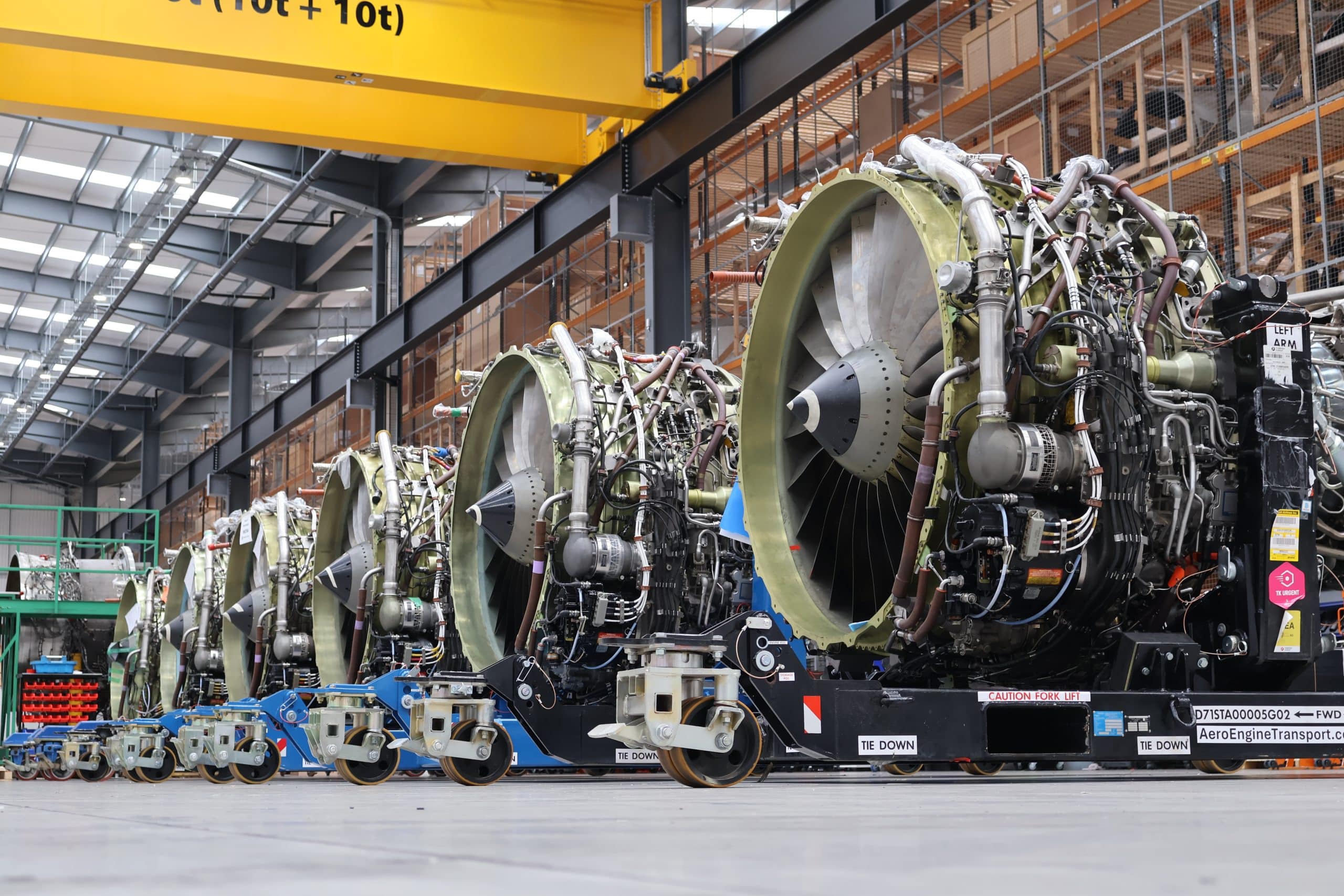
Aircraft parts search behavior is one of the clearest real-time indicators of stress in the aviation aftermarket. When airlines, MROs, lessors, and independent traders search for specific components at scale, those patterns reveal where operational pressure is building before it becomes visible.
Locatory.com May 2026 marketplace data, covering the Top 50 Most Searched and Top 50 Hardest-to-Find aircraft parts across its global user base, offers a granular view of where that pressure is concentrated.
Key Highlights:
· Narrowbody fleets are carrying the heaviest aftermarket load. Boeing 737 and Airbus A320-family components dominate May 2026 search activity, reflecting continued reliance on in-service aircraft as delivery delays and engine constraints keep older fleets active.
· Engine and dispatch-critical systems are the main pressure points. HMUs, starters, FADECs, IDGs, pneumatic valves, hydraulic pumps, ADIRUs, and fire detection units were the highest-demand categories in May 2026.
· Hard-to-find parts reveal repair-cycle and rotable-pool stress. Limited availability of engine controls, cooling components, cabin-specific items, and mature widebody parts suggests that TAT, traceability, and USM feedstock are shaping sourcing outcomes.
· Boeing 777 sourcing pressure is rising. Multiple GE90-related components appear in the hardest-to-find data, pointing to tighter support for 777-300ER and 777F fleets.
May 2026 Demand Signals: What Operators Are Searching For
The central finding is not surprising. The Boeing 737 Next Generation and Airbus A320ceo fleets continue to dominate aftermarket demand.
Among the most-searched components are CFM56-5B and CFM56-7B engine-core parts, including the booster spool assembly (PN: 338-001-906-0), HPC front shaft (PN: 1386M56P03), and HPT disk variants (PN: 1498M43P06 and PN: 1498M43P07). Their presence points to deeper shop visit activity across A320ceo and 737NG fleets, where high-cycle CFM56 hardware is increasingly sensitive to remaining life, traceability, and repair capacity. The list also includes the HPT rotor blade (PN: 2100M96P03) and outer retaining sleeve (PN: 2082M44P02) for B777, showing that demand for engine-core components extends beyond narrowbody platforms.
Beyond the engine core parts, pneumatic system demand was also prominent. Air turbine starters (PN: 3505582-27, PN: 3505945-10, and PN: 3505945-12), applicable to CFM56-7B-powered Boeing 737 fleets, appear among highly searched components. And the starter air assembly (PN: 3505830-13), applicable to the Boeing 777, extends this demand into widebody operations.
Integrated Drive Generators are another strong demand signal. IDG units (PN: 1706903 for A320 Family; PN: 761574B for 737 Fleet) are complex rotables with long lead times for serviceable replacements.
Bleed-air and precooler valves searches add another layer to the story. Precooler control valves (PN: 3289562-5), high-stage bleed valves (PN: 3214446-4), and pressure regulator and shutoff valves (PN: 3214552-5 and PN: 3214552-6) are linked to engine start, anti-ice, pressurization, and environmental control system performance. These components are thermally stressed and cycle-driven, making them sensitive to high utilization.
Two additional search categories accumulated attention in May 2026. First, APU-related components,including the APU unit itself (PN: 3800708-1) and APU ignitor plug (PN: 305766-1) for Boeing 757/767. Second, evacuation slide assemblies (PN: 5A3307-701) and crew protective equipment (PN: 174692-N7, full face crew mask for 737) indicate active sourcing around dispatch readiness, regulatory compliance, and fleet reconfiguration.
May 2026 Supply Constraints: What Buyers Struggled to Source
The Boeing 777 fleet emerges as a major supply-side pressure point, with several GE90-related components appearing on hardest-to-find list.
The likely cause is January 2026 FAA directive on GE90 HPT disks, which has increased B777 engine shop visit activity. Although the directive targets disk inspections and replacements, deeper shop visits are also pulling related components, including FADECs, HMUs, and cooling valves, into repair pipelines.
This pressure is visible in Locatory.com May 2026 data. GE90 FADECs are critically hard to source, with multiple part numbers appearing on the hardest-to-find list, including PN: 105E70898G1, PN: 105E70898G2, PN: 105E70898G3, PN: 105E7090G9, PN: 105E7090G12, PN: 105E7090G13, and PN: 114E6791G3. B777 HMUs (PN: 1693M75P08 and PN: 1851M65P05) also show acute scarcity, while Core Compartment Cooling Valve (PN: 5010759-101) suggests GE90 sourcing pressure is spreading beyond core engine hardware into surrounding systems.
With B777X delays leaving 777-300ER and 777F operators without a near-term replacement path, GE90 component sourcing is likely to remain structurally pressured.
Outside the B777/GE90 ecosystem, brake assembly hardware (PN: 2608892-1A) appears in the hardest-to-find list. Brake assemblies are high-cycle landing gear components subject to wear-based replacement. Their presence in scarcity data is consistent with an operating environment where aircraft expected to retire or reduce flying are instead accumulating additional cycles.
Avionics and electrical shortages are visible as well. The Smart Monitor unit (PN: RD-FJ7828-01) appears on the hard-to-find list. A Power Supply Module (PN: LA5D12100H30200) for Airbus and a Radio Frequency Power Divider (PN: 77A561002P001) also point to longer sourcing lead times for avionics and electrical LRUs. These components may not attract the same attention as engines, but in an AOG event, their absence can still ground an aircraft.
Fleet-Specific Insights
The fleet pattern is clear. B737NG and A320ceo aircraft are driving the demand across engine, pneumatic, hydraulic, and electrical systems, while the B777/GE90 ecosystem shows the sharpest supply-side stress.
Regional and legacy widebody platforms add secondary pressure. The Bombardier CRJ series and B757/B767 platforms also appear across both lists. Examples include the CRJ door landing component (PN: CC670-33151-6S), main windshield (PN: NP139321-13), B757/B767 APU ignitor plug (PN: 305766-1), Smart Monitor (PN: RD-FJ7828-01), and fuel nozzle assembly (PN: 3105208-2).
These operators often have smaller supplier bases, fewer teardown opportunities, and more limited access to pooled support. When material tightens, these fleets can move from sourcing friction to AOG exposure quickly.
What The Data Suggests About The Global Aviation Supply Chain
First, GE90 FADEC and HMU scarcity is becoming a leading widebody risk indicator. Any operator, lessor, or supplier managing 777 fleet assets or GE90 inventory should reassess rotable depth and repair access now.
Second, the legacy narrowbody is not retiring on schedule. Both the 737NG and A320ceo fleets are flying beyond original retirement horizons, generating sustained demand for CFM56 rotating hardware, pneumatic system components, and power-generation LRUs.
Third, repair-cycle TAT is a binding constraint. Sourcing material is only part of the challenge. If the approved repair ecosystem is backlogged, serviceable pool availability remains tight even when unserviceable units exist in the market.
Fourth, USM supply is less effective as a pressure-release valve. Delivery delays are suppressing teardown activity across both narrowbody and widebody categories, tightening the used serviceable material channel that historically helped buffer open-market scarcity.
Strategic Implications For Airlines, MROs, Lessors, And Suppliers
Airlines should reassess rotable-pool depth for engine accessories, pneumatic valves, hydraulic pumps, flight-control actuators, fire detection units, ADIRUs, and safety equipment. Items such as the pneumatic turbine starter (PN: 3505945-10), precooler control valve (PN: 3289562-5), FDU fire detection unit (PN: 909012-02-01), and ADIRU (PN: HG2030BE04) deserve targeted provisioning reviews before peak Q3 utilization.
Engine MRO providers should focus on repair throughput for CFM56 accessories, pneumatic components, hydraulic systems, IDGs, and engine-control LRUs. Capacity investments made now will generate long-term returns. For GE90 support, FADEC repair authorization and shorter TAT can become a clear commercial advantage.
Lessors and asset managers should examine engine configuration, component status, and repair exposure on transitioning 777, 737NG, A320ceo, and legacy widebody assets. Aircraft with limited engine-control availability or pending shop visit exposure may face longer transition periods and higher redelivery costs.
Inventory managers and traders should prioritize serviceable material in categories where search demand and scarcity overlap. GE90 FADEC units, HMUs, HPT-related hardware,
CFM56 rotating components, air turbine starters, IDGs, bleed-air valves, APU hardware, and selected safety equipment are clear focus areas before Q3 2026.
Outlook For Q3 2026
Q3 2026 is likely to increase pressure on the same component categories visible in May. Summer utilization will raise demand for ECS, cooling, bleed-air, starting, fire detection, and dispatch-critical avionics. Engine-related shortages are unlikely to disappear quickly, particularly where repair capacity, inspection workscopes, and spare engine availability remain constrained.
A key indicator to monitor will be whether hard-to-find demand migrates from high-value engine controls into secondary systems such as valves, sensors, harnesses, lighting, and cabin-safety equipment. That would suggest operators are no longer only short of major components but are experiencing broader provisioning gaps across line-maintenance consumables and repairables.
Another indicator is the behavior of USM supply. If more young aircraft are parted out to access engines or high-value components, short-term parts availability may improve in selected categories. But this is not a structural fix. It can also reduce future feedstock, distort asset values, and complicate long-term fleet planning.
The operators and suppliers best positioned for Q3 will be those that move before demand becomes AOG-driven. In the current aftermarket, advantage will come from traceable inventory, repair-slot certainty, stronger rotable planning, and the ability to convert Locatory.com marketplace intelligence into early sourcing decisions. Locatory