
MRO operations generate a significant amount of waste on a daily basis. This waste includes everything from solvents, degreasers, and chemical cleaners to composite scrap and removed parts, plus leftover hydraulic fluid, oil, and fuel residues.
Fortunately, many MROs are aware of this problem and are taking steps to reduce their environmental impact. Aviation Maintenance magazine spoke to four MROs who are doing their best to “go green.”
What They Are Doing
Montreal-based MRO AJW Technique takes sustainability seriously. To do so, the company has aligned its operations with the United Nations Global Compact by actively reducing its energy consumption, water usage, and general waste. AJW Technique also operates as an aviation recycling plant, continuously repairing and overhauling aircraft components to extend their lifecycle and prevent landfill buildup.
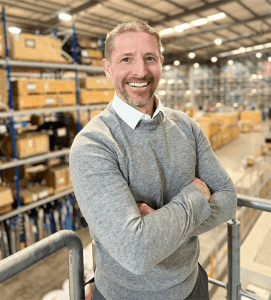
“To minimize chemical waste from cleaning and degreasing processes, we prioritize aqueous solutions wherever possible,” said Louis-Philippe Mallette, president of AJW Technique. “In cases where performance requirements necessitate the use of solvent-based cleaners, we extend solution life through regular monitoring, filtration and controlled chemical top-ups. When replacement is required, waste is managed by accredited disposal partners who ensure correct identification, segregation, recycling, and safe disposal. A similar approach is applied to fluids used in our test stands, such as Skydrol and fuel. Through filtration, routine condition monitoring and, where necessary, water separation, we maximize fluid longevity and reduce waste.”
Most of the scrap parts generated by AJW Technique are metallic in nature. They are managed by specialist contractors to ensure proper segregation and recycling. “In addition, we have significantly reduced packaging waste by replacing expanding foam with paper-based cushioning and void fill systems,” Mallette told Aviation Maintenance. “These alternatives have a substantially lower environmental impact and are fully recyclable.
Headquartered in Munich, Germany, MTU Aero Engines drives sustainability through its group-wide ecoRoadmap program, which is focused on improving energy efficiency, adopting renewable energy, and electrifying systems across its sites. In alignment with the Paris Agreement, the company’s climate transition plan sets measurable decarbonization goals while pursuing a “circular economy” (closed-loop) approach from procurement to waste management.
“MTU addresses waste reduction in MRO through a combination of certified environmental management systems, site governance and a broader push toward circularity.
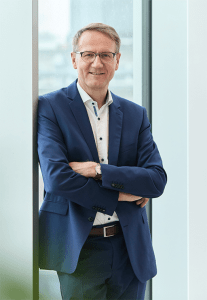
Environmental management and compliance structures,” said Alexander Engel, MTU Aero Engines’ vice president for corporate sustainability management and reporting. “At MTU Maintenance Hannover, environmental protection activities explicitly include cooperation with environmental stakeholders such as a waste management officer, regular operational inspections, audits and KPI management. Such mechanisms are typically used to reduce waste generation and ensure proper handling of hazardous materials and residues.”
“MTU’s sustainability framework highlights circularity and a planned circular economy strategy,” he added. “It explicitly lists reducing raw material and energy consumption via ‘used parts management’ and industrializing repairs, which also reduces scrap and material throughput.”
Singapore’s ST Engineering is relying on technological solutions to reduce its environmental footprint, such as implementing its water-saving EcoPower engine wash system and utilizing additive manufacturing to produce lighter parts. The company also develops advanced nacelles to lower fuel consumption and has been integrating solar energy at its aerospace facilities since 2018.
“In component MRO, a wheel cleaning automation solution reduces the consumption of cleaning chemicals by up to 40%, while enabling overnight operations,” said an ST Engineering spokesperson. “When it comes to paint stripping, an automated media blasting solution eliminates the need to soak components in paint-stripping chemicals, which is part of a process that normally takes up to two days and entails heavy chemical usage.”
ST Engineering deploys a fully automatic and enclosed ultrasonic cleaning system for cleaning engine parts, which improves productivity while minimizing technicians’ exposure to chemicals. “Compared to the process of manually immersing parts in a large cleaning tank, this system uses smaller tanks with less liquid, meaning that less energy is consumed for heating, while the use of ultrasound technology provides better cleaning quality,” the spokesperson said. “Meanwhile, the use of extremely pure deionized water in our EcoPower aircraft engine wash system as a highly effective cleaning agent eliminates both the need for detergent and the risk of engine contamination.”
Headquartered in Scottsdale, Arizona, StandardAero is reducing its greenhouse gas emissions, energy use, and waste through its GreenERmro continuous-improvement program and a targeted decarbonization roadmap. StandardAero is aiming to achieve net-zero emissions by 2050 by scaling up its use of renewable energy, deploying electric ground support equipment, and optimizing resource efficiency across its operations.

“In 2025, StandardAero launched 85 GreenERmro projects that target energy, water, and waste reduction,” said Brian Skrobarcek, the company’s enterprise vice president for environment, health, safety & sustainability. As an example, “StandardAero’s Kansas City facility moved to a reusable grit‑blast medium, eliminating about 40,000 lbs of waste a year, with a 75% reclamation target.” Meanwhile, StandardAero’s Maryville facility found an alternative part‑cleaning process that avoids the use of about 28,000 gallons of water. The company’s Winnipeg facility has installed an efficient vacuum furnace with closed‑loop cooling, reducing energy and process waste.
In the area of recycling and circular approaches, StandardAero’s San Antonio facility is repurposing surplus equipment and converting materials into recyclable scrap, with 16% of its overall total waste being recycled in 2025. The company’s Fleetlands facility in the United Kingdom has initiated organic waste segregation and composting.
“Globally, our e‑waste is recycled or dispositioned appropriately,” Skrobarcek said. Additionally, “StandardAero’s Supplier Code of Conduct and procurement practices emphasize environmental stewardship, responsible sourcing, and proper handling of specialty materials.”

More Repairs, Less Replacements
In their efforts to go green, many MROs are repairing, overhauling, or remanufacturing parts rather than replacing them. “The first step is to confirm the part needs to be or can be repaired,” said Mallette. “If we are repairing rather than overhauling a component, we check whether all bearings and seals are still functional or whether they need replacing. Provided they are still within specification, there is no need to replace them. Our skilled engineers are equipped to identify opportunities to repair rather than replace them with new items. We also collaborate with partners who specialize in parts restoration processes such as plating and welding.”
AJW Technique’s approach is endorsed by MTU Aero Engines. “One of MTU’s core philosophies is repairing instead of replacing as a way to make our MRO operations more sustainable and more reliable,” Engel said. “We work closely with engine OEMs to develop, license and industrialize approved repair methods so they can be performed at scale. This reduces overall demand for raw materials and related energy consumption, as well as dependence on the market, while extending component life and maintaining airworthiness requirements. We also have a global network of Centers of Excellence that specialize in different areas of parts repair and help our MRO network conduct upwards of 90 percent of necessary repairs ‘in-house’.”
StandardAero explicitly prioritizes repair over replacement to extend component and engine life and avoid manufacturing‑intensive impacts. Mindful that time is money, “We use data analytics and predictive maintenance products such as EHM, ECTM, and Maintenance Insight to optimize time‑on‑wing and reduce unnecessary shop visits,” said Skrobarcek.
At the same time, “Certification and traceability are critical in aviation and can limit reuse/repair if documentation, quality controls, or provenance aren’t maintained,” he noted. To comply with these requirements, StandardAero employs rigorous quality management certifications, digitized record-keeping, OEM-authorized repair capabilities, and strict supplier oversight.
Making MRO Spaces Less Resource-Intensive
Because they service aircraft, MROs need large spaces to work in. These facilities consume substantial amounts of electricity, water, heating, and cooling resources.
So what are environmentally-conscious MROs doing to consume fewer resources? AJW Technique’s Montreal facility uses electrical power that is virtually 100% generated from renewable sources such as hydropower. “In all of our facilities we’ve moved to LED or low-power lighting systems to minimize energy usage, and in our Montreal facility we’ve installed an advanced control system on our multiple air extraction systems to ensure they only operate when required and at a flow level appropriate to the equipment in use,” said Mallette. “This has resulted in a 60% reduction in the volume of extracted air.”
In Singapore, ST Engineering has installed solar panels atop all its hangars and available building space to generate clean energy, fulfilling approximately one-third of its operational needs. Solar panel deployments are also being undertaken at its other facilities globally, while in Dresden, Germany, its joint venture Elbe Flugzeugwerke’s facility obtains all its electricity from renewable sources.
At MTU Aero Engines, “we employ a number of measures to drive down our CO2 footprint,” Engel said. “This includes heat exchangers and pumps as well as photovoltaic installations to electrify operations sustainably as much as possible. Smart lighting and optimization of ventilation systems at our locations also help reduce industrial energy consumption. At our Munich HQ, we have even built a geothermal plant that powers most of the site’s operations. A more recent development is the retrofit of MTU’s test cells to include sustainable aviation fuel (SAF) for performance tests.”
StandardAero has implemented several initiatives to reduce energy usage at its facilities. For instance, the company is electrifying its ground support equipment, such as replacing a gas tug with an electric model in Van Nuys and pursuing eTaxi certification with GTS to decrease aircraft taxi fuel consumption. By installing rooftop solar panels on its hangars, this MRO supplied nearly 25% of its Stockton site’s electricity needs in 2025 — and avoided over $99,000 in energy purchase from their local grid.
That’s not all. StandardAero saved over 170,000 liters of test-cell fuel in 2025 through a targeted efficiency process. The company has also installed smart controls, energy-efficient lighting, and WaterSense fixtures across its facilities, while improving energy performance and operational reliability at its San Antonio site by upgrading compressed air and chilled water infrastructure.

Preparing for SAF
Beyond reducing waste and facility emissions, many MROs are also preparing for broader industry fuel transitions, like Sustainable Aviation Fuel (SAF). “While SAF is ‘drop-in’, it still affects maintenance due to its different chemical composition that may affect seals, elastomers, and fuel system components over time,” said Skrobarcek. “It also has cleaner burn characteristics that may lead to different inspection intervals, plus fuel storage and handling differences at MRO facilities.”
They’re not alone. “MTU is preparing for SAF both at the test and infrastructure level, as well as through data and experience gathering,” said Engel. “We are already ready to test with SAF at our Hannover location and have successfully done so there with 100% SAF on a V2500 engine together with International Aero Engines (IAE). Because SAFs are still a fairly recent development in aviation, it is still to be seen how it affects engines in the long-term and over maintenance intervals.”on credit programs.
What Comes Next
Each of the MROs interviewed for this story have taken real and very tangible steps to make their operations green. So what are their plans to ‘go greener’, to improve upon the progress they have made to date?
At AJW Technique, “we continue to focus on repair development to minimize the purchase of new material and promote re-use and recycling across our global offices and operations wherever possible,” Mallette said.
Over at MTU Aero Engines, “we will continue to build on and further develop our sustainability initiatives and actions on a continuous basis,” echoed Engel. “Engine MRO is emerging as a key lever for advancing sustainability in aviation. Significant benefits can be achieved by extending engine service life through repair, reuse, and retrofitting. We can also enhance operational efficiency by leveraging data-driven, predictive maintenance as part of our engine fleet management services. When combined with circular economy principles, it is a boon to minimizing energy and material consumption. The full sustainability potential is realized when these approaches are consistently applied across the entire engine lifecycle.”

To maximize solar energy generation, ST Engineering is exploring mobile solar panel deployments and is in the midst of designing and constructing a prototype unit. For its engine MRO business, ST Engineering is looking into implementing a carbon capture device to partially sequester greenhouse gas emissions from test cells, and has started to acquire blended SAF to drive down its direct greenhouse gas emissions.
As for StandardAero, the company is still following its goals of achieving 45% greenhouse gas reduction by 2030 and reaching net‑zero by 2050, finding additional energy-reduction efficiencies while using more renewable electricity, and electrifying more ground support equipment. The company also wants to further improve its test‑cell performance, form partnerships to increase the repairability of parts, and ensure that its suppliers are also doing their part to be more sustainable.
The takeaway is that these MROs aren’t just talking about going green; they are doing something about it. The result is a growing shift toward sustainability practices that are becoming increasingly integrated into modern MRO operations.