
ITS was founded in May 2002 and since that time the company says it has refocused its strategy. ITS made their first acquisition of a complete aircraft in 2007. With that experience, ITS’s leaders redirected the company’s focus to support the used serviceable material (USM) market and the global air transport industry. The company says this new strategy began with the MD-80 family and transformed ITS from a parts wholesaler into a global supply chain company. ITS began providing complex components and systems while developing in-house technical expertise on the entire airframe. Throughout the years, ITS has expanded the number of aircraft types they serve and has strategized with current and forecasted market demand to include support for various engines and APUs. ITS is headquartered in Chandler, Arizona, in a 100,000 sq. ft. state-of-the-art facility and holds ISO 9001:2015, AS9120B:2016, and ASA-100 accreditations. Aviation Maintenance spoke with Reid Selover, chief strategy officer to learn more about the company, its business philosophy and its goals.
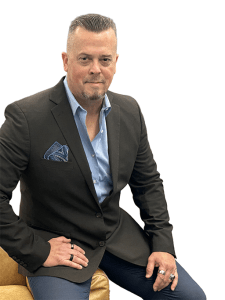
AVM: ITS has taken an interesting position in the supply chain arena. Tell us more about that and give us more background on the history of ITS.
Reid Selover: We just celebrated our 24th anniversary in the last couple of months. The company was founded by Ryan Kohnke and Scott Tinker, two college buddies who got into this space and the USM market. It is an interesting business. In a nutshell, ITS buys aircraft and helps airlines retire them so we support the remaining active fleet with critical USM components. Aircraft have a certain life expectancy, and at the end of that life, we acquire them and Dismantle them down to their critical components. We have those components returned to service and then sell them back to the airlines. That happens in a couple of different ways. In some scenarios, airlines consign the aircraft to us because they want to receive a little more return on their investment, and they trust ITS to help them do that. Much like a regular acquisition, we take over the aircraft, dismantle it, and manage the components and major pieces across the entire aircraft, from tip to tail. We then have those components returned to service. When we are helping an airline retire an aircraft, it may keep certain components or take some of them back. We may also sell the material into the market and share the value with the airline. That allows the airline to realize a little more from its investment.
AVM: What sets ITS apart from its competitors?
Selover: There is certainly competition in this space, but what sets us apart is our experience and technical know-how. We have torn down well over 300 aircraft, . There are not many companies with that level of experience and know-how. The other thing we do is work closely at the airlines we support. A major airline customer may operate one specific aircraft type or several different platforms. We look at the aircraft that are retiring and available, and we target the types that directly support those customers. We want to make sure we have a steady supply of material for them. Other companies may be more opportunistic. They acquire whichever aircraft becomes available, tear it down, sell the material, and may not know what the next aircraft will be. Some of our competition don’t even buy aircraft. They buy material from ITS or companies like ours and then flip them to the airlines. We are much more intentional about aligning our aircraft acquisitions and material with the platforms and customers we support.
AVM: What is ITS’s strategic mission?
Selover: We want to be the best nose to tail supply chain partner in the market. There is a lot of competition in this space, and you really have to fight for those aircraft. You have to position yourself well with the people who own the aircraft so you have the opportunity to buy them. You also have to do it intelligently so there is still value available for the airlines. That is where we are really strong. We call it “Win the Platform. Earn the Customer.” We do that through our relationships and through a concierge-style, white-glove approach to supporting our customers. We think these things through, look closely at what our customers need, and determine how we can best support them. That is where we perform well.
AVM: How do you determine what your customer’s needs are?
Selover: That’s where our experience comes in. Because we have been doing this for so long, we understand what fails and how often it fails. It comes from touching the parts, knowing what they are, understanding what they do, knowing where they live on the aircraft, and knowing how they work. And we Listen to our customers. To us, it is not just a part number on a page. We know what those parts look like, what they do, where they live, what other parts of the aircraft they affect, and what other systems they touch.

AVM: Give us an example.
Selover: A good example would be the flap carriages on a 747. You have a lot of metal sitting on these large, heavy aircraft, with components that are moving all the time and performing very specific functions that allow the aircraft to fly. We want our team members to understand what they are working with, what they are supporting, and how those components support the aircraft. That knowledge allows them to better educate and support their customers and their counterparts at the airlines.
AVM: You say ITS places a lot of importance on communications and training. Tell us more about that.
Selover: We want to be good communicators. I mentioned earlier that we provide white-glove service, and part of that is being able to clearly communicate exactly what we do and how we do it. Some of the training we bring in is specifically focused on communication. How should we speak to one another? How do different people listen to and receive information? What is important about the value proposition we are offering? When we tell our customers that we are going to take care of them, we want our team to understand exactly how we are going to do that and be able to communicate it clearly. We also want to help the customer understand how we are going to support them.
AVM: Is having the right team also important?
Selover: Having the right team is the Key to our success! We want our team to understand what our history is, our experience and our technical know-how so they can convey that to our customers. So, as I mentioned, we work on communication training. We work on teamwork. We rely on each other very heavily. This business doesn’t turn off. We are available 24 hours a day, seven days a week. There’s AOG support here and understand when you’ve got an aircraft on the ground you need to send parts counter-to-counter to keep that aircraft flying. And so, when the airline is at a work stoppage, you’ve got to know how to handle that. That’s really what the training is for us. It is who we are as an organization — what’s important to us. Internally we talk about our observable behaviors. This is what the best person is on the best day. We use those traits to hold ourselves accountable and to be better. The culture is a big, important thing for us and it’s something that we’re always going to work on. Even when you’re getting it right, you have to be involved in that all the time. You don’t turn that off either. It’s intentional. It’s an intentional culture.