ST Engineering’s commercial aerospace business has secured a five-year maintenance, repair and overhaul (MRO) contract with Air Cairo, a new customer, to support the LEAP-1A engines that power its Airbus A320neo fleet. Under this contract, ST Engineering will provide quick-turn repair and Performance Restoration Shop Visit (PRSV) services at its engine MRO facility in Singapore. The first engine is expected to be inducted in mid-2025.
Captain Ahmed Shanan, chairman and CEO of Air Cairo, said, “We are pleased to form a partnership with ST Engineering, the globally recognized leader in engine overhaul, to support the maintenance of the LEAP-1A engines powering our Airbus A320neo. This agreement underscores our commitment to operational excellence, reliability and the highest standards of safety for our growing fleet.”
“As Air Cairo continues to expand its network and modernize its operations, having a trusted and experienced engine MRO provider like ST Engineering ensures that our engines receive world-class maintenance, minimizing downtime and optimizing performance. This collaboration will play a key role in supporting our mission to deliver seamless and efficient air travel for our passengers across the region. We look forward to a long and successful partnership with ST Engineering as we continue to strengthen our fleet capabilities and enhance our service offerings in the competitive aviation market.”
Tay Eng Guan, head of Engine Services at ST Engineering, said, “This latest contract demonstrates increasing confidence in our expertise as a Premier MRO provider for the LEAP engines, while marking another significant step in expanding our LEAP engine support for Middle Eastern operators. As we continue to grow our LEAP engine MRO capacity and parts repair capabilities, we look forward to supporting Air Cairo — and more operators in the region — with high-quality, value-added LEAP engine services.”
Air France Industries KLM Engineering & Maintenance (AFI KLM E&M) and Rolls-Royce announced the first Trent XWB-84 engine scheduled for maintenance, repair and overhaul (MRO) center at Charles De Gaulle Airport, Paris, France, has been inducted.
This establishes capability to exclusively support the Air France fleet and in turn will provide Rolls-Royce additional capacity to support customers around the globe. The facility complements Rolls-Royce’s current MRO footprint and addresses growing long-term demand for new civil large engines.
The announcement followed an agreement, made at Paris Airshow 2023, for the maintenance and repair of Trent XWB engines powering Airbus A350, building on an initial agreement signed between the two groups in 2014, as part of Air France-KLM Group’s acquisition of the aircraft type.
“We’re investing in a resilient future and plan to significantly increase our global MRO capacity and capability by 2030,” said Paul Keenan, director, commercial aviation aftermarket operations Rolls-Royce. “Today marks an important milestone on that journey as we see the first Trent XWB-84 inducting for MRO at AFI KLM E&M. AFI KLM E&M has a long heritage of MRO experience that will enhance overhaul and repair capabilities for the Trent XWB-84 engine – we are delighted to have them part of our global network. This will allow for additional capacity in the entire Rolls-Royce network and is further proof of our commitment to deliver both excellent products and services to our global customer base.”
Both Air France and KLM have ordered the Trent XWB powered Airbus A350. As part of the deals, the health and maintenance of the engines will be covered by Rolls-Royce’s comprehensive TotalCare service. Earlier this year Air France celebrated one million engine flying hours on the Trent XWB-84. The Trent XWB-84 EP offering a 1% fuel burn saving, worth $5m a year for the average fleet according to Rolls-Royce.
“The induction of the first Trent XWB-84 engine into our Paris facility marks a major milestone in our partnership with Rolls-Royce and in the continued evolution of our MRO capabilities,” said Anne Brachet, executive vice president, Air France – KLM Engineering & Maintenance. “This new chapter enables us to provide dedicated support for Air France’s A350 fleet while also contributing to the global Trent XWB aftermarket network. It reflects our commitment to combining technical excellence and innovation to meet the evolving needs of next-generation aircraft and engines.”
Alain Bellemare, executive vice president and president – Delta International, will assume an additional leadership role as chairman of the Delta Maintenance, Repair and Overhaul (MRO) Advisory Board, providing strategic direction, support and guidance to Delta’s commercial MRO business. He will work in close partnership with John Laughter, chief of operations and president of Delta TechOps, who will continue leading the business.
“Alain’s extensive experience in aerospace systems, engines and aftermarket services — paired with his strategic acumen and global commercial experience — makes him ideally suited to help guide the continued growth of the Delta MRO,” said Ed Bastian, CEO of Delta Air Lines.
In this capacity, Bellemare will provide strategic direction, support and guidance to Delta’s commercial MRO business, working in close partnership with Laughter and his leadership team. Delta TechOps is a $5 billion industry leader in MRO services, supporting Delta’s own fleet and hundreds of airline customers worldwide. Bellemare’s role as chairman will complement these operations by bringing his strategic lens and global experience to help strengthen market positioning, deepen customer relationships, accelerate long-term growth and enhance commercial success leveraging Delta’s industry-leading aircraft maintenance capabilities.
“We’ve partnered closely with Alain, leveraging his expertise for years, and it has helped position Delta’s MRO for the success we share today,” said Laughter. “His leadership in this board position will continue to grow and strengthen this critical part of our business.”
Bellemare brings 25 years of global aerospace and industrial leadership experience, having led complex aircraft programs, advanced propulsion and systems technologies, and global aftermarket services. As president and CEO of Bombardier Inc., he led the company through a comprehensive and successful transformation, overseeing the development, certification and successful entry into service of the C-Series, now Airbus A220. Prior to that, as president and CEO of United Technologies Corporation Propulsion & Aerospace Systems, he led Pratt Whitney, as well as the acquisition of Goodrich, with its integration into Hamilton Sundstrand. Delta says he has deep experience leading global teams responsible for the development, certification, maintenance and support of some of the world’s most advanced engines and complex aircraft systems. He also serves on the board of directors for Wheels Up.
Bellemare added, “I’m honored to take on this expanded role. Delta TechOps is a world-class operation with talented people, deep technical capabilities and a strong customer foundation. I look forward to partnering with John and the team to help shape the next chapter of growth and commercial success.”
Trax has been selected to modernize Delta TechOps’ maintenance and engineering systems. Delta TechOps will replace its legacy maintenance and engineering systems with Trax’s advanced eMRO and eMobility solutions.
Initially, more than 6,000 technicians across the Delta TechOps line maintenance network will use Trax’s innovative technology to digitize their maintenance processes, leading to enhancements in efficiency, data accuracy, and operational performance. The companies plan to use this initial implementation as a foundation for the future deployment of additional Trax eMRO modules and eMobility apps focused on heavy maintenance, maintenance planning, engineering, and quality management — all hosted in the fully-managed Trax Cloud.
“AAR’s strategic investments in Trax have enabled the company to scale to support the largest airlines and most diverse fleets,” said John M. Holmes, AAR’s chairman, president and CEO. “We are grateful to Delta for selecting Trax and look forward to powering their system modernization,” he continued.
John Laughter, president of Delta TechOps, added, “We are confident Trax will enhance our operational efficiency by streamlining maintenance processes across Delta TechOps, enabling our people to focus on delivering the Delta Difference.”
In preparation for Lufthansa Technik’s new facility in Portugal, the company recently opened a training center in Santa Maria da Feira, roughly 35 kilometers south of Porto, and welcomed the first 18 employees of Lufthansa Technik Portugal.
The training center is located in the Perm industrial park about nine kilometers away from the site where Lufthansa Technik Portugal’s new facility will become operational by the end of 2027. It consists of two buildings, one of which is now hosting introductory events and theoretical lessons. In the other, practical training units will begin in the coming weeks, supervised among others by qualified and highly experienced Lufthansa Technik employees from Hamburg. The training center, leased for three years, features several seminar rooms and office space with fully equipped workstations.
Lufthansa Technik announced last December its plan to invest a triple-digit million-euro amount in a new facility in Portugal. Located in the Lusopark industrial area of Santa Maria da Feira, the company will begin construction next year on a 54,000-square-meter production facility for the repair of engine parts and aircraft components, creating approximately 700 jobs.
Since announcing the project, Lufthansa Technik Portugal has already recruited 25 people, filling initial positions such as human resources manager, production manager and tool and equipment engineer. An additional 20 employees are expected to be hired before the end of this year. The company is actively seeking technicians, quality engineer auditors and further human resources specialists. Lufthansa Technik says on average, approximately 150 applications have been received for each position advertised so far.
Volker Magunna Chairperson of the Board, Lufthansa Technik Portugal
To ensure this continues in the coming years, Lufthansa Technik Portugal says it aims to establish partnerships with nationwide educational institutions and is already collaborating with Cenfim (Centro de Formação Profissional da Indústria Metalúrgica e Metalomecânica). This national vocational training center specializes in the metal, metalworking and electromechanical industries and supports the technical selection process for mechanics.
As chairperson of the board at Lufthansa Technik Portugal, Volker Magunna welcomed all new employees at the training center, together with Ricardo Arroja, CEO of the Portuguese trade and investment agency AICEP (Agência para o Investimento e Comércio Externo de Portugal), and Amadeu Albergaria, mayor of Santa Maria da Feira.
“Today is a special day for Lufthansa Technik Portugal, one that will go down in the company’s history — even before construction of the actual production facility has begun,” said Volker Magunna at the event. “It is a great feeling to welcome our first 18 colleagues as well as our guests from politics and business at the newly opened training center. This milestone vividly demonstrates the pace and commitment with which we are advancing this major project. I am excited about everyone who wants to shape and build Lufthansa Technik Portugal together with us. This also applies to our partners at AICEP and the city of Santa Maria da Feira, who have welcomed us with open arms and have provided strong support from the very beginning through an intensive process.”
Gogo has confirmed its Gogo C1 line replaceable unit (LRU) has received Supplemental Type Certification (STC) for 42 aircraft models through an Approved Model List (AML) granted by the Federal Aviation Administration (FAA). The confirmation covers 70% of North American Gogo legacy air-to-ground (ATG) customer aircraft and, once equipped, will ensure continued compatibility with and connectivity to Gogo’s forthcoming LTE network upgrade.
Metrea Aerospace Design (MASD) collaborated with Gogo to generate the AML STC, which covers aircraft including Cessna Citation, Gulfstream, Bombardier Challenger and Learjet, Dassault Falcon, Embraer, and Hawker family models. Equipping the Gogo C1 will enable current customers operating with legacy ATG 1000, 2000, 4000 or 5000 systems to seamlessly transition to the upgraded Gogo Biz North American 850MHz Licensed LTE network when it comes online in May 2026 to ensure uninterrupted service. The Gogo C1 LRU also provides a practical bridging capability for customers planning to switch up to Gogo AVANCE products, which enables optimized inflight productivity through internet, voice, streaming, popular pilot applications, and more.
To maintain continuity, the C1 houses a dual-technology aircard that connects to the existing network and will automatically transition to the new LTE network when it becomes available. To simplify installation, Gogo has designed the C1 with external dimensions and attachment points to match the legacy products, enabling a form-fit replacement. The LRU swap will require minimal downtime, and the Gogo C1 hardware will provide customers with a simple transition pathway, delivering access to a strengthened, future-ready network for more capacity and an improved customer experience.
“ATG continues to represent a valuable connectivity solution for aircraft operating over North America, so we want to make it easy and fast for our customers to maintain their connectivity while seamlessly transitioning to the upgraded LTE network,” says Gogo CEO Chris Moore. “We know that customers need to plan connectivity upgrades, so we’ve invested in creating the Gogo C1 LRU to help clients navigate the practical and financial pathway from legacy ATG services to our AVANCE portfolio. We are already working with our extensive approved dealer network to ensure it’s a streamlined process.”
Customers are eligible for a $35,000 installation incentive if they complete the C1 installation before December 31, 2025. Gogo is also providing other generous promotions to enable a direct transition to Gogo AVANCE, with its higher connection speeds, over-the-air (OTA) system software updates, and access to Gogo Vision inflight entertainment. Details about the rebates and promotions can be sourced athttps://www.gogoair.com/how-to-buy/promotions.
On June 14, the Aeronautical Repair Station Association (ARSA) opened a short survey collecting industry feedback on FAA Advisory Circular (AC) 43.13-1B Acceptable Methods, Techniques, and Practices—Aircraft Inspection and Repair.
The FAA has engaged industry to help review the AC, which primarily supports independent mechanics, technicians, and repair stations maintaining general aviation aircraft. ARSA is collaborating with the Aircraft Electronics Association (AEA) to gather input ahead of an in-person meeting on July 15-16.
The agency’s review focuses on:
(1) Clarifying and revising the content.
(2) Eliminating redundancy.
(3) Updating for new technologies.
To complete the survey, maintenance professionals should visit arsa.org/ac-43_13_1 or click here to go directly to the questionnaire.
Avionics Testing and Repair Advances with New Tools and Technology
Avionics testing and repair are undergoing a rapid transformation as new technologies redefine how maintenance crews diagnose, service, and upgrade aircraft systems. From AI-assisted diagnostics to portable test platforms and augmented reality overlays, today’s avionics maintenance is more precise, predictive, and efficient than ever before. As aircraft become increasingly software-defined, staying ahead in the hangar now means embracing tools once reserved for the lab.
A predominant theme in avionics testing and repair seems to be the role that technology and advances in science and engineering plays — be it artificial intelligence, software-centric solutions, more effective equipment, or new digital tools. All are contributing to advancements in avionics testing and repair.
Michael Miles is an avionics manager with Standard Aero in Springfield, Illinois.
“Computer-based troubleshooting continues to advance, modernizing avionics repair methodology. Hardware has given way to software and more and more systems from avionics manufacturers must be downloaded and sent to a repair center for each manufacturer,” says Miles. “The days of an avionics mechanic being able to overhaul or replace small parts in instrument and computer systems are long gone. Most analog test equipment has gone by the wayside for bus readers and laptop connections. However, the one constant has been the multimeter. The multimeter has advanced from analog to digital over the years, but the basics remain the same. Troubleshooting wiring and components still comes down to power, ground, and continuity checks. If a component or system fails or gives an error message, the first manufacturer-directed step is to always to check the wiring to the system to ensure proper connection. While we have moved away from simpler diagnostic tools to the digital and software-based world, the multimeter is the one constant backbone of troubleshooting and provides us with the confidence in the source of issues to make the decision to repair or replace the failed system. However, with today’s modernization in avionics, many advancements in component complexity have been offset by user-friendly systems and much better training for technicians.”
Artificial Intelligence (AI) Offers New and Advanced Maintenance Methods
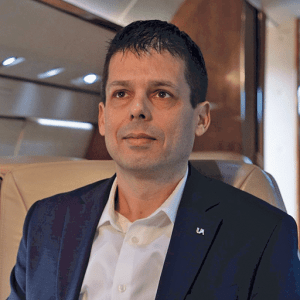
Artificial intelligence is also playing a role in new and more effective approaches to avionics testing and repair. Dror Yahav is the CEO at Universal Avionics in Tucson, Arizona.
Dror Yahav, CEO Universal Avionics
“Avionics testing and repair have always been based on proven methods with strict standards that ensure reliability, such as bench testing and built-in diagnostics,” says Yahav. “These essential practices are critical, but with the rise of AI and access to deeper operational insights, we’re evolving our processes. We’re now able to move from reactive maintenance to predictive, using AI data-driven strategies. AI helps us identify trends, streamline repair techniques, and optimize inventory, reducing both downtime and cost.”
Yahav adds that they are feeding all their insights back into our AI models to train new design processes. Lessons learned in the field are directly shaping the next-generation product development and improvements we introduce to existing products.
Advancements in Test and Repair Are Incrementally Integrated
Louis Philippe Mallette is the president of AJW Technique in Montréal, Canada, a maintenance, repair and overhaul (MRO) facility for business and commercial aircraft and the global repair hub for AJW Group. Mallette says that primary testing of avionics components is performed using automated test equipment where a full functional test of the equipment is performed. This generally highlights any failures in specific areas of the component requiring attention. But there’s an evolution to more sophisticated tools, technology, and techniques.
Louis Mallette, President AJW Technique
“Avionics components have evolved significantly over the years, progressing from principally analog electronics in the 1980s to the latest digital technologies today with increased use of microprocessors embedded in aeronautics,” says Malette. “The testing of avionics components has become significantly more intensive, driven by new testing standards from the aircraft manufacturers and equipment OEMs to drive increased reliability and enhance safety on modern platforms. As an example, the number of test points performed during a typical avionics unit test is now easily 10 to 100 times what it would have been 20 years ago. The performance of the automated test equipment has clearly improved over the years and this, in conjunction with more efficient test software, has been accomplished without increasing the overall test time.”
Mallette explains that once component failure is narrowed down to a specific circuit card, manual testing using an oscilloscope, for example, is used to verify the integrity of the circuit card assembly and to test individual devices on the card to identify the cause of failure.
“It goes without saying that the workshop environment in which we are testing is more stable than the actual environment on the aircraft, so, if necessary, we also adopt stress testing techniques,” he says. “In these instances, we heat and/or cool the component whilst testing, and subject it to vibration. This helps identify latent failures as simple as cold solder joints, which do not show up in regular testing.”
Advancements in avionics are not taking place all at once but are incrementally finding their way into shops and depots. Sometimes this takes place as upgrades to existing equipment and procedures. Marlon Bustos is an accountable manager at Air Accessories and Avionics, a Broward Aviation Services Group Company, located in Florida.
Marlon Bustos, Accountable Manager Air Accessories and Avionics
Bustos says that the fundamental methodologies tend to remain quite consistent over time. “Most component maintenance manuals (CMMs) continue to specify the use of established test equipment,” says Bustos. “However, at Air Accessories and Avionics we do observe incremental advancements. This often involves the integration of supplementary equipment, or the adoption of upgraded versions of existing testers. This evolution is partly driven by the fact that certain older test equipment models are no longer manufactured or supported for repairs, necessitating updates to our capabilities.”
Concerning advancements or changes in how avionics are maintained, his observation is that many avionics components are typically not removed from the aircraft unless a failure has occurred.
“Unlike mechanical systems, avionics components generally lack parts susceptible to wear and tear,” says Bustos. “As long as they receive the correct input power and are adequately cooled, their longevity is typically excellent. However, it’s important to note that the repair and troubleshooting of individual processor boards within these components is generally not feasible due to insufficient information provided in the CMMs. This detailed knowledge is proprietary to the original board manufacturer. Consequently, in approximately 98% of cases, board-level failures result in component replacement rather than repair.”
Ramey Jamil is the director of engineering at Muirhead Avionics/AMETEK MRO in London, U.K. He says that in the past decade, there has been an ongoing emphasis on moving towards automated testing methods, systematically enhancing productivity by providing hands-off testing with a wider depth of subsystem interrogation. This inherently allows engineers to gain greater insight into the root cause of problems, thereby enabling more effective and reliable resolutions.
“In some cases, at Muirhead Avionics/AMETEK MRO, we have seen LRU testing times cut down by more than 80%,” says Jamil. “A test program that used to take two hours can now be reduced to mere minutes. With each passing year, these systems continue to improve their efficiency, leveraging advancements in the next generation of computing and sensors to provide greater productivity and further insight into our daily operations. Muirhead Avionics observes that these systems allow us to collate new data, detailing downtime and common failures, thereby fueling preventative maintenance routines. This enables us to predict potential issues before they arise and ensures we can secure our stock and supply chain. We are now looking at automating legacy avionics into automatic testing regimes, developing purpose-built rigs that mimic the manual operator-driven test programs through in-house developed sub-routines.”
“The testing of avionics components has become significantly more intensive, driven by new testing standards from the aircraft manufacturers and equipment OEMs to drive increased reliability and enhance safety on modern platforms,” according to Louis Mallette, president of AJW Technique in Montréal, Canada. AJW image.
There are many digital tools as well as new skills available that enable avionics testing and repair to be more expedient and effective. With such tools and technologies, tribal knowledge and reliance on specific personnel experience is less than in the past.
“Historically, many avionics technicians were referred to as ‘sparkys’ or other informal monikers, in relation to their work with the instrument and autopilot systems,” says Michael Miles. “This is more prevalent in today’s software-based systems. Bendix/King Sandia and some of the older analog systems have given way to Garmin, Collins, and Honeywell smart digital systems. The use of laptop computers has become a way of life for maintaining and updating the modern systems. Troubleshooting skills are now based on component diagnostics through the systems themselves and computer-based downloads that will point to likely root causes of the affected systems. I have seen technician skill levels with computer and diagnostic skills rise significantly over the years due to many more learning opportunities for the early career technician. Each manufacturer has its own classes and schools nowadays and they are invaluable tools for the line technician. AEA and FAA classes can also help teach the basics of avionics wiring and general repair for someone just beginning. This has been a great help in getting technicians qualified at a quicker rate than years past. The complexity of the systems has increased, but thankfully the training and OJT programs have kept up with the advances in technology. No longer is ‘tribal knowledge’ needed as much today because of the many digital tools at our disposal.”
Yahav says that avionics maintenance is moving from traditional scheduled maintenance toward a more intelligent, predictive model. Data is continuously gathered across the entire lifecycle of the system. This creates a real-time digital profile of the equipment’s health and usage.
“With Universal Avionics, this proactive maintenance is enabled using UA FlightPartner and FlightReview iPad apps, recording data across connected systems (such as flight management systems and flight data recorders) for extensive aircraft and fleet reporting after every flight,” says Yahoo. “This cloud connectivity streamlines maintenance workflows, helping technicians save 45 minutes on aircraft database updates each month. Predictive maintenance algorithms run in the background, analyzing this data to detect early signs of degradation. Instead of waiting for a fault or relying solely on routine intervals, we can now recommend preemptive actions before any equipment fails. This enhances safety, reduces unscheduled downtime, and optimizes lifecycle costs.”
Muirhead Avionics says it has seen some LRU testing times cut down by more than 80%. “A test program that used to take two hours can now be reduced to mere minutes.” says Ramey Jamil, director, Muirhead Avionics/AMETEK MRO. “With each passing year, these systems continue to improve their efficiency.” Shown here, is the ATEC 5000. Muirhead Avionics/AMETEK MRO image.
Software-Centric Test and Repair
Muirhead’s Jamil says that along with other industries, aerospace has continued its trend towards more software-centric development. In the past, specific functions were developed using hardware alone, that is in the form of logic circuits, made up from resistors, diodes, breakers, etc., and spread across several different boards.
“Now avionics development has shifted most of these functions to a single IC, utilizing advanced software logic and control laws instead,” he says. “In essence avionics have become smaller and smarter, fundamentally impacting the way we maintain them at Muirhead Avionics. This approach demands currency and competency in software development as well as requiring a whole new set of specialized tools. However, this trend does come with a major set of benefits; it has now become easier to execute modifications which rely on software updates, as opposed to a board replacement or complete overhaul. We can also interrogate them further, giving us the ability to explicitly analyze the root cause of the issue. When coupled with automatic testing methods this process is dramatically improved in both efficiency and reliability.”
Jamil adds that now, more than ever, avionic MRO specialists like Muirhead Avionics are becoming a key focus point of the aerospace industry, housing critical and cross sectoral data. Hence, with the advancements in data analytics and AI, this data can be used to drive the development of the next generation of avionics, making them cheaper, more reliable, and easier to maintain.
“Over the next few decades, we expect to see a shift in the way the aerospace industry operates,” he says. “OEMs will seek to establish long-term partnerships with MROs earlier in the development cycle, leveraging their data, knowledge base, and experience to ensure a smoother deployment and go-to-market strategy.”
Ismael Fadili, VP of sales, AMETEK MRO, Europe
Ismael Fadili is vice president of sales for AMETEK MRO Europe. He concludes by saying that one of the key things impacting the industry is formal FAA rulemaking on the 25-hour CVR mandate which is forthcoming.
“Airlines will likely need to retrofit their existing fleets by 2030 at the latest but can accelerate the safety benefits by adopting the 25-hour CVR earlier through a simple box swap. This will be a challenge for many avionics shops over the next few years and Muirhead Avionics is well positioned to prepare this transition. We anticipate that the digital transformation will be another challenge with AI integration, especially to support predictive maintenance.”
Maintenance for aircraft wheels and brakes is more complicated than it might seem. Ian Harbison spoke to some of the leading players.
Nikolaj Jacobsen, CEO of TP Aerospace, says the MRO market for aircraft wheels and brakes closely mirrors global airline activity. These components are among the most cycle-driven parts of an aircraft — meaning their maintenance schedules are directly tied to how often an aircraft takes off and lands. Typically, aircraft wheels require servicing every 250 to 400 flight cycles, while steel brakes see maintenance between 800 to 1,000 cycles and 1,500 to 2,000 flight cycles for carbon brakes.
Nikolaj Jacobsen, CEO, TP Aerospace
The company operates across 12 strategic locations worldwide, covering the full spectrum of commercial aircraft, from regional jets to widebodies, and it supports both passenger and cargo operators, with long-term service contracts for close to 1,000 aircraft globally.
Those locations are: Bangkok, Brisbane (opened in 2024), Brno, (also opened in 2024), Copenhagen (headquarters), East Midlands, Hamburg, Kuala Lumpur, Las Vegas, Melbourne, Orlando, Shenzhen (sales representative office) and Singapore.
International markets in Asia Pacific and Latin America are experiencing robust growth and increased demand for wheels and brakes services. TP Aerospace image.
He says this global footprint enables the company to keep a close eye on the state of the industry. In 2025, the year started with unexpected turbulence — largely due to U.S. tariffs and the economic uncertainty they triggered. While these factors have introduced some headwinds, the overall trajectory remains positive. Key indicators like Revenue Passenger Kilometers (RPK) and Available Seat Kilometers (ASK) are on the rise.
There are some regional imbalances that have been noted. North America and Oceania are showing signs of softness, with some U.S. carriers already adjusting capacity and adopting a more cautious outlook. In contrast, international markets in Asia Pacific and Latin America are experiencing robust growth. This divergence is reflected in the wheels and brakes segment as well — Asia Pacific is buoyant, while the Americas are more reserved. Europe remains relatively stable, with the exception of some transatlantic routes. He comments that these dynamics are shaping how and where the company invests in capacity, inventory, and talent.
A clear trend is emerging that airlines are increasingly seeking long-term partnerships with specialized providers like TP Aerospace. They’re not just looking for a repair shop — they want a strategic partner who understands their operational needs and can deliver tailored, efficient solutions that are agile and trustworthy. This shift spans all airline segments, from cargo to passenger and ACMI operators.
He says this is great news for the company, which prides itself on being more than a service provider. It is a value chain optimizer. By working closely with OEMs, maintaining robust inventory buffers and aligning with its airline partners, it helps reduce waste, increase efficiency and ensure continuity even during supply chain disruptions. The extensive network also contributes to efficiency, as customers can find a service center close to them. Recent examples include Ukrainian operator Supernova, which has a fleet of Boeing 737NG freighters and is mainly serviced by Brno, the Czech Republic, while the U.K.-based ACMI specialist Ascend Airways will have its existing and future planned fleet of 737MAX aircraft, support by East Midlands.
He adds that airlines today demand more than just repairs, they want predictability, transparency and peace of mind. They don’t want to worry about whether a specific fastener is stuck in a producer’s backlog. They want a partner who understands the intricacies of the wheels and brakes ecosystem and can proactively mitigate risks. The great thing is that OEMs also want a partner that can handle this part of the value chain and that is why the company partner with both sides.
TP Aerospace has embraced this shift, with a service model built around end-to-end lifecycle support, ensuring that customers can focus on flying while it handles the rest. From predictive maintenance to inventory planning, it is helping airlines turn uncertainty into reliability.
Interestingly, he says, the demand for specialized wheel and brake services is not confined to any one type of airline. Low-cost carriers, full-service airlines, cargo operators, and ACMI providers are all converging on the same need of operational reliability at a predictable cost. This convergence is driving a more unified approach to MRO partnerships, where flexibility and customization are key differentiators.
TP Aerospace’s CEO, Nikolaj Jacobsen, emphasizes that they work closely with the OEMs, maintain robust inventory buffers and align with its airline partners’ needs. Doing those things helps reduce waste, increase efficiency and ensure continuity even during supply chain disruptions, he says. TP Aerospace image.
The company offers fully integrated exchange Flat-Rate Programs where the customer pays a fixed rate per landing and Land For Less (LFL) Programs that provide a less-integrated solution where customers pay a fixed fee per exchange event. In addition, it has the largest spares stock in the aftermarket and is an active purchaser of inventory, either serviceable or in need of repair. It also offers a 24/7 service for AOG situations or routine delivery. The third leg of the business is distribution of new OEM wheels and brakes piece parts and assemblies across all types and platforms.
He says innovation is a continuous journey. The company is constantly evaluating how to make the repair and overhaul processes more efficient and sustainable, especially as some steps are quite tough and labor-intensive and involve chemicals that it is actively working to reduce or replace. These improvements not only benefit the environment but also enhance employee safety and reduce costs, savings that can be passed on to customers and invested in upskilling the workforce.
Investments are also being made in automation and digital tracking, as well as a focus on AI and machine learning in the planning process. The latter helps to predict and mitigate supply chain disruption, again reducing the pain for airlines and OEMs.
TP Aerospace says their clients want a partner who understands the intricacies of the wheels and brakes ecosystem and can proactively mitigate risks. TP Aerospace image.
Antavia
Laurent Bouissou is managing director of Antavia, which has been part of AMETEK MRO since 2007 but has a history of more than 30 years. The activities cover commercial, business, helicopters and military market sectors.
Laurent Bouissou, MD, Antavia
Corporate headquarters and a workshop are located in Campsas, just under 20 miles north of Toulouse-Blagnac Airport, with a larger facility, covering commercial, business and military aircraft in Le Mesnil-Amelot, on the edge of Charles de Gaulle Airport (CDG) and just eight miles northwest of Le Bourget. There is also a workshop in Singapore, which is growing.
Campsas is dedicated to supporting the ATR and Dassault production lines as well as the Airbus Transport International fleet of three Beluga ST and six Beluga XL.
For Le Mesnil-Amelot, proximity to CDG makes airline work important, particularly from Air France while a lot of business aviation work comes from Le Bourget, including Cessna, Dassault, Bombardier and Embraer types. As well as contracts with operators like NetJets, it works closely with Dassault Aviation Falcon Spares (DAFS) and Dassault Aviation Business Services (DABS), a worldwide service organization. Antavia works as well for the Dassault Production line in Merignac. In fact, it has just delivered the first set of wheels and brakes for the prototype Dassault Falcon 10X.
Antavia has been part of AMETEK MRO since 2007 but has been around more than 30 years. Their activities cover commercial, business, helicopters and military market sectors. Antavia image.
He notes that the business aviation market has high expectation of reduced turnaround times (TRTs) and quality. The company can often be expected to return a wheel in 48-72 hours, even if this includes 12-24 hours needed for pressure testing, as well as paint stripping, balancing, NDT (dye penetrant, eddy current and magnetic particle). In addition, Dassault, for example, requires that wheels are resprayed at every tire change. For DAFS, this can mean wheels being returned to a specific aircraft, while for DABS, with its worldwide network, they often go back into a pool.
Military work includes support for Boeing on the USAF C-17 fleet in Europe; for Sabena Technics for the French Air Force Airbus A330 tanker and VIP aircraft and the Lockheed Martin C-130 Hercules; and for Air France for French Air Force Boeing E-3F AWACS. He says it is an important and growing part of the business.
As a rough guide to the market split, he explains that Paris handles around 5,000 wheels a year, of which business aviation is 50%, military is 30% and commercial 20%.
He comments that airlines tend to have their own particular models. Some have their own wheels and brakes shop; some perform tire changes in-house but subcontract overhaul work; some subcontract specialized repairs; and some use outside shops for overflow work.
He adds that tire work is very cyclical. Tire wear is highly dependent on outside temperature, with a rule of thumb that every 1°C increase will cost 10 landings. His own airline experience showed a tire that would do 400 cycles in winter would only achieve 200 in summer. This is complicated with long haul services crossing continents and climate zones. A freeze or a heatwave over several weeks can also throw up unexpected wear levels. The other major factors affecting tire wear include use levels of thrust reverse and brakes, and runway and taxiway abrasion levels.
There are averages, he says, but there are always surprises. One customer forecasted 300 wheels in 1Q25 but only sent 180. Having recalculated their annual requirement, it dropped from 1,000 to 800 wheels. Recently, they delivered 20 wheels in one week. All these uncertainties, combined with demand for fast TRTs, means load planning is “our daily nightmare!”
On brakes, he says carbon is dominant, with aircraft like the Boeing 737, where there is an option of steel brakes, seeing a shift from steel to carbon. They are lighter and much more durable, but also very, very expensive. Also dominant are the OEMs. They control prices to third-party MROs and no PMAs are available. In fact, the carbon heatstack is their exclusive preserve and is often supplied as embodiment loan to the MROs, who can work on the rest of the system.
Another part of the Air France contract for French Air Force Boeing E-3F AWACS is steel brakes.
Finally, he adds, electric brakes are an upcoming requirement, with the Airbus A220 and Boeing 787, which will require investment in different test benches.
Safran
From an MRO perspective, Safran Landing Systems sees a trend towards carbon technology, as it offers lighter equipment and greater energy absorption capacity as well as faster cool down than steel. In 2023, 13% of commercial aircraft with 100 seats or more were equipped with steel brakes, compared with 87% with carbon brakes.
Now, the carbon brake production level is higher than before Covid due to the unprecedented production ramp-ups by the airframers and the growing maintenance needs of airlines, both driven by the strong recovery in air traffic since the pandemic.
The company adapts to the specific needs of each airline with a comprehensive range of services, from heat sink exchanges to “all inclusive” support including the supply of components and even tire change. As part of this tailor-made services offer, it provides cost-per-landing contracts, particularly interesting for airlines with large fleets, for which maintenance and repair costs are based on the number of landings made by the aircraft. This cost is variable depending on traffic levels, which is linked to revenues. This enables operators to manage their maintenance costs more predictably.
Uncertainties in customer planning combined with demand for fast TRTs, mean load planning is a daily challenge for companies that provide wheels and brakes services. Antavia image.
In order to offer increasingly responsive support and improve fleet availability for customers, Safran Landing Systems has its own MRO workshops in the USA and soon in Asia, as well as MRO partnerships around the world to cover major airports with very short turnaround times. In the USA, in particular, subsidiary Wheel & Brake Repair & Services relies on five repair stations strategically located in Miami (Florida), Milwaukee (Wisconsin), Las Vegas (Nevada) and Grand Prairie (Texas), to be as close as possible to customers, while wheels, brakes and heat sink are manufactured by a plant in Walton (Kentucky).
In addition, it is developing projects leveraging the potential of Artificial Intelligence, allowing it to better anticipate customers’ demand for carbon disk exchanges.
Safran says the trend for their airline clients is towards increasingly robust brakes, with a short turnaround time between overhauls and lightweight brakes, to help reduce fuel consumption. Safran image.
Each airline has its own support model, either by completely outsourcing the maintenance of its wheels and brakes, or by carrying out all or part of these operations in-house, through its own MRO workshop which, in some cases, may even provide maintenance services to other airlines. There are more and more requests from airlines to outsource their maintenance to maximize variable cost.
Today, supply rather than demand defines growth, whether on medium-haul or long-haul routes. More broadly, at the request of airlines, the trend is towards increasingly robust brakes, with a short turnaround time between overhauls and lightweight brakes, to reduce fuel consumption.
Safran says it adapts to the specific needs of each airline with a comprehensive range of services, from heat sink exchanges to “all inclusive” support including the supply of components and even tire change. Safran image.
The company is able to remanufacture carbon brake disks as new by reusing/recycling up to 50% of the disk, depending on the configuration. While guaranteeing the same level of performance and safety, this process contributes to significantly reducing needs for materials and the energy associated with manufacturing.
Once seen as bureaucratic obligations, Safety Management Systems (SMS) have evolved into dynamic, data-driven ecosystems that support informed decision-making across aviation operations and maintenance, and even boardrooms. In this Aviation Maintenance ‘virtual roundtable’ discussion, three SMS industry leaders take a look at what SMS is, where it is headed, and why operators should care about SMS more than ever.
Aviation Maintenance: Let’s begin by asking each of you to introduce yourself, and to tell us about your role in aviation SMS.
Chris Howell: I am CEO at NorthWest Data Solutions, a leading provider of aviation safety solutions. My work focuses on overseeing the development and implementation of SMS tools that enhance risk management and safety culture for airlines and operators. With 17 years of experience in aviation safety, I collaborate with stakeholders to ensure our solutions align with regulatory standards and industry needs.
Chris Hill: I am the senior director of safety at Vertical Aviation International (VAI). I lead VAI’s strategic initiative to elevate safety throughout the vertical aviation industry by delivering high-quality safety programs and educational resources. My focus includes advancing SMS awareness, adoption, and effectiveness across diverse operational profiles worldwide.
Debi Carpenter: As executive director of the Air Charter Safety Foundation, my role is to drive the ACSF’s mission to influence industry safety by empowering our members with educational tools and resources to proactively drive their organization’s safety culture and safety performance. More specifically, I oversee the development of our SMS tools for operators of varying sizes. At ACSF we also have an ASAP (Air Safety Action Plan) program, plus our Member Assistance Program (MAP) where we help operators prepare for audits, get their SMS set up and get ready to submit compliance.
Aviation Maintenance: Thanks! So, to begin with, what trends are driving the SMS market today?
Chris Howell: The SMS market is evolving rapidly, driven by several key trends.
First, there’s a strong shift toward data-driven safety management, with organizations leveraging advanced analytics and artificial intelligence to predict and mitigate risks proactively. For instance, real-time data from flight operations and maintenance records is being used to identify patterns that could indicate potential hazards.
Second, there’s a growing emphasis on integrating SMS across all aviation domains, including manufacturers and air traffic control, as regulators like the FAA expand requirements and oversight capabilities. Finally, fostering a robust safety culture remains critical, with more organizations adopting anonymous reporting systems to encourage open hazard identification, which has led to a notable increase in reported safety issues.
Debi Carpenter: The integration of AI and predictive analytics is a major trend driving SMS these days. AI is a great way to enhance hazard identification and risk assessment. Predictive analytics tools can forecast potential safety issues, which helps to be more proactive and more informed for decision-making.
Additionally, there is a rising emphasis on FDM (Flight Data Management), which adds objective data to support a Safety Management System. Within the framework of the SMS, FDM provides insight into what’s really happening during flights, so operators can spot patterns, fix issues early, and continually improve. It’s a powerful way to make sure safety isn’t just a plan — it’s something that’s always improving.
Chris Hill: The recent expansion of the U.S. Part 5 SMS rule has brought renewed attention to SMS implementation across the industry. In response, VAI is focused on equipping our members with the resources they need to build effective safety management systems that support daily operational risk management.
Despite broad industry support, many smaller operators remain hesitant. We understand their concerns and are working alongside regulators, industry partners, and volunteers to help demystify SMS and emphasize its practical benefits when implemented properly.
With compliance deadlines approaching, we expect to see a spike in attention, some of it sincere, some of it perhaps less so. Regardless, we encourage all operators to pause, assess where they stand, identify gaps, and begin closing them. Don’t wait for a due date or, worse, a preventable tragedy. Take the time now to ask, “What could go wrong today?” and address it before it becomes a regret.
Aviation Maintenance: Has the recent spate of aircraft accidents had an impact on SMS and the use of these systems in aviation?
Chris Hill: I’d like to believe so. Every operator and maintenance provider should use each accident report as an opportunity for reflection and improvement. The findings, causal factors, and recommendations should prompt meaningful conversations and guide practical changes that enhance safety at every level.
Debi Carpenter: We have seen an increase in interest from operators seeking guidance on how to strengthen or implement their SMS. We have also seen more engagement with our tools and programs, including our new MAP and Industry Audit Standard Lite audit.
A number of high-profile aviation accidents have drawn public attention, prompting increased concern even among those who fly privately. Passengers and executives are asking more questions about the safety practices of their operators. In response, we’re helping operators use objective safety data not only as an internal tool, but as a transparent layer that can inform and reassure decision-makers.
Chris Howell: Recent aircraft incidents, such as near-collision events at major U.S. airports, have heightened the focus on SMS adoption. These incidents have underscored the need for proactive risk management, prompting operators — particularly in the Part 135 and general aviation sectors — to accelerate SMS implementation.
While Part 121 operators have long had SMS mandates, smaller operators are now recognizing the value of structured safety systems to prevent incidents and enhance compliance. This increased scrutiny has also driven demand for training programs that strengthen crew resource management and situational awareness, further embedding SMS principles into daily operations.
Aviation Maintenance: Okay, let’s get practical. What new SMS products and services have come onto the market recently, including any of your own?
Debi Carpenter: Over the past year, I’ve seen a range of new SMS products and enhancements across the industry, including improvements in data visualization, accessibility, and integration with other platforms. Some operators are even developing their own in-house SMS tools tailored to their specific needs.
At ACSF, we’ve been focused on making our SMS tools more user-friendly and adaptable across departments to support cross-functional collaboration as well as integrating with other platforms. We also introduced two key initiatives, which I have touched on before.
The first is our Member Assistance Program (MAP). This program offers hands-on coaching, including a GAP Analysis (a structured process that evaluates the current state of a safety program against its desired state, such as compliance with civil aviation authorities like FAA, ICAO, or IS-BAO) and step-by-step guidance to help operators build or improve their SMS and reach compliance with FAA Part 5 requirements.
The second is Industry Audit Standard (IAS) Lite. Designed for operators who need a more accessible pathway to compliance, IAS Lite helps ensure alignment with FAA Part 5 and ICAO Annex 19. Once certified under IAS Lite, an operator is well-positioned to submit their SMS for FAA compliance acceptance.
These additions aim to provide practical, scalable solutions for operators at different stages of SMS maturity.
SMS Pro is a cloud-based SMS platform that streamlines hazard reporting and risk analysis through an intuitive interface, according to Chris Howell, CEO of NorthWest Data Solutions. Northwest Data Solutions image.
Chris Hill: VAI has partnered with several trusted providers to offer SMS solutions tailored to a wide range of operator sizes and missions. These are not off-the-shelf templates or shelf-sitters. Our partners work directly with operators to identify real capability gaps and deliver tools, assessments, and coaching that align with their specific operational needs and maturity levels.
Chris Howell: The market has seen several innovative SMS products emerge recently. At NWDS, we’ve continued to expand on SMS Pro, a cloud-based SMS platform, which streamlines hazard reporting and risk analysis through an intuitive interface. This tool integrates with existing operational systems, allowing operators to aggregate data from multiple sources and generate actionable insights. Other notable enhancements include built in a learning management system (LMS), and computer-based training modules for safety procedures, which enhance employee preparedness and reduce human error. These advancements reflect a broader industry push toward technology-enabled safety solutions.
Aviation Maintenance: To close out our discussion, what do you foresee the future holding for SMS?
Chris Howell: Looking ahead, I see SMS becoming even more predictive and interconnected. As artificial intelligence and Internet of Things (IoT) technologies mature, SMS platforms will increasingly anticipate risks by analyzing vast datasets in real time — everything from engine performance to weather patterns. Regulatory harmonization will also play a key role, with global standards like those from ICAO ensuring seamless SMS implementation across borders. Additionally, the rise of autonomous aircraft and urban air mobility will necessitate new SMS frameworks to address unique safety challenges.
Ultimately, SMS will evolve into a cornerstone of aviation operations, prioritizing prevention and fostering a culture of continuous improvement.
Debi Carpenter: I believe SMS will continue evolving from a compliance-focused framework to a more integrated, data-informed safety culture. We’ll likely see broader use of predictive analytics, AI, and real-time data, both at the macro and individual level, to identify and mitigate risks proactively.
I also expect SMS to become more cross-functional and extend beyond flight operations to include maintenance, ground handling and other departments as standard practice. Greater collaboration between regulators and industry will be important in refining what effective SMS implementation looks like across diverse operations. In the near future, insurance underwriters and insurance brokers may require charter operators to have an SMS program before they offer them a policy.
Chris Hill: I am optimistic about the future of SMS. There’s a growing pool of talented professionals committed to simplifying SMS implementation while retaining its core value. The future lies in practical tools and intuitive strategies that make safety management easier to understand and apply.
SMS shouldn’t feel like an unsolvable puzzle. It should be clear, effective, and integrated into everyday operations. We’re moving toward that goal, and the momentum is encouraging.
We use cookies on our website to give you the most relevant experience by remembering your preferences and repeat visits. By clicking “Accept”, you consent to the use of ALL the cookies.
This website uses cookies to improve your experience while you navigate through the website. Out of these, the cookies that are categorized as necessary are stored on your browser as they are essential for the working of basic functionalities of the website. We also use third-party cookies that help us analyze and understand how you use this website. These cookies will be stored in your browser only with your consent. You also have the option to opt-out of these cookies. But opting out of some of these cookies may affect your browsing experience.
Necessary cookies are absolutely essential for the website to function properly. This category only includes cookies that ensures basic functionalities and security features of the website. These cookies do not store any personal information.
Functional cookies help to perform certain functionalities like sharing the content of the website on social media platforms, collect feedbacks, and other third-party features.
Performance cookies are used to understand and analyze the key performance indexes of the website which helps in delivering a better user experience for the visitors.
Analytical cookies are used to understand how visitors interact with the website. These cookies help provide information on metrics the number of visitors, bounce rate, traffic source, etc.
Advertisement cookies are used to provide visitors with relevant ads and marketing campaigns. These cookies track visitors across websites and collect information to provide customized ads.